Quan Thanh Temple- a sacred Taoist temple within Hanoi capital
Fragrant incense smoke fulfills the air at the ancient temple helping visitors to find inner peaceful in their minds.
A sacred Taoist temple
Quan Thanh Temple, formerly known as Tran Vu Temple, was built during the reign of King Ly Thai To (1010–1028). The temple worships Huyen Thien Tran Vu, one among four Taoism sacred deities.
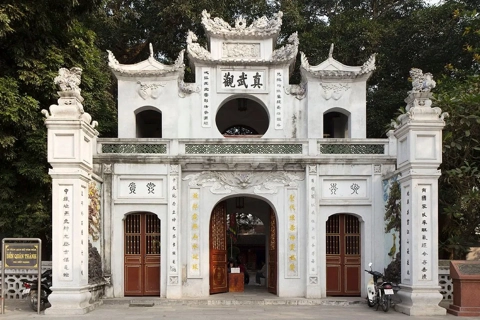
| Quan Thanh Temple was built in the style of Chinese Taoist architecture/ Photo: Nguyen Thi Thanh |
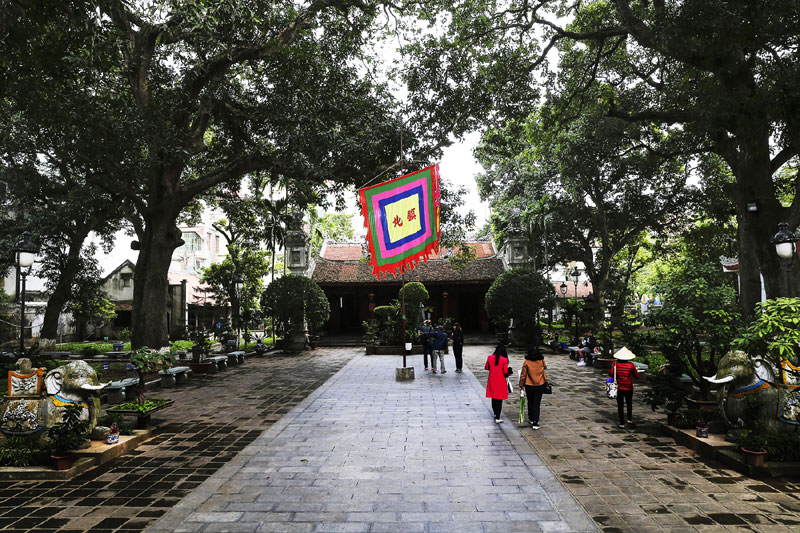
As one of the Four Sacred Temples that were built in four directions to protect the ancient Thang Long Citadel from malevolent spirits, the temple is a should-not-to-miss for visitors to the West Lake area.
During its long history, Quan Thanh Temple was renovated seven times from 1618 to 1941. Each restoration was recorded in an epitaph erected in the temple premises that the oldest one dated from 1677 while the latest was made by viceroy Hoang Cao Khai in 1894 under the reign of King Thanh Thai during the French colonial era.
The architecture of Quan Thanh Temple is imposing, making strong impression on visitors at their first glance. Quan Thanh Temple was built in the style of Chinese Taoist architecture, with a three-door gate; a courtyard and a three-part main temple consisting of the pre-worshiping area, the main-worshipping hall and the forbidden palace.
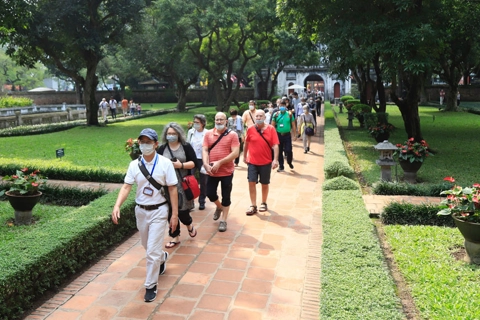
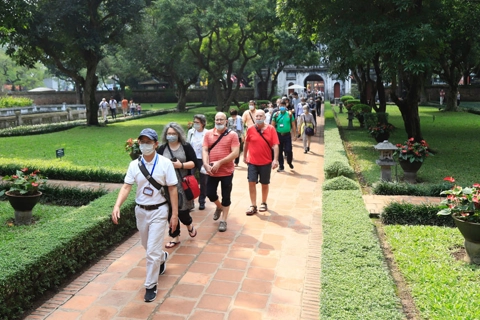
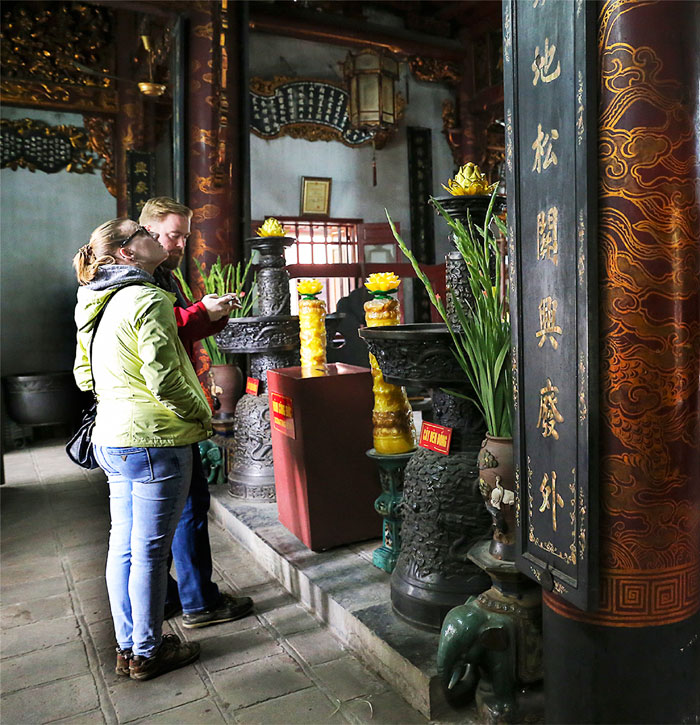
| Nowadays the temple is one of the leading tourist attractions in Hanoi city. |
Tam Quan Gate is the archway in the front of the temple having two floors and three arches. The spacious arch is in the middle and two smaller ones are on the two sides.
After a courtyard, there is a shrine that was built according to Taoist Chinese architecture, with red tiled roof and embossed serpent and turtle images on trusses.
The religious treasures
Passing through the door of the shrine, visitors will be attracted by a giant statue of Tran Vu deity- the most outstanding feature of Quan Thanh Temple.
According to historical records, in 1677 during the reign of King Le Hy Tong, artisans from the nearby bronze casting village of Ngu Xa offered Quan Thanh Temple a gigantic statue of Tran Vu in black copper, which is preserved inside the temple’s main shrine.
| The rare artwork is evidence of the advanced technical standard of bronze casting and sculpture of Vietnamese artisans in the past. Photo: Nguyen Thi Thanh |
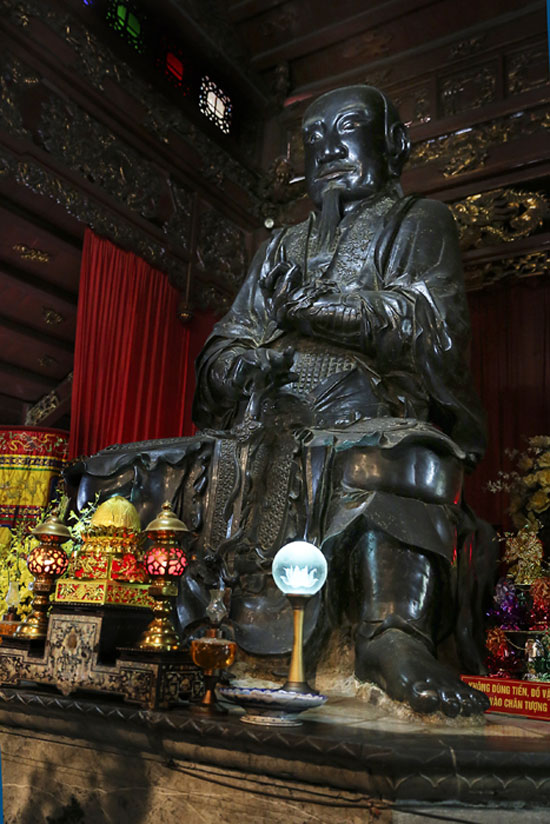
This statue is measured 3.96 metres high and weighs around 3,600 kilograms. The deity's statue has a square face and a long beard. His left hand is placed in front of his chest, while his right hand is holding the sword’s hilt. The details and lines of the sculpture are extremely fine and sophisticated.
Considered a masterpiece of Vietnamese bronze casting and sculpture, it is the second biggest bronze statue in Vietnam. This artwork is evidence of the advanced technical standard of bronze casting and sculpture of Vietnamese artisans in the 17th century.
There is also another smaller black copper statue at Quan Thanh Temple. Many people believe that the statue represents Mr. Trum Trong, the master sculptor who commanded the casting of Tran Vu statue. This statue was cast by his disciples to commemorate their teacher's merit.
Beside the statues of Tran Vu and Trum Trong, the main shrine also has a valuable collection of ancient poems dating back to 17th and 18th century. In addition, the temple also features a "Khanh” made from bronze, a kind of Chinese bell made of bronze that was cast between the 17th and 18th centuries. The bell is 1.25 meters wide and 1.1 meters high.
Nowadays, Quan Thanh Temple is one of the leading tourist attractions in Hanoi city.