Riding into history: Hanoi youth rediscover heritage on horseback
From lakeside parks to riverbank meadows, horseback riding in Hanoi is evolving into a cultural movement that blends sport, wellness and a renewed connection to Vietnam’s past.
THE HANOI TIMES — With growing cultural exchange, horseback riding has quietly taken root in Vietnam, especially in major cities, emerging as a sport that delivers physical and mental benefits.
Located inside Yen So Park in the ward of the same name, the Hanoi Horseback Riding Tours Club is a popular meeting point for horse enthusiasts.
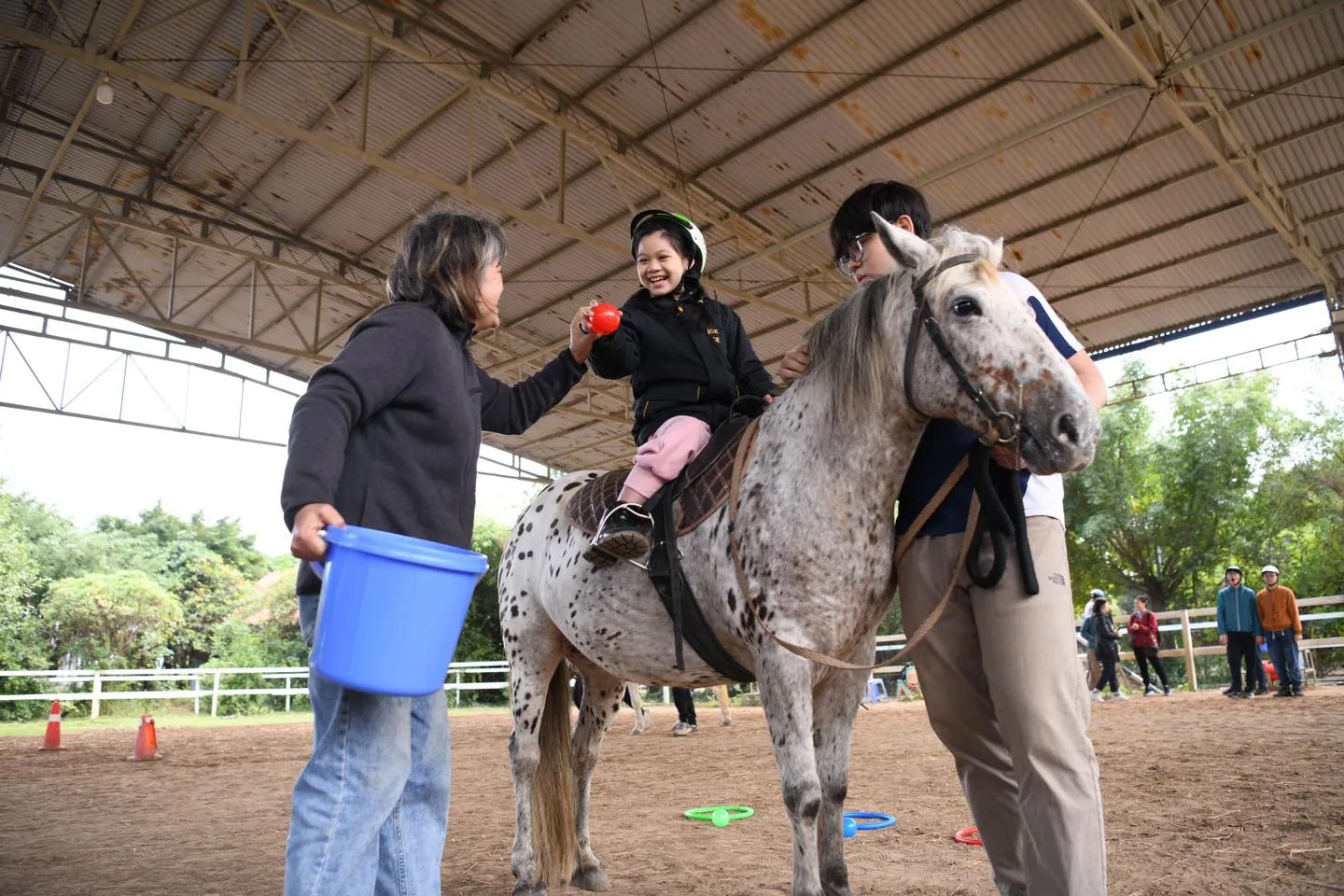
A kid enjoys her horse-riding training session. Photo: Hanoi Horseback Riding Tours Club
Open lawns, a calm lake and shaded trees create a rare setting where hoofbeats echo softly through nature. Here, riding goes beyond exercise as it offers a pause from urban life.
Hoang Ngan, who manages the club, said it operates more than 10 riding tours for domestic and international visitors.
Each tour starts with about 30 minutes of basic instruction for beginners under a trainer’s supervision, she told Hanoimoi Newspaper.
Riders spend 10 minutes getting acquainted with the horse, reviewing safety rules and putting on protective gear. They then warm up for 20 minutes in the arena to adjust to the saddle and the horse’s steady gait.
Once riders gain balance and confidence, the trail ride begins. Guests move through green surroundings and absorb the quiet rhythm of nature, Ngan said.
The tours also include photo sessions, walks and hands-on interaction with the horses, adding depth to the experience, she said.
On weekends and holidays, the grasslands beneath Nhat Tan Bridge attract young riders in neat outfits, some wearing traditional attire, confidently mounted on tall horses.
Experienced participants can stand on the saddle, release the reins and shoot arrows at targets while the horse gallops, a display of focus and control.
Ngo Huong Quynh, a member of the Vietnam Archery Club, recalled her first lessons. She said she felt intimidated because horses are tall and constantly in motion, and losing focus could mean falling.
“Once I bonded with the horse, I felt liberated, as if I had overcome my fear,” Quynh told the Vietnam News Agency. “After basic riding lessons, I learned to hold a bow, sit upright, keep balance and aim accurately.”
The Thanh Giong Equestrian Community, located along the Red River dike in Thanh Tri Commune, has become another hub for enthusiasts.
Inspired by the legendary hero Thanh Giong, the club promotes community ties, love for animals and environmental awareness. Members ride, care for horses and take part in community activities with social value.
“Our members have strong individuality,” said club president Dinh Ngoc Cuong. “They arrive out of curiosity, then passion grows. From there, they train seriously and push their limits.”
Dang Thi Thanh Huyen from Phu Thuong Ward said riders need time to build a bond because horses are sensitive to emotion.
“Riding requires constant interaction. When trust forms, control improves,” she said.
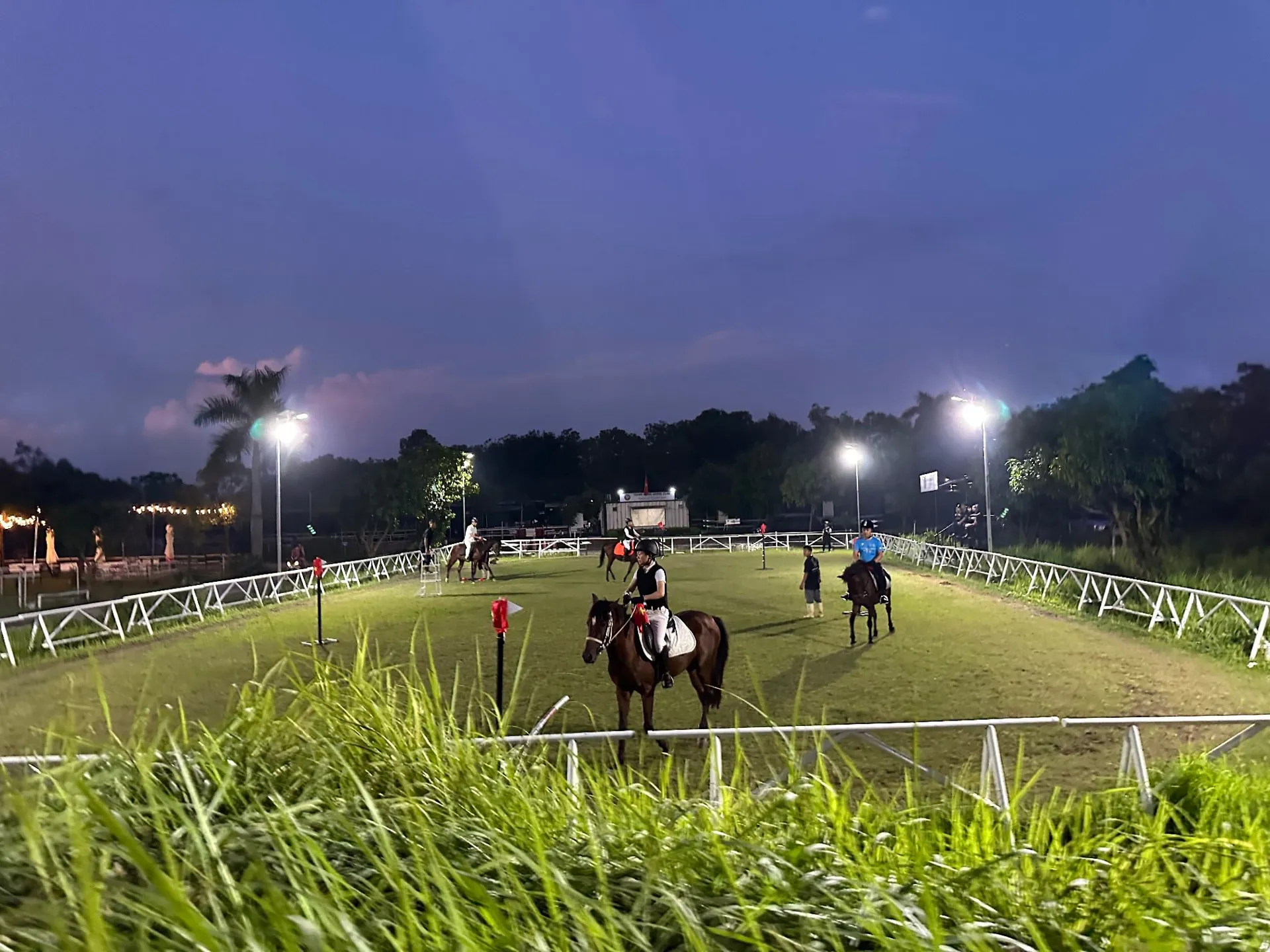
A night training class at Thanh Giong Equestrian Community in Thanh Tri Commune. Photo: Thanh Giong Equestrian Community
Nguyen Duy Quang from Hoan Kiem Ward said the sport improves his fitness and gives him a sense of mastery.
“At first I felt nervous and the horse did not always respond,” he said. “Training builds strength, focus and patience. It clears daily stress and brings calm as you ride.”
Riding has expanded beyond recreation and now gains recognition for its therapeutic value. At Thanh Giong Equestrian Community, horses serve as companions in emotional recovery.
People facing psychological stress, children showing signs of autism and older adults often find comfort in touching the horse and listening to its steady breathing and hoofbeats.
Riding demands cooperation between human and animal. Riders must show patience and build trust rather than rely on force.
Control depends on posture, reins and subtle cues instead of speed. Contrary to common belief, riding centers on precision. Posture, hand position, gaze and breathing must align with the horse’s movement.
Pham Duc Huy, a trainer at the Hanoi Horseback Riding Tours Club, said riding improves balance, strengthens muscles and enhances coordination.
Mentally, it allows riders to step away from screens, spend time outdoors and release pressure after work or study, he said.
For children with emotional challenges, riding fosters positive thinking and greater stability, Huy added.
“On horseback, children build confidence and self-control,” he said. “Each stride strengthens discipline, patience and responsibility while nurturing respect for animals and nature.”
Connections with history and culture
The appeal of riding and mounted archery among young people stems from its historical roots. Participants study cavalry traditions, past generals and the role of mounted archers in historic battles.
Traditional costumes based on historical research add symbolic depth and strengthen the link to heritage.
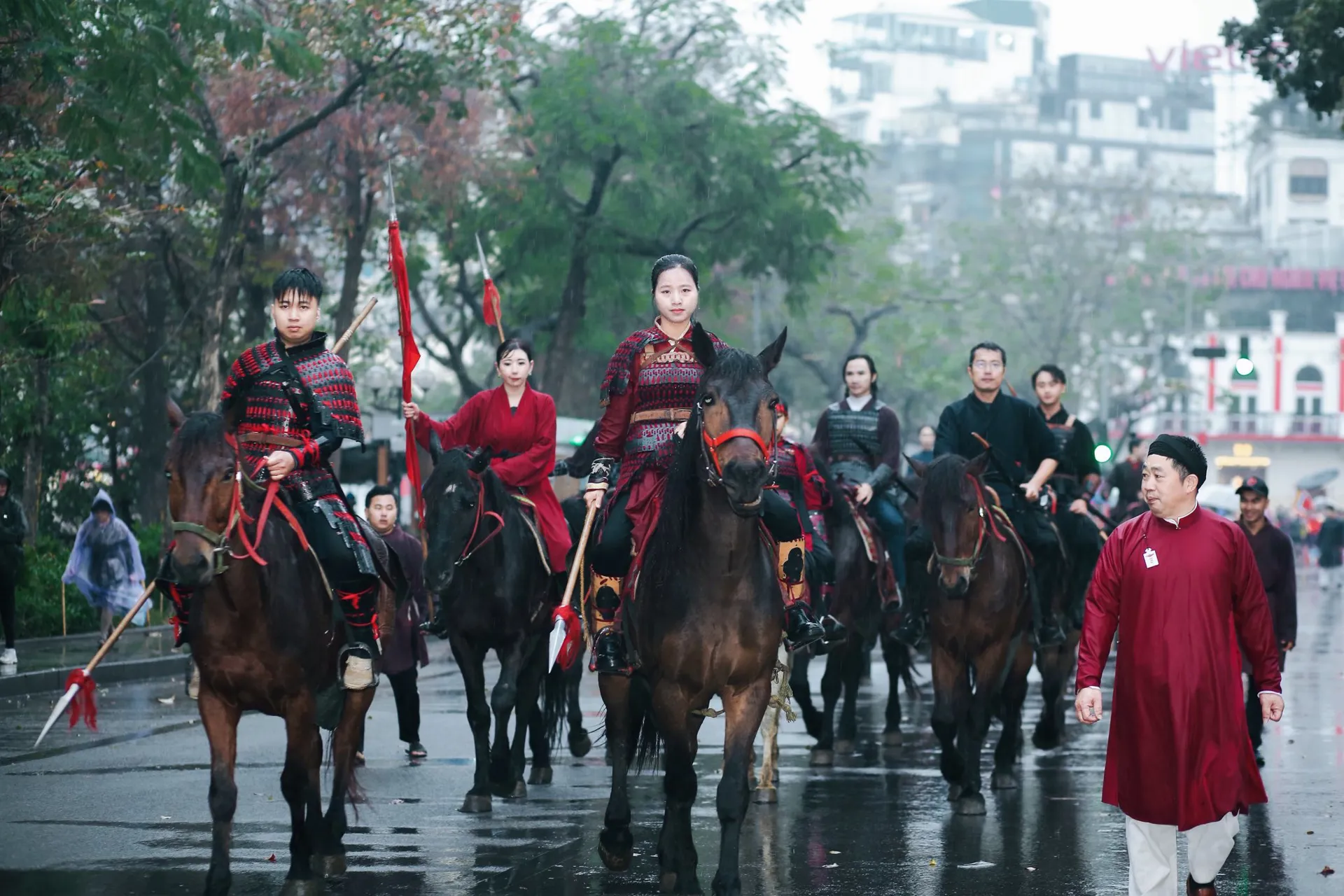
Members of the Vietnam Archery Club dressed like calvaries partake in a cultural event in Hanoi. Photo: Vietnam Archery Club
Nguyen Minh Duc, a young rider who also studies traditional clothing, told the Vietnam News Agency that wearing historical attire and riding feels like stepping beyond everyday life.
“It reminds me how our ancestors lived and defended the country,” he said.
The movement has formed tight-knit communities. Students, office workers and artists gather around shared interest and exchange stories about history and identity after practice sessions.
Pham Van Phuc, President of the Vietnam Archery Club, said the sport helps young people regain balance in a fast-paced, technology-driven society as outdoor training and sustained focus strengthen both body and mind.
The trend also opens prospects for sports and cultural tourism. Several competitions and riding performances have begun drawing public attention, Phuc said.
Throughout Vietnam’s feudal dynasties, horses played a central role in society. Under the Nguyen Dynasty, their importance rose as they became part of royal authority.
Before railways or motor vehicles, horses provided the fastest transport for court and military affairs.
They carried goods and supplies during campaigns and delivered tactical mobility in battle. In the royal court, horses pulled carriages for ceremonies, hunting trips and state rituals.
From battlefield to palace, horses stood as steadfast companions.
Over time, the horse became a symbol of power, speed and command over destiny. For Nguyen rulers, it represented decisive governance and strength.
In that sense, the horse embodied an effective and responsive state.