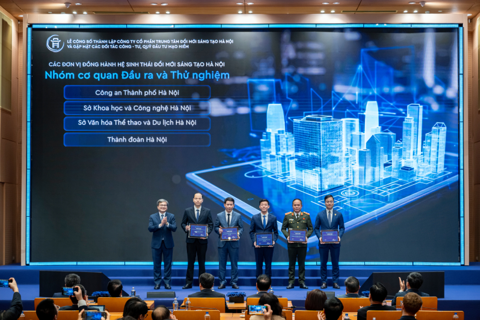
The launch is expected to drive Hanoi to become a leading national hub for science, technology and innovation and to strengthen its regional position in the knowledge-based economy.
THE HANOI TIMES — Hanoi is set to officially launch the Hanoi Innovation Hub Joint Stock Company (HiHUB) on February 26, marking the establishment of a new institution to coordinate the city’s innovation ecosystem.
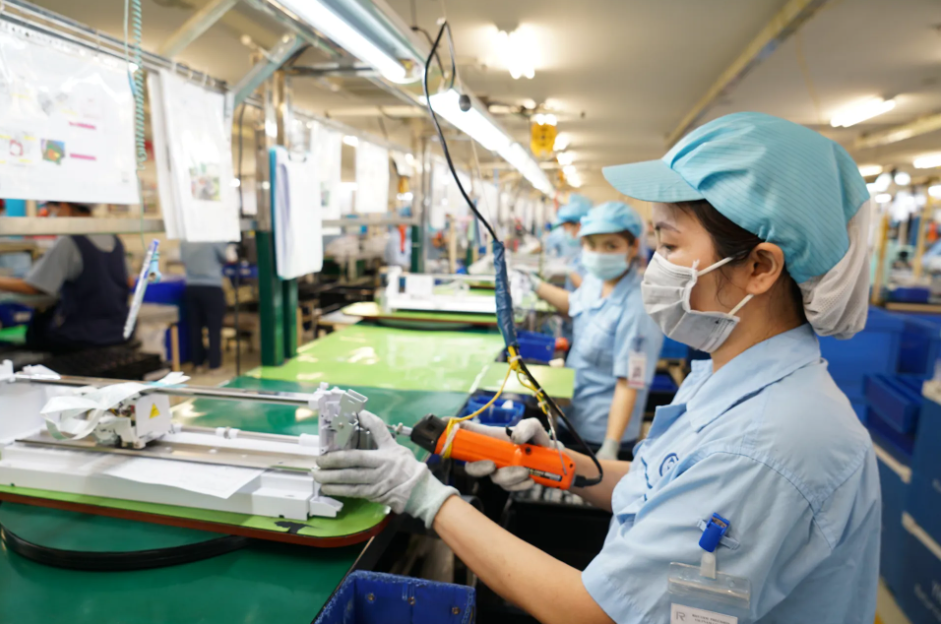
Electronic devices for export produced at Rhythm Precision Vietnam Co., Ltd., Noi Bai Industrial Park, Hanoi. Photo: Pham Hung/The Hanoi Times
The event takes place as the capital accelerates the rollout of mechanisms and policies to advance science, technology and innovation in line with the Capital Law and Resolution No. 57-NQ/TW of the Politburo on the development of science and technology, innovation and national digital transformation.
Under the plan, HiHUB will operate as a joint stock company with majority state ownership. The charter capital is set at VND100 billion (US$3.9 million), with the Hanoi People’s Committee holding a 70% stake.
HiHUB is tasked with operating the capital’s innovation ecosystem and implementing a controlled regulatory sandbox mechanism. It will develop incubation and startup acceleration programs, connect investors, experts, research institutes, universities and enterprises, and promote international cooperation in high technology.
The center’s headquarters is expected to be located at 46 Tran Hung Dao Street, Cua Nam Ward. A network of satellite hubs will also be established at several locations across the city to expand creative space and support startups and technology firms.
The launch of HiHUB is expected to mark a significant milestone in Hanoi’s roadmap to become a leading national center for science, technology and innovation, with ambitions to gradually reach regional standing in the knowledge-based economy era.

Vietnam is positioning science, technology and innovation as the driving force of its next growth phase, as Politburo member and Secretary of the Hanoi Party Committee Nguyen Duy Ngoc engaged US partners in Washington to advance cooperation in semiconductors, artificial intelligence and high-tech industries.
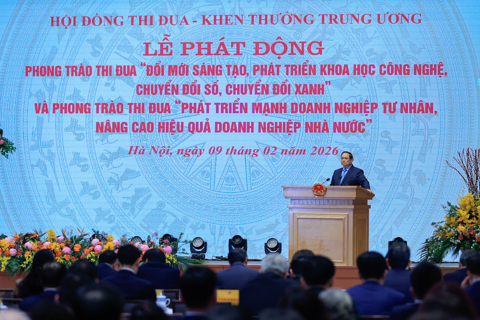
Vietnam is counting on its technology sector to power the next phase of economic growth, with business leaders committing to innovation, digitalization and green transition under newly launched emulation movements.
Student innovators from Hanoi are transforming environmental concerns into practical startup ideas, demonstrating how youth-led creativity can drive sustainable lifestyles and social responsibility.
Hanoi sets 2026 as a breakthrough year for healthcare reform, accelerating digital transformation, restructuring hospital networks and tightening food safety management under Politburo Resolution 72.
The new innovation center is designed to connect policy, technology and talent, aiming to accelerate digital transformation, support startups and position the capital as a global testing hub for emerging technologies and creative industries.
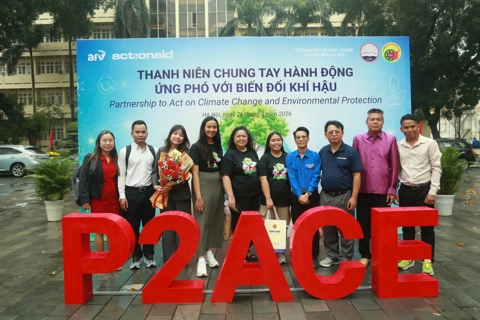
Young innovators from Vietnam and across ASEAN presented practical climate solutions in Hanoi, highlighting grassroots initiatives tackling plastic waste, renewable energy and sustainable livelihoods.
The goal is to turn policies into outcomes under the principle of “less talk, more action, effective results to the end, all for the capital and its people.”
Home to more than 680 million people, many in vulnerable coastal and low-lying areas, ASEAN is on the front line of climate change, facing rising seas, fiercer storms, prolonged droughts and accelerating biodiversity loss that endanger the region’s economic resilience and social stability.
Hanoi has unveiled an ambitious five-year plan to reform governance, mobilize public assets and restructure state enterprises, aiming to turn the state economy into a powerful engine of sustainable growth.
Hanoi launches comprehensive action plans to implement Politburo Resolutions 71, 72, 79 and 80, prioritizing people-centered reforms in education, healthcare, culture and state economic development.
More young Vietnamese families choose travel over staying home during the Lunar New Year holiday, seeking fresh experiences while keeping core traditions intact.