Settling water issues requires fairness and justice: Prime Minister
As much as 63% of Vietnam’s surface water is sourced abroad.
Vietnam’s Prime Minister Pham Minh Chinh said it requires fairness and justice in solving water resource-related issues among countries.
| Vietnam’s Prime Minister Pham Minh Chinh attends the 4th Asia-Pacific Water Summit held on April 23-24. |
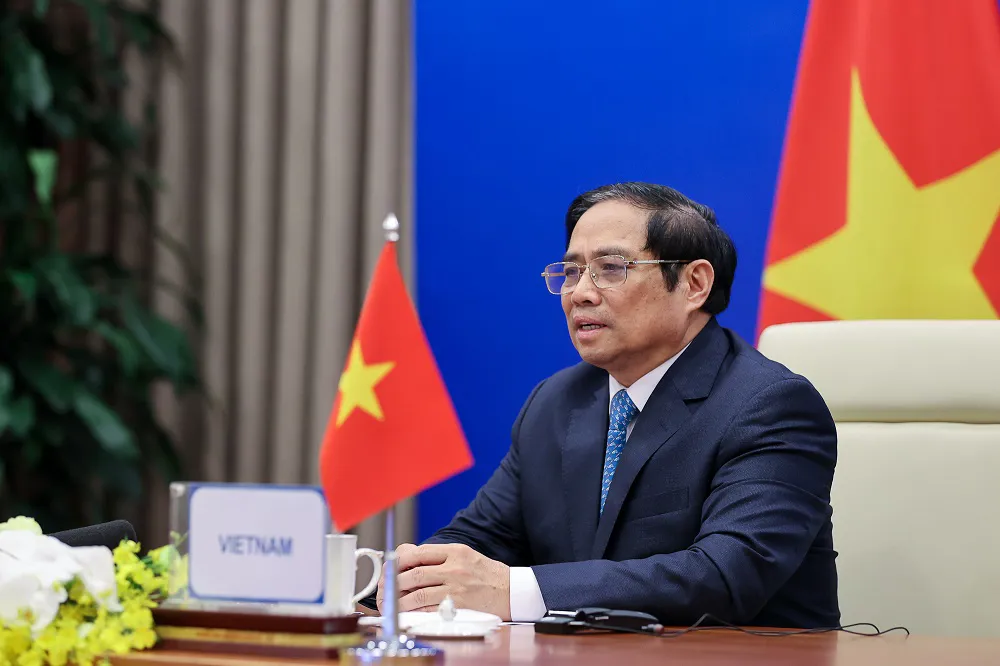
The Vietnamese PM made the statement at the 4th Asia-Pacific Water Summit hosted by Japanese PM Fumio Kishida on April 23-24, which marked the participation of more than 140 participants, including heads of state and governments of many regional countries.
To support his idea, PM Chinh suggested three solutions for water quality betterment, sustainable water exploitation, and water security.
He stressed the importance of regional and international cooperation in managing water resources, saying it should be carried out in an open, transparent, and substantive manner in accordance with the United Nations Sustainable Development Goals (SDGs) by 2030, the Paris Agreement, commitments at the 2021 UN Climate Change Conference (COP26), and the Sendai Framework for Disaster Risk Reduction 2015-2030.
The PM suggested that Japan and developed countries support developing countries in terms of experience, finance, technology, administration, human resource training for effective management, sustainable exploitation, and equitable distribution of water resources; prioritize the protection of ecosystems and nature and biodiversity conservation.
In addition, it’s necessary to strengthen cooperation mechanisms on transboundary river basin management such as the Mekong River Commission, focus on digital transformation, encourage the participation of businesses and people, promote public-private partnership, and boost smart water governance.
For its part, Vietnam identifies water as a strategic resource, which needs to be managed, exploited and used appropriately, safely, hygienically, and effectively to promote green, circular, and sustainable development, ensuring harmony between economic growth and environmental protection, the PM noted.
He emphasized that Vietnam has actively contributed to international cooperation, especially with countries that it shares water sources, such as Laos, Cambodia, and China to manage, protect, and use water from rivers in a sustainable and effective manner.
On this occasion, PM Chinh expected further support from international partners and Japan to develop water resources to avoid impacts on the natural flow of rivers, mainly the Mekong River.
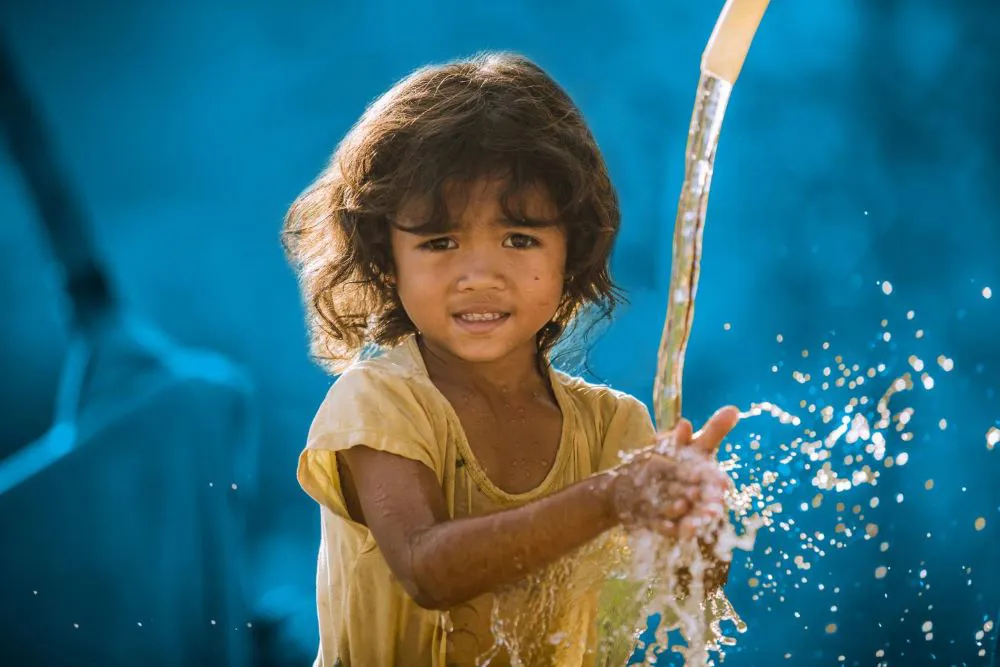
| Vietnam warned of water insecurity. Photo: Truong Viet Hung/UNICEF |
Addressing the summit, UN Secretary General António Guterres said the world is “facing a growing water crisis and Sustainable Development Goal 6 is badly off track.” Across Asia-Pacific – the region with the lowest per capita water availability in the world – the situation is especially troubling. The water crisis demands a holistic, systemic, and multilateral response.
The Asia-Pacific Water Summit was launched in 2006 following an initiative by late Japanese PM Ryutaro Hashimoto with the objective to raise the priority of tackling water security issues highlighted in the development agenda in the Asia-Pacific region in order to improve people’s livelihoods and the environment.
At the event held in Kumamoto, Japan’s PM Fumio Kishida announced that Japan will provide some ¥500 billion (US$3.9 billion) in the next five years to help solve water-related issues in the Asia-Pacific region.
Vietnam’s primary water supply is sourced from surface flows captured by rivers and aquifers. The two largest of these flows come from the Red River and Mekong River, which are known locally as the Hong River and Cuu Long River, respectively. As much as 63% of surface water in Vietnam originates from upstream foreign countries.
As stated by a recent study by the World Bank, the water situation in Vietnam is “too much, too little, too dirty”. This statement reflects the uneven temporal and spatial water distribution (too much water in the rainy season, too little water in the dry season) and severe water pollution (too dirty). The situation is even more severe under the impact of climate change, according to German-supported Project Office for Sustainability Research in Vietnam.