State steps in where private sector cannot: PM
The primary objective of the state economy is to safeguard national security in finance, monetary policy, energy and food, while protecting social welfare, promoting progress and ensuring equity.
THE HANOI TIMES — All economic sectors should compete on an equal footing, with the state taking on only what the private sector cannot do, rather than what it could do better.
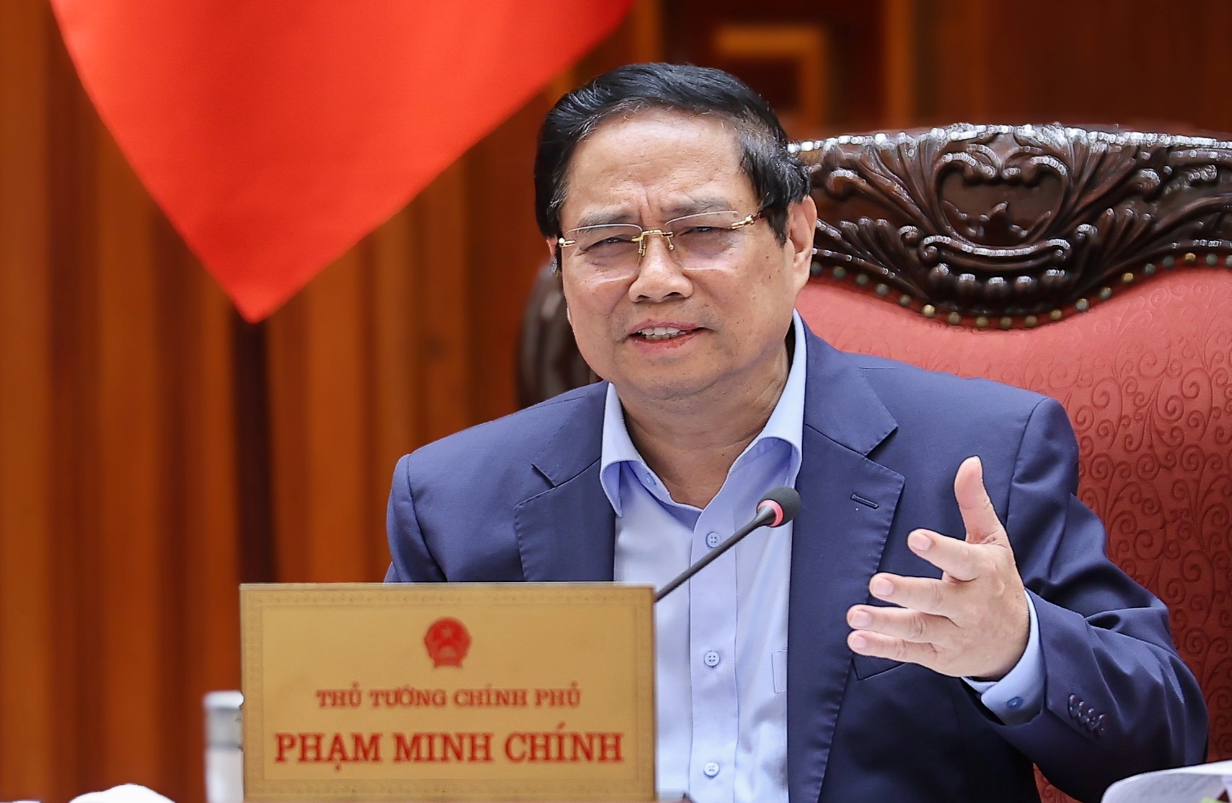
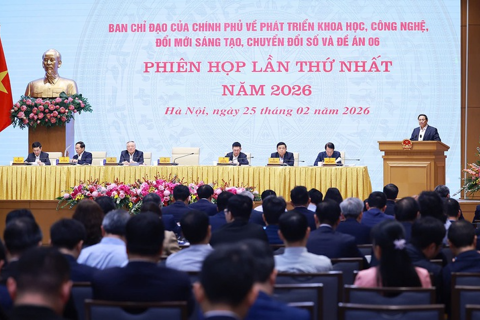
Prime Minister Pham Minh Chinh during the meeting. Photo: VGP
Prime Minister Pham Minh Chinh stressed this view at a government meeting on September 23 while discussing the Scheme for State Economic Development.
He said the Party’s platform and the Constitution affirm Vietnam’s path of building a socialist-oriented market economy, led by the Party and managed by the State. The state economy is one component of the national economy. He underlined that its role is to take the lead, guide, regulate and connect other sectors.
National resources must be managed strictly, with fairness, openness and transparency in access and use.
He added that Vietnam needs to expand socialization and continue equitization to make businesses more efficient and prevent state resources from being wasted.
In July, the prime minister established a steering committee to draft the Scheme on State Economic Development. The committee is tasked with building a proposal to improve the effectiveness of this sector.
Once completed, the scheme will be submitted to the Politburo for adoption as a separate resolution. In May, the Politburo issued Resolution 68 on private sector development.
The scheme covers land and natural resources, public assets, the state budget, national reserves, state funds, state-owned enterprises, credit institutions and public service units to develop the state economy in a way that improves quality and efficiency, maintains its leading role, and ensures national security in major sectors.

Offshore drilling platform of Petrovietnam. Photo: Hoang Anh/The Hanoi Times
He stressed that the scheme must adopt an inclusive and comprehensive approach, unlocking resources and creating a foundation for development. “It should be concise, action-oriented, practical and effective.”
At the same time, it needs to respect the principle of clearly distinguishing between criminal, administrative and civil responsibilities, and between corporate and individual liability in cases of violations. Civil, economic and administrative measures should be prioritized in addressing economic disputes.
Chinh also argued that the model for managing resources and state-owned enterprises should be lean, efficient and flexible, aligned with real-world conditions.
This includes greater decentralization, streamlined administrative procedures, less pre-checking, and stronger post-checking. He called for a review of stakeholder groups to propose breakthrough solutions, particularly in science and technology, innovation and digital transformation.
Last year, the total assets of 671 state-owned enterprises, 473 fully owned by the state and 198 with state ownership above 50%, reached more than VND5,600 trillion (US$220 billion), up 45% from 2023. Their combined revenue was nearly VND3,300 trillion ($129 billion), a 24% increase.
Pre-tax profit stood at almost VND227.5 trillion ($8.9 billion), up 8%. Contributions to the state budget totaled about VND400 trillion ($15.6 billion), an increase of 9%.