Strategic vision needed to address challenges facing GMS: Vietnam PM
Vietnam highlights joint efforts in preparing for recovery plans and better competitiveness.
The Greater Mekong Subregion (GMS) needs a vision and strategic solutions to solve today’s most urgent problems and lay the foundation for sustainable and inclusive development in the next decade.
| Vietnam’s Prime Minister Pham Minh Chinh at the summit on September 9. Photos: VGP |
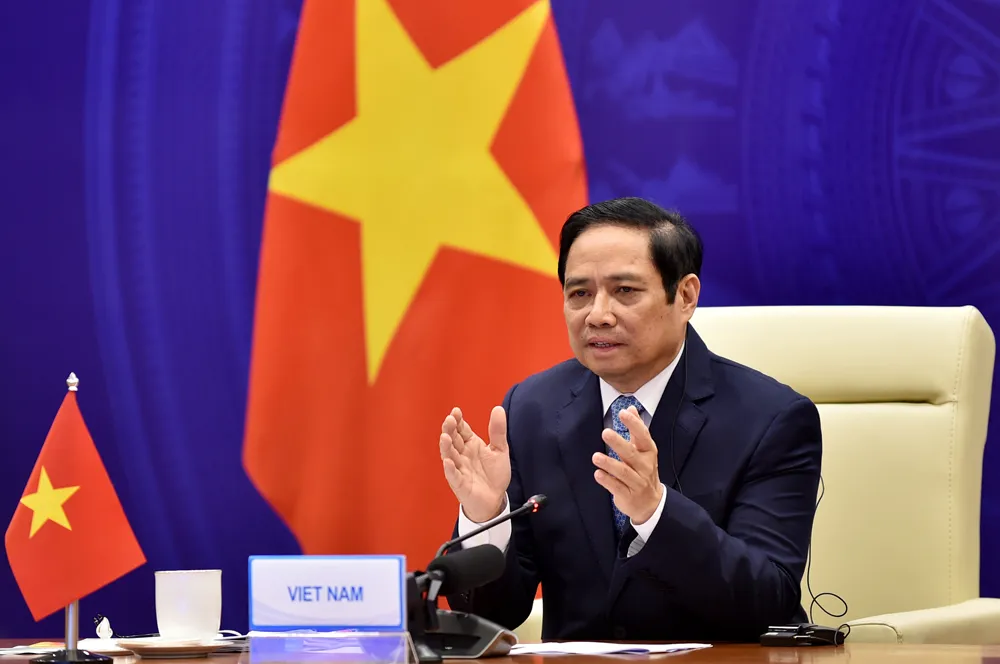
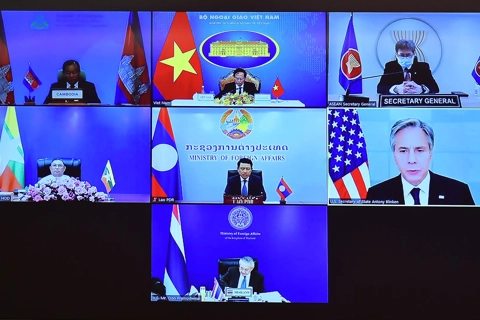
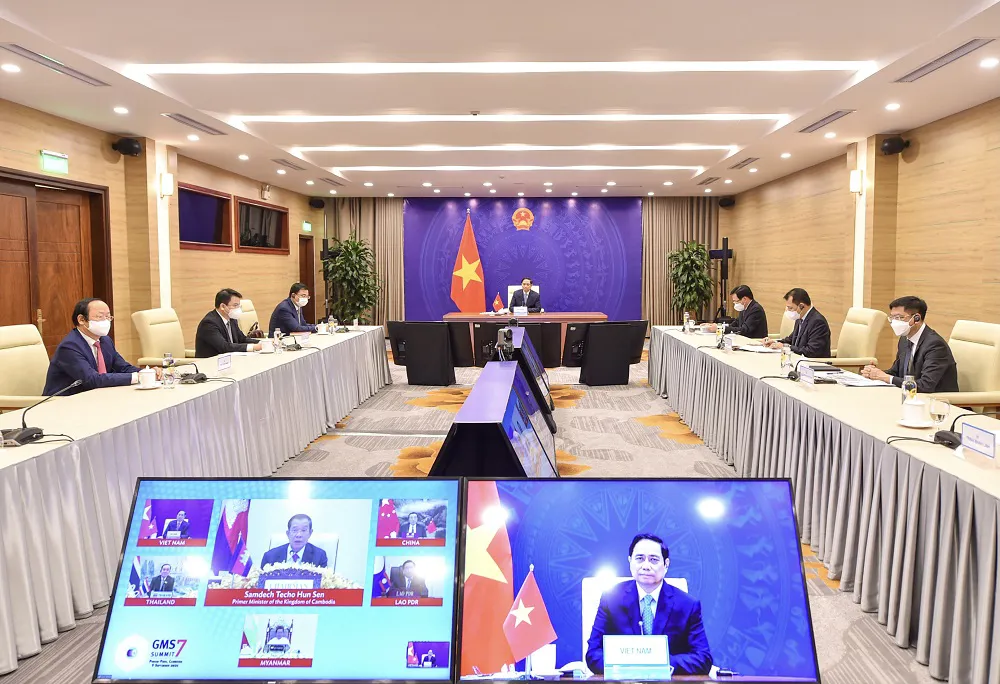
Vietnam’s Prime Minister Pham Minh Chinh made the statement at the 7th Greater Mekong Sub-region (GMS) Leaders’ Summit hosted virtually on September 9 by Cambodia with the attendance of Chinese premier Li Keqiang, Lao PM Phankham Viphavanh, Chairman of the State Administration Council of Myanmar Senior General Min Aung Hlaing, Thai PM Prayuth Chan-o-cha, President of the Asian Development Bank Masatsugu Asakawa, and representatives of 31 developing partners.
In support of the idea, Chinh emphasized that no one is safe until everybody is safe.
For that reason, Chinh recommended six main issues for the upcoming cooperation in the region, as followed:
(1) Covid-19 prevention and control: the regional countries need to prioritize effective cooperation in the fight against the Covid-19 pandemic and at the same time develop a coordination mechanism to respond to infectious diseases in the future. “No person is safe until everyone is safe, no country is safe while other countries are mired in the fight against the Covid-19 pandemic, Chinh said.
The main coverage is equal and transparent access to vaccines and Covid drugs, vaccine sharing through multilateral and bilateral mechanisms, technology transfer for vaccines, and drug self-reliance in the region.
(2) Smooth supply chains: the countries should facilitate custom clearance and open a “green corridor” at the border gates to ensure both containing the pandemic and avoid trade barriers.
(3) Infrastructure: It needs to upgrade infrastructure in transport and energy to boost the connectivity and competitiveness among economies towards the completion of the transport networks, border gates, and seaports. The efforts would lead to multimodal transport, transition to low-emission energy, cross-border power trading, interconnected grid system, development of power sector infrastructure.
(4) Digital transformation should be promoted to work as motivation for growth, economic recovery, and narrowing development gap with a focus on e-commerce, digitalization-based recovery plans, and proper regulatory framework.
(5) Green GMS: it’s necessary to build a green and safe mechanism for efficient adaptation to climate change with a focal point into climate resilience capacity and cooperation in sustainable management and using regional rivers, mainly the Mekong River.
(6) Cooperating between GMS and ASEAN and another regional mechanism: there should be a mechanism to encourage the participation of developing partners and businesses.
The Vietnamese PM suggested the holding of the annual GMS Leaders’ Forum with the participation of member states and developing partners to review the cooperation and draw more resources and recommendations.
Speaking at the event, Cambodia’s Prime Minister Hun Sen stressed the need to enhance extensive solidarity towards strong socio-economic recovery. He said it is critically important to promote extensive solidarity in the spirit of multilateralism to ensure the post-pandemic economic recovery process.
| Vietnam's representatives attend the event. |
Greater Mekong Subregion
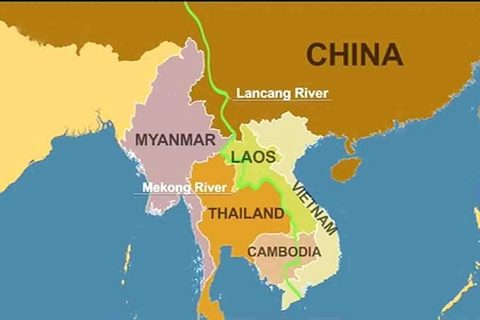
The GMS is comprised of six nations that share the Mekong River, including Cambodia, China (specifically Yunnan province and Guangxi Zhuang Autonomous Region), Laos, Myanmar, Thailand, and Vietnam.
The GMS Leaders’ Summit is generally held every three years.
The GMS is home to Vietnam’s neighboring countries, special partners, strategic partners, and Vietnamese businesses’ markets.
In 2020, trade between GMS countries reached US$630 billion, compared to $5 billion in1992.
In 1992, with the assistance of the Asian Development Bank (ADB), the six countries entered into a program of subregional economic cooperation, designed to enhance economic relations.
With support from ADB and other donors, the GMS Program supports the implementation of high-priority subregional projects in agriculture, energy, environment, health and human resource development, information and communication technology, tourism, transport, transport, and trade facilitation, and urban development.
To realize its vision of a prosperous, integrated, and harmonious subregion, the GMS program has adopted a three-pronged strategy with the 3C: Connectivity, Competitiveness, and Community.
Connectivity: Increasing connectivity through sustainable development of physical infrastructure and the transformation of transport corridors into transnational economic corridors.
Competitiveness: Improving competitiveness through efficient facilitation of cross-border movement of people and goods and the integration of markets, production processes, and value chains.
Community: Building a greater sense of community through projects and programs that address shared social and environmental concerns.