Stronger oversight urged for transport firms to curb traffic accidents
Measures helping reduce road accidents inlcude establishment of road safety management unit, installation of tracking devices and cameras and improvement of driving ethics.
THE HANOI TIMES — Legislators need to improve regulations, strengthen oversight of transport businesses, while these companies must raise drivers’ awareness and professional ethics to enhance traffic safety.
Chairman of the Hanoi Transport Association Do Van Bang spoke with Kinh te & Do thi (Economic & Urban) Newspaper about this topic.

Chairman of the Hanoi Transport Association Do Van Bang.
Could you point out the reasons causing serious traffic accidents involving commercial vehicles, especially passenger buses?
Many accidents involving commercial vehicles are linked to infrastructure that has not kept pace with traffic demand, incomplete road transport rules, and poor corporate supervision of drivers. Most accidents involving commercial vehicles stem from drivers’ own faults.
However, traffic accidents involving commercial vehicles have dropped significantly in recent years. Over the last 10 years, the number of accidents have dropped by 50% despite the number of commercial vehicles tripling.
It shows that state management agencies, enforcement forces, and transport businesses have made great efforts to ensure road safety and improve services for passengers.
What results in incomplete policies and poor business supervision?
By law, every transport firm with five or more vehicles must establish a safety supervision unit. In reality, many companies and individual operators have fewer than five vehicles and are therefore not required to have such a unit. Some businesses do have one but its operation is ineffective.
The safety supervision unit monitors journeys via onboard cameras and issues warnings when drivers exceed speed limits, drive for excessive hours, and violate traffic rules, helping prevent the risks early. Ineffective operation of this unit is one of the biggest causes of disorder and unsafe operation of commercial vehicles.
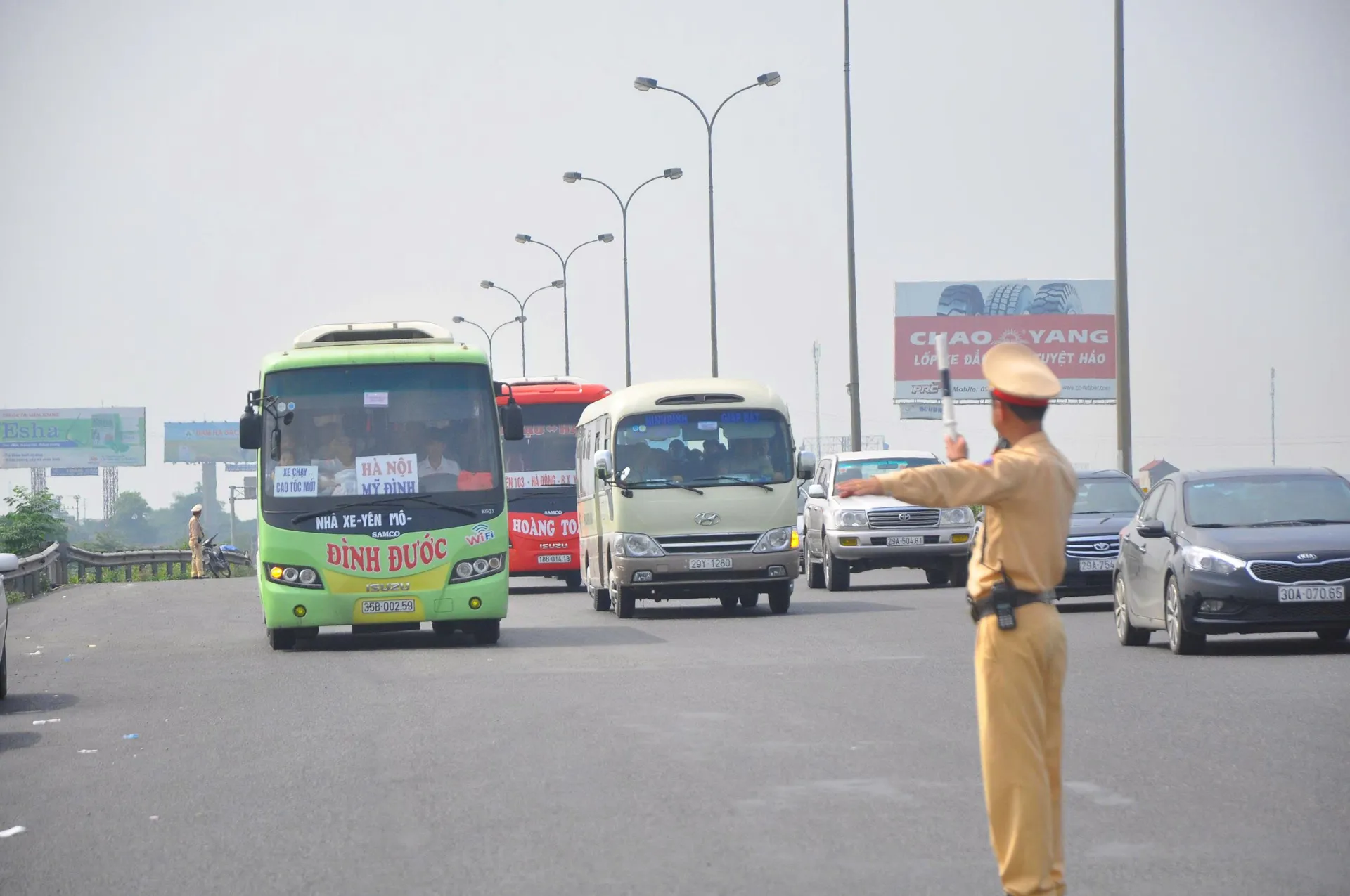
Traffic police patrol and monitor commercial buses moving from Hanoi to other provinces and vice versa. Photo: Pham Hung/The Hanoi Times
Another major shortcoming in road transport policy is that even an individual operator with a single vehicle can run fixed-route passenger services, and companies with fewer than five vehicles are not required to have safety supervision units. Without this unit, businesses lack an efficient tool to monitor their vehicles and drivers.
Furthermore, the cooperative model still exists, where members contribute funds and operate their own vehicles while the cooperative only handles administrative procedures.
Safety management and supervision in these groups are often neglected. This means there is still much to be done in road transport management.
What should be done to improve road transport management and reduce safety risks?
First, regulations on road transport, especially passenger transport, must be improved.
Licenses should not be granted to operators with too few vehicles, who lack safety supervision units, or who do not have adequate resources for fixed-route operations. The cooperative model should also be restructured as it no longer fits current conditions.
Second, business oversight should be tightened, holding companies more accountable for accidents involving their vehicles. Firms must operate effective safety supervision units, as strict monitoring can ensure commercial vehicle safety.
Third, firms should install full camera systems and tracking devices to detect and prevent driver violations promptly. Authorities should also step up inspections and strictly penalize offenses to prevent accidents.
At the same time, companies need to raise drivers’ awareness and ethics, and strengthen training, health checks, and competence assessments during recruitment.
What is your view on calls to ban sleeper buses, which some say cause many accidents?
I believe this is a subjective and one-sided opinion. Sleeper buses have operated for decades, and are increasingly popular as they meet public demand. Most accidents are caused by human error, not by whether a bus has seats or berths.
The law already bans converting seat buses into sleeper buses. Now, all sleeper buses are built in original form, meeting all technical safety requirements and certified by state authorities.

My Dinh Bus Station, one of the largest terminals in Hanoi. Photo: Pham Hung/The Hanoi Times
Wanting to ban sleeper buses based on false assumptions shows a lack of legal knowledge and understanding of road transport operations.
How do you assess the current and future of passenger road transport?
In recent years, passenger road transport has transformed strongly, meeting public travel and trade needs well.
Despite challenges from the Covid-19 pandemic and fierce competition from other transport modes, companies have invested in upgrading vehicles, lowering ticket prices, reducing overcrowding, and ensuring services during holidays and Tet.
Passenger road transport currently meets nearly 95% of actual travel demand, confirming its key role in Vietnam’s transport system and the efforts of transport businesses.
In the future, with the introduction of high-speed rail, the industry will face many challenges, requiring businesses to adapt and find new directions.
They must focus on improving service quality and safety to serve the public better. Passengers are, in fact, the strictest “managers” of the road transport industry, only high quality services and reasonable prices can convince and retain them.
Thank you for your time!