In Hanoi, culture thrives where people are happy
Happiness is no longer just a feeling, it has become a clearly defined goal in policymaking and a central benchmark for measuring development outcomes.
THE HANOI TIMES — As Hanoi charts a path toward becoming a livable, creative, and people-centered city, cultural development rooted in public happiness is emerging as both a guiding vision and a measure of progress.
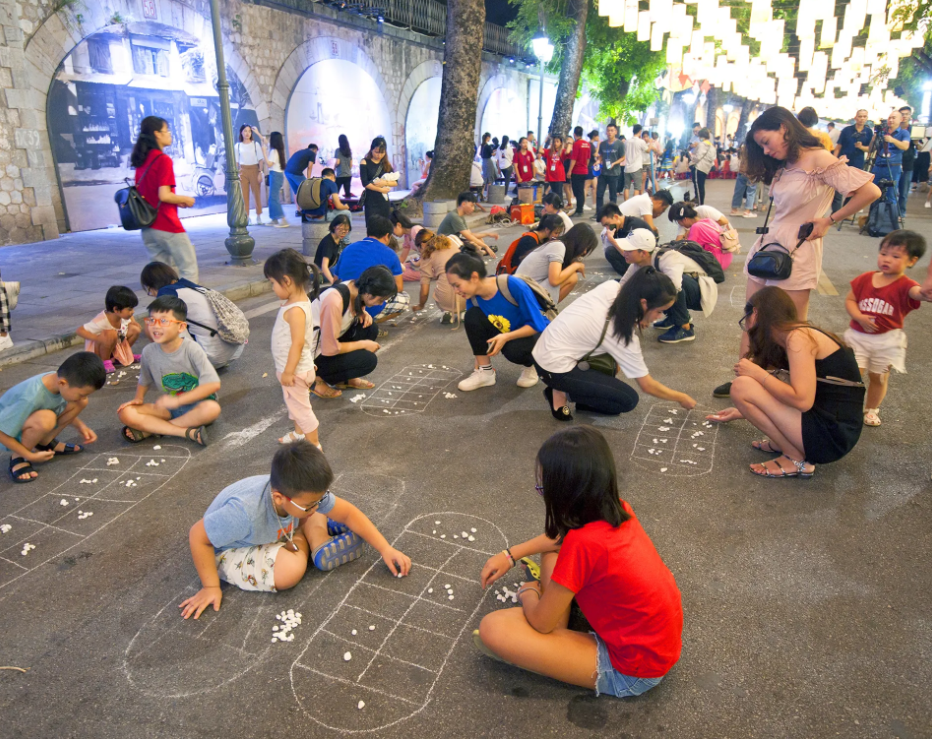
Kids having fun along Phung Hung pedestrian zone. Photos: The Hanoi Times
Culture gives life to happiness and carries it forward
For the first time, the draft Political Report for the 18th Congress of the Hanoi Party Committee for the 2025–2030 term highlights “people’s happiness” as a core direction for the capital’s development, signaling a shift in leadership mindset.
Happiness is no longer just a feeling; it has become a clearly defined goal in policymaking and a central benchmark for measuring development outcomes. This approach aligns with Vietnam’s national vision, echoed repeatedly by General Secretary To Lam, who affirmed the Party and State’s commitment to serving the nation and its people, declaring that “the happiness of the people is our joy and purpose in life.”
This philosophy is now being translated into concrete efforts to promote cultural development, as culture is seen as the spiritual foundation of society, a space where happiness originates and spreads.
In today’s fast-paced world, cultural happiness in Hanoi is nurtured through simple but deeply rooted values: the sense of peace and belonging when living in a healthy cultural environment, where positive values are upheld and harmful behaviors are discouraged.
In recent years, Hanoi has aggressively advanced programs to promote civility and foster shared social norms in public spaces, families, and workplaces. Campaigns such as “Building a Civilized and Elegant Hanoi” and “The Entire Population Unites to Build a Cultural Life” have taken root in neighborhoods, residential groups, and individual households. When each citizen acts responsibly, shows empathy, and respects others, a collective sense of happiness can flourish.
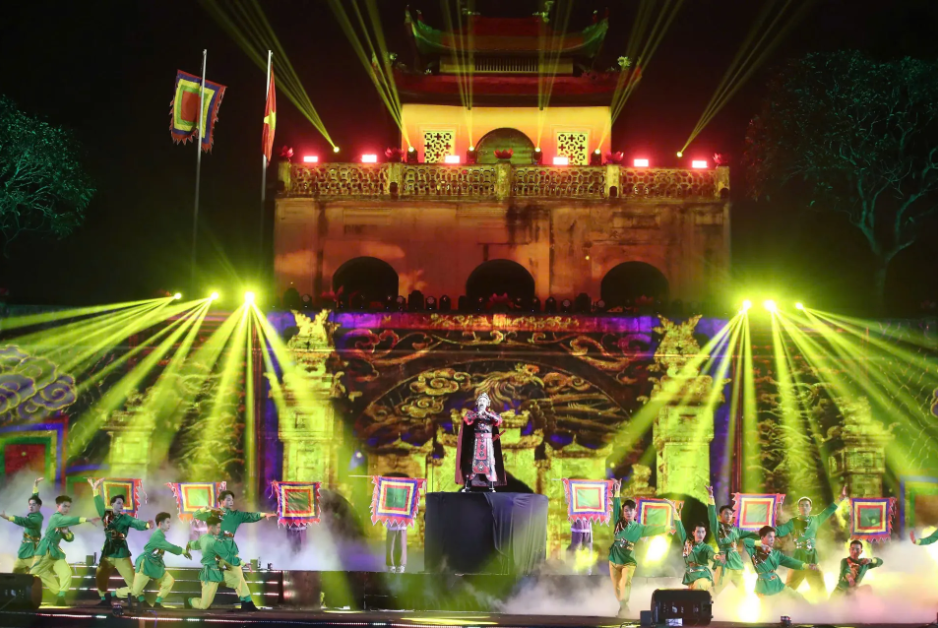
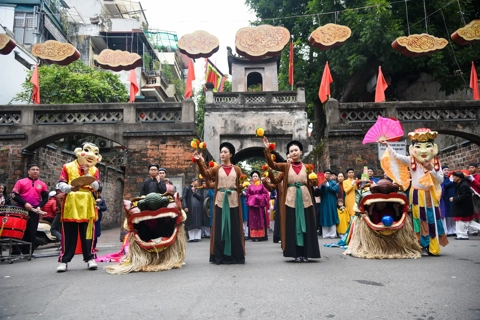
Art performance at the Thang Long Imperial Citadel.
Public spaces are being beautified, cultural and historical sites preserved, traditional festivals revitalized, and artistic activities brought into communities, efforts that collectively enrich the spiritual life of the capital’s residents.
No discussion of cultural happiness is complete without recognizing the growing strength of Hanoi’s cultural and creative industries. With more than 6,400 historical sites, 1,800 intangible cultural assets, and hundreds of traditional craft villages, Hanoi is not only preserving its heritage but also reinventing it into innovative cultural products for both locals and tourists.
Spaces such as the Hoan Kiem pedestrian zone, 19/12 Book Street, Phung Hung Art Street, and night tours of the Temple of Literature and the Imperial Citadel of Thang Long are not only generating revenue for the city, but also offering rich, emotional cultural experiences. Programs like Hanoi Saturday Nights, the Creative Design Festival, and open-air concerts have turned weekends into opportunities for family bonding and community connection.
Cultural industries are more than an economic sector, they serve as a bridge between the past and present, intellect and emotion, creativity and happiness. Alongside developing cultural spaces and products, Hanoi has placed strong emphasis on building its people—the core actors and beneficiaries of all policies. The image of the “civilized, elegant Hanoian” is not a slogan but a living standard passed down through generations. In the context of globalization, these values are being renewed through education, media, and community engagement, shaping a modern, humanistic cultural identity.
Cultural happiness begins with small gestures: a polite greeting, a kind smile, respectful behavior in public, or a moment of understanding within the family. When each person values and spreads these simple acts of beauty, happiness becomes a shared current flowing through every street and every home in Hanoi.
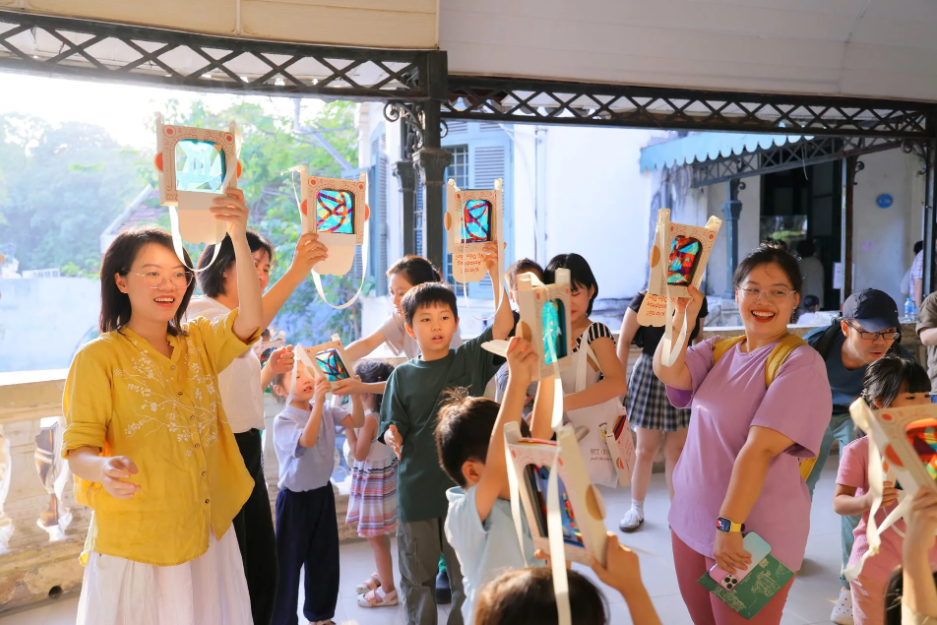
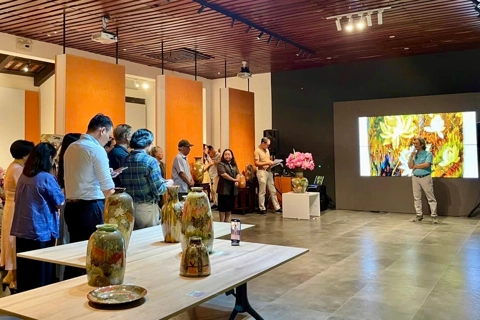
Activities at the Hanoi Creative Design Festival 2024.
People at center of all policymaking
The role of heritage in nurturing the city’s spiritual life is also undeniable. Hanoi is where the soul of the nation lingers, where past and present intertwine, where every ancient structure tells the story of generations.
The restoration of historical relics is not just a duty to the past, but a way to inspire pride and joy in the present. When an elder listens to a traditional chèo performance, or a child makes a wish at the Temple of Literature at the start of the year, these are not only acts of cultural preservation, they are moments of deep, personal happiness rooted in tradition.
In an era of digital transformation and global integration, Hanoi is also modernizing its approach to cultural access. From digital libraries and virtual museums to interactive arts and theatrical history programs, residents now enjoy more dynamic and engaging ways to connect with cultural values. These innovations are enhancing quality of life, expanding access to knowledge and creativity, and fueling the ambition to grow and contribute.
People’s happiness cannot be separated from the care of the Party and the State. Immediately after being elected as General Secretary, Party Chief To Lam pledged: “I will devote all my strength, together with the Party Central Committee, the Politburo, the Secretariat, and the entire Party, to fulfill our duties, to serve the country with all our heart, to serve the people, and to make the happiness of the people our joy and our reason for being.”
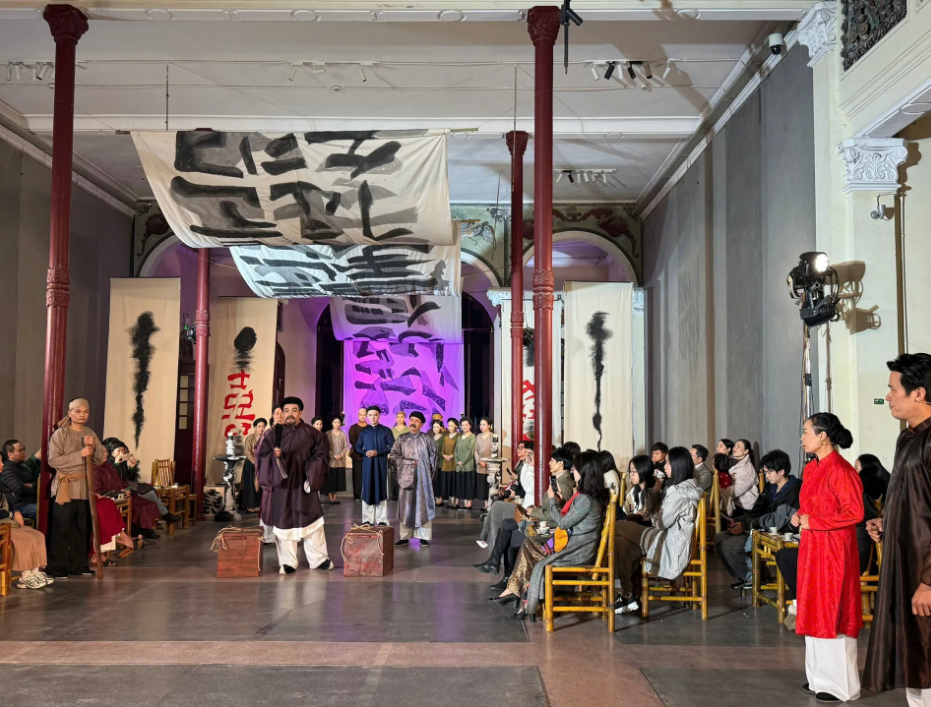
Audiences enjoy traditional art performances in Hanoi’s Old Quarter.
This declaration was not just a political commitment, but a cultural statement, placing people at the center of all policymaking. When happiness becomes the ultimate goal, every development strategy, from infrastructure and the economy to healthcare, education, and culture, must be people-centered, inclusive, and humane.
Looking ahead to the 2025–2030 term of the Hanoi Party Committee, the city is poised to lead in building a livable, creative, and happy urban model. Every street, every cultural institution, every creative product, every thoughtful act, all contribute to constructing a shared foundation of happiness.
As the General Secretary once wrote in his article “Radiant Vietnam” on the 95th anniversary of the founding of the Communist Party (February 3, 1930 – February 3, 2025): “The Party’s mission today is to lead the country into a new era of development and prosperity, to build a strong, democratic, fair, and civilized socialist Vietnam, standing shoulder to shoulder with the world’s powers, and ensuring that every citizen enjoys a life of warmth and happiness.”