Telling Vietnam’s cultural story through ceramics
The “Sen Soul” exhibition reimagines Vietnamese ceramics, drawing inspiration from the timeless beauty of the lotus flower.
THE HANOI TIMES — The solo exhibition Sen Soul – The Soul of Lotus by artist Ngo Ba Hoang featured over 40 original ceramic artworks inspired by the lotus, a symbol of purity, wisdom, and Vietnamese spiritual identity.
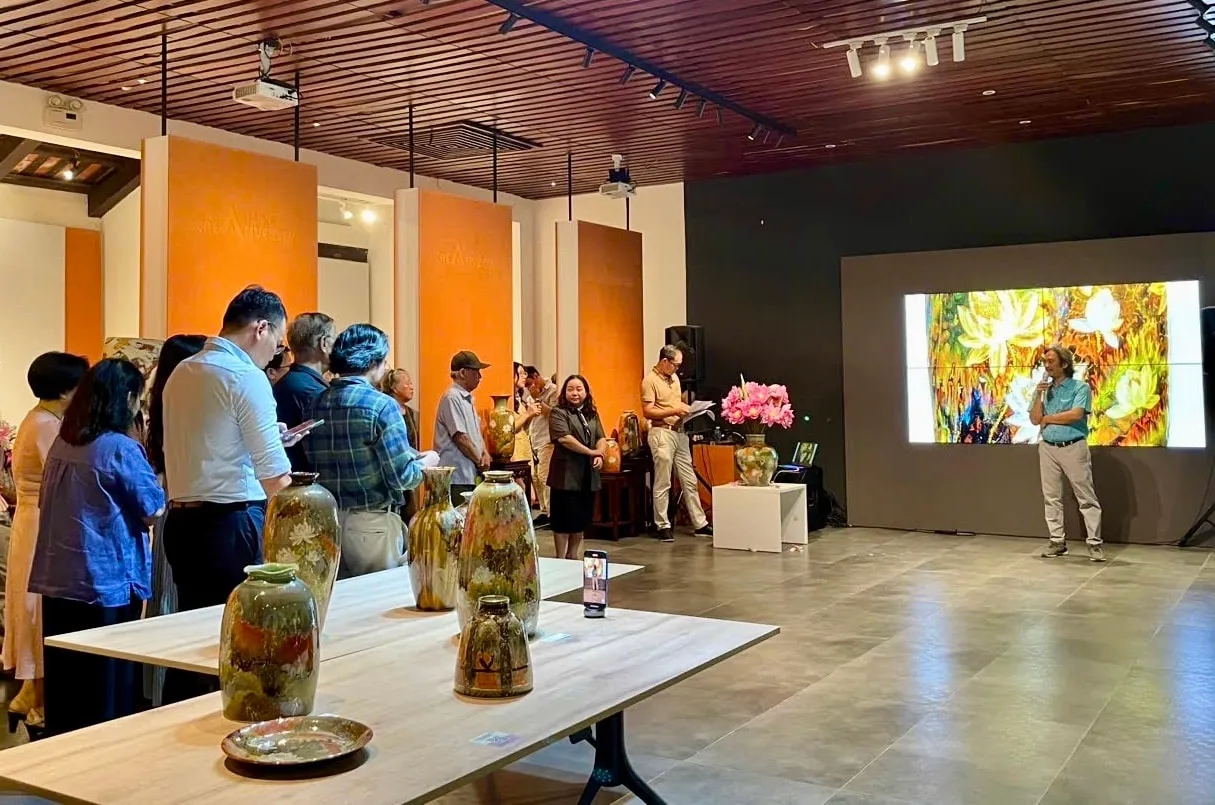
Artist Ngo Ba Hoang introduces his latest collection to visitors. Photo: Hanoimoi
Opened on July 26 at the Hanoi Museum, the exhibition is the culmination of five years of passionate research and experimentation, merging Eastern aesthetics with modern ceramic techniques.
Each vase, bowl, and sculptural form presents the lotus as a living character, sometimes the central subject and other times a quiet companion, leading viewers into deeper layers of Vietnamese culture and emotion.
"I chose the lotus not only because of my personal interest in it, but also because it’s deeply tied to our cultural identity," said Hoang. "In my work, lotus flowers appear to whisper to one another, evoking the tenderness of family bonds, affection, and a shared spirit that defines the Vietnamese soul."
Through Sen Soul, Hoang hoped to inspire cultural appreciation among Vietnamese audiences and offer a poetic glimpse into Vietnam’s thousand-year-old heritage to international visitors.
A key feature of the exhibition is Hoang’s pioneering pursuit of "gom doc ban" (one-of-a-kind ceramics) - a challenging artistic path that sets itself apart from mass-produced pottery.
Unlike conventional ceramics, these pieces thrive on spontaneity, embodying the artist’s personal expression and the unpredictable nature of glaze and fire.
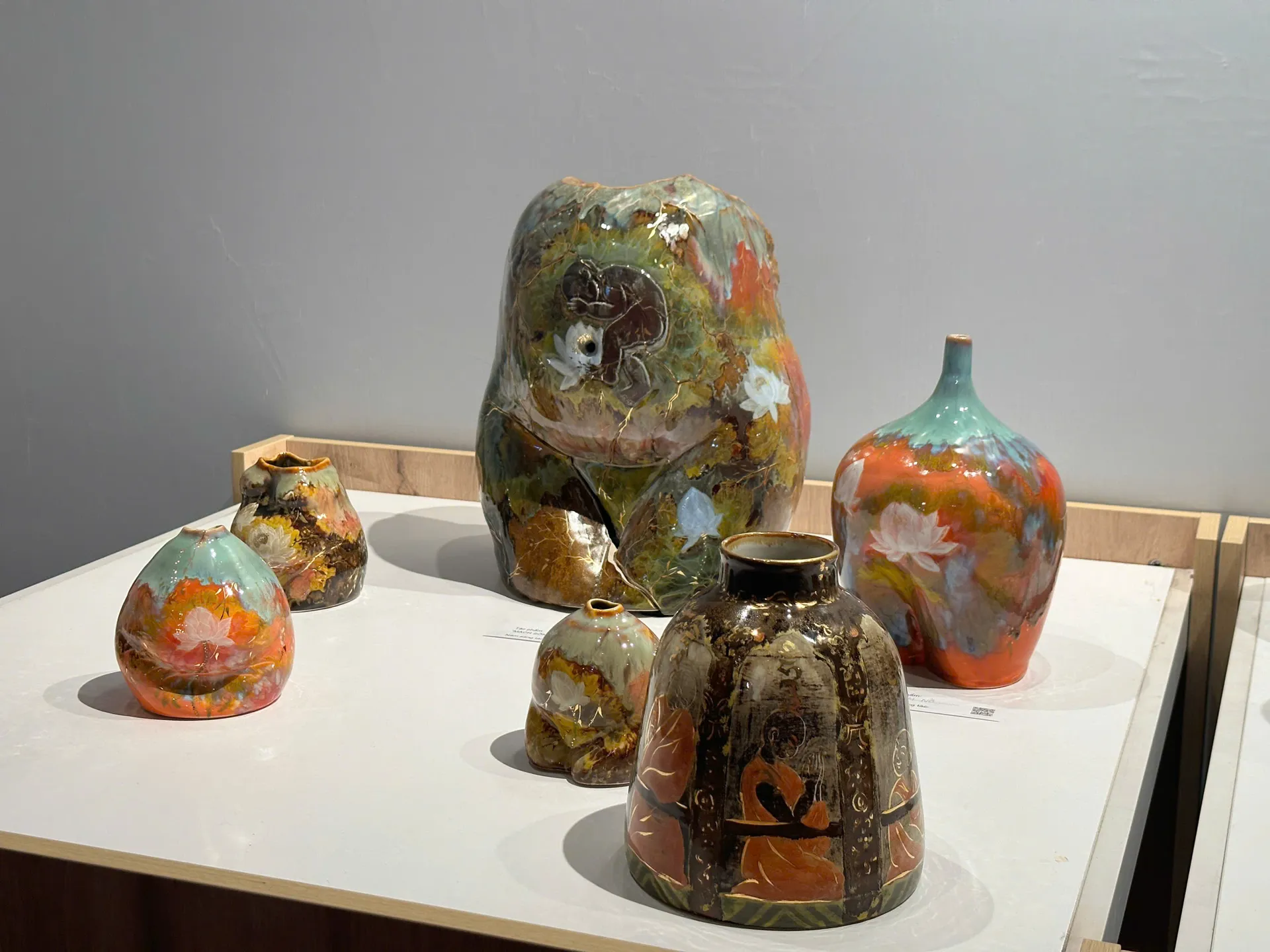
Each of Hoang’s ceramic pieces has its own unique shape and color. Photos: Khanh Van/Hanoitimes
“I had the rare opportunity to experiment with unique glazes - materials never before used for painting - and I accepted the challenge,” he said.
Using multiple layers of premium glazes, Hoang applies his brushwork in a manner reminiscent of Vietnamese lacquer painting to create fresh, original visuals on ceramic surfaces.
"Each glaze reacts differently at various temperatures. No two pieces are ever alike. Each piece has its own unique identity, shaped by artistic intention and the natural interaction of clay, fire, and glaze.”
All of the works were crafted in Bat Trang Village in Hanoi, the centuries-old hub of Vietnamese ceramics. For Hoang, working there is not just a matter of technique but also a way to stay rooted in the artisanal tradition.
"Vietnamese ceramics may not lead in industrial technology, but our strength lies in artistic vision. If we leverage that, we can absolutely assert our place on the global stage."
As Vietnam seeks to grow its cultural industries, Hoang’s journey offers a vivid example of how traditional crafts can become creative pillars of national identity.
“With the depth of our culture and artistic potential, I believe we can go far if we build on what we already have,” said Hoang.
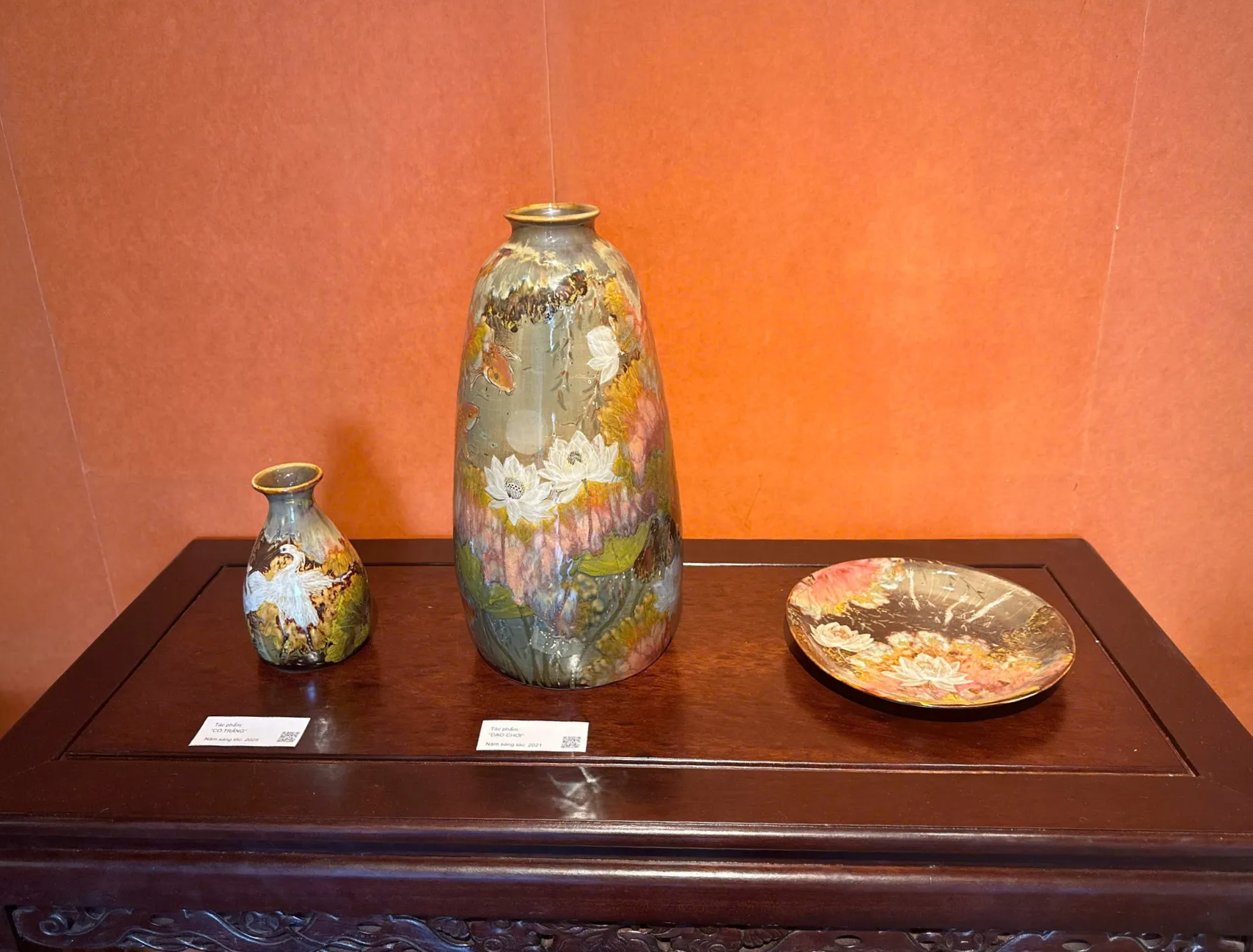
The image of the lotus flower is ever-present in the artist’s work.

One artwork is titled "Me, be va sen" (Mother, Child and Lotus).