Talent attraction a focal point in amended Capital Law
A work environment that fosters creativity and innovation and provides opportunities for talented individuals to grow plays a pivotal role in building their loyalty and unleashing their potential.
National Assembly deputies discussed with The Hanoi Times the importance of the new provisions of the amended Capital Law in guaranteeing a high-quality workforce for Hanoi.
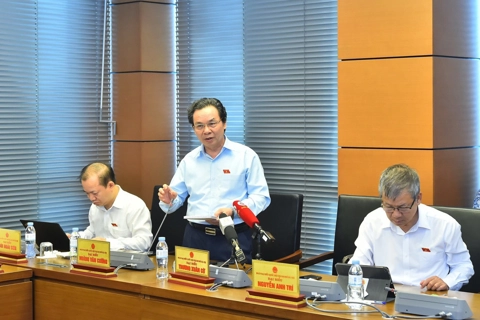
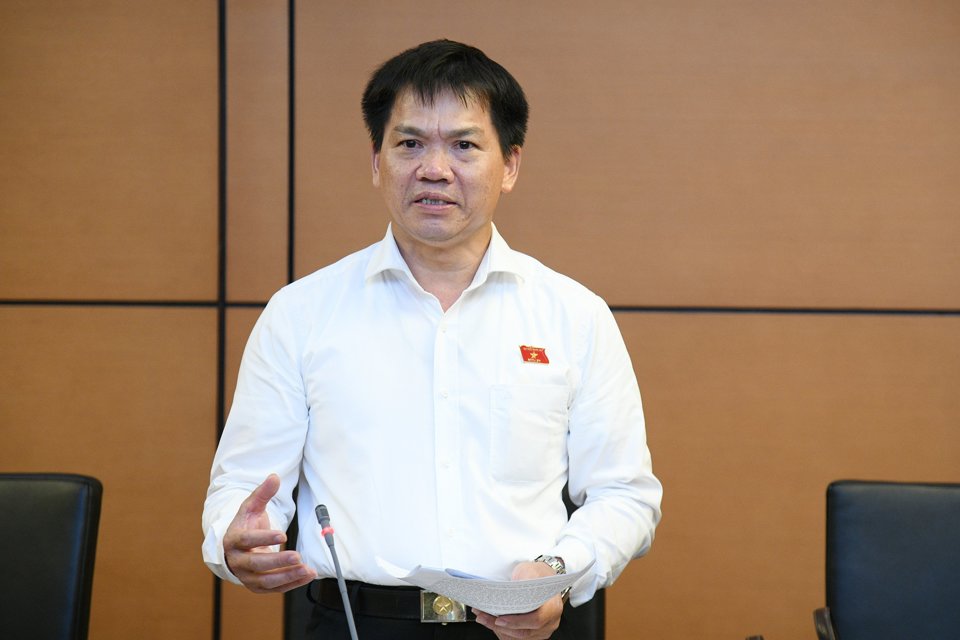
Deputy Duong Khac Mai (Dak Nong): Granting authority to the Hanoi People’s Council to set regulations on talent attraction
| Deputy Duong Khac Mai. Source: quochoi.vn |
The policies on attracting, recognizing, and developing high-quality human resources in the amended Draft Capital Law have evolved from the provisions of the 2012 Capital Law. However, the implementation of these stipulations has exposed certain limitations.
In response to the socio-economic development needs outlined in Resolution No. 15-NQ/TW, guiding the development of Hanoi until 2030, with a vision to 2045, the Draft Capital Law (amended) introduces specific tasks. One crucial task is the necessity for "appropriate mechanisms and policies to attract and utilize high-quality domestic and international human resources."
In line with the requirements of Resolution 15, Article 17 of the Draft amended Capital Law contains two clauses: the first addresses the attraction and appreciation of talents, while the second focuses on the development of high-quality human resources in the capital.
To enhance the practicality of these provisions, it is essential to empower the Hanoi People's Council to issue more specific regulations. These regulations should precisely outline the subjects to be attracted to, with clear classifications and regulations on appropriate qualifications, and policies on recruitment, appointment, and remuneration.
In the endeavor to attract and retain talented individuals, it is imperative to consider various conditions, including the establishment of a democratic, friendly work environment characterized by mutual respect and trust.
The creation of a working environment that fosters creativity and innovation, and provides opportunities for talented individuals to grow and contribute plays a pivotal role in building their loyalty and harnessing their potential. The environment wherein they can showcase their abilities, maximize their strengths, and receive the respect they deserve holds paramount significance and often outweighs considerations of remuneration and salary.
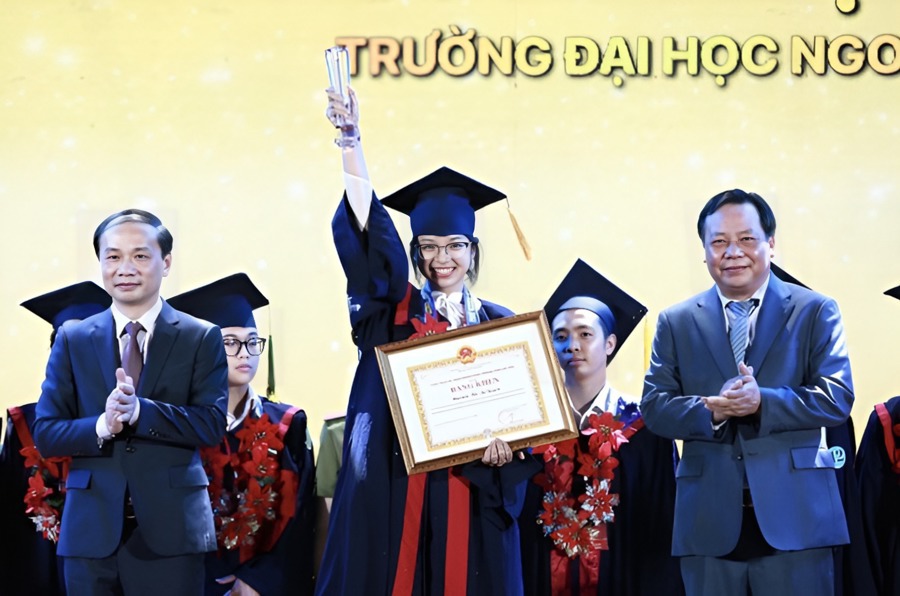
Deputy Head of the Party Central Committee's Commission of Mass Mobilization Pham Tat Thang, along with Deputy Secretary of the Hanoi Party Committee, Nguyen Van Phong, presents Certificates of Merit to exceptional valedictorians who graduated from universities and academies in Hanoi in 2022. Photo: The Hanoi Times |
Deputy Vuong Quoc Thang (Quang Nam): Focusing on incentives for talents
| Deputy Vuong Quoc Thang. Source: quochoi.vn |
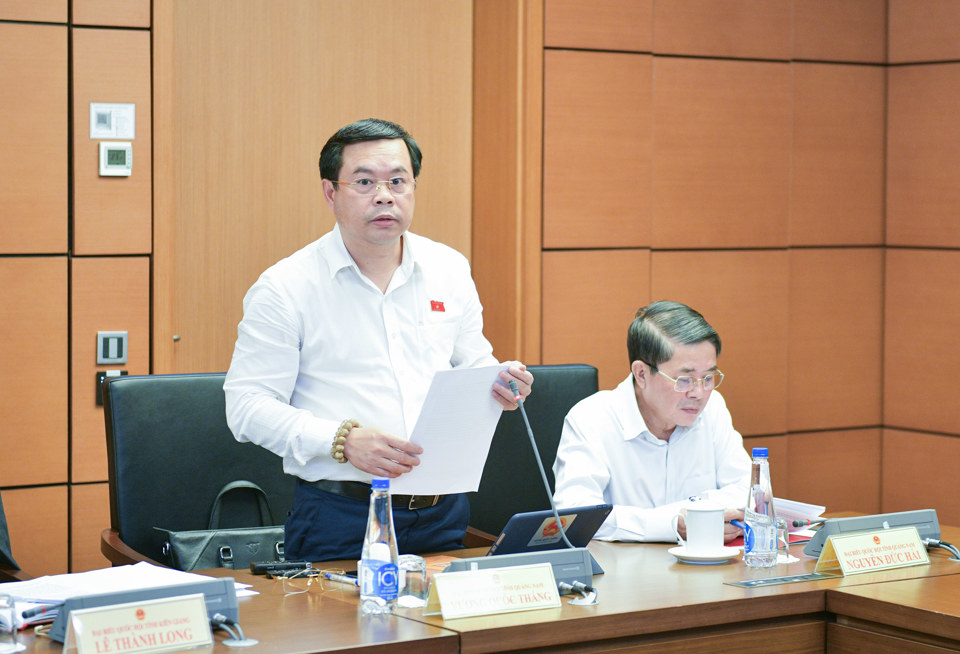
To effectively attract talents and transform the Capital into a "civilized, cultured, and modern" city that serves as a key economic hub for the north and the entire nation, plays a pivotal role in the development of the Red River Delta, and fosters deep international integration, a tailored and workable mechanism must be established for attracting and utilizing the capital's talents.
In addition to existing preferential policies such as those related to recruitment, admission as civil servants and public employees, or holding managerial positions in public service units, and entering into contracts for tasks in fields like science, technology, health, and education, specific regulations need to be introduced for appropriate remuneration. This should encompass salary and additional income incentives, as well as support for housing, travel, and medical care for the talented individual and a specified number of their relatives.
Relying solely on special incentives within the public sector, as outlined in the current draft Law, will pose challenges in competing for and retaining talented individuals committed to the public sector.
Deputy Tran Thi Thu Dong (Bac Lieu): Extraordinary policies in recruiting talents
| Deputy Tran Thi Thu Dong. Source: quochoi.vn |

The draft law should explicitly outline strategies for the effective use of recruited talents. The current scenario of recruiting talented individuals but not providing them with a suitable environment to utilize their skills, has resulted in a sense of discouragement among many officials and civil servants. This, in turn, has contributed to a growing inclination among them to leave the public sector.
According to Ministry of Internal Affairs statistics, approximately 40,000 civil servants and public employees have left the public sector in less than three years.
The draft law might consider incorporating criteria from the Global Talent Competitiveness Index (GTCI) for evaluation purposes. The GTCI includes four crucial criteria: Attracting talent, Developing talent, Retaining talent, and Creating favorable conditions for talent, along with two consideration criteria: Vocational training skills/techniques and Global knowledge skills.
Cities like Hanoi undergo different stages of development with specific requirements, particularly in attracting and appreciating talents. Recognizing the autonomous authority of the Hanoi People's Council in formulating policies and regulations to attract talent over time is essential.
Although Hanoi has experience implementing Resolution No. 14/2013/NQ-HDND dated July 17, 2013, concerning the policy of utilizing talented individuals in building and developing the capital, the provisions of the resolution differ significantly from the general national mechanism for recruiting cadres, civil servants, and public employees.
Notably, the resolution provides initial material incentives and financial support for capacity building. However, considering the variance in spending levels between the Capital and other localities, these incentives may not necessarily be outstanding. Therefore, granting the Capital government stronger autonomy in the talent recruitment and utilization mechanism is imperative.
Article 17 of the Draft amended Capital Law consists of two clauses. The first clause focuses on the attraction and utilization of talents, while the second deals with developing high-quality human resources for the Capital. Attracted subjects encompass Vietnamese citizens and foreigners with outstanding abilities, high professional qualifications, special talents in various fields, practical experience, remarkable projects, products, or achievements, as well as significant contributions to the development of a field or industry in the capital. Vietnamese citizens under these categories will enjoy preferential treatment such as consideration for admission, acceptance as civil servants and public employees, and access to regimes and policies as prescribed by the Hanoi People's Council. They may also sign contracts to work or hold management positions at public service units. Foreigners, on the other hand, can sign contracts to perform tasks in science and technology, healthcare, and education with appropriate remuneration policies. For the development of high-quality human resources in the Capital, the Draft Law introduces support policies funded by the city budget. These policies aim to invest in the development of national key training institutions with multi-level education, providing training and overseas education opportunities for cadres, civil servants, public employees, students, and pupils in the capital. Additionally, the law proposes the creation of national and regional centers for training and high-quality professional internships in the capital, contributing to the development of human resources with advanced vocational skills in line with the goals of industrialization, modernization, and attracting foreign investment. |