The US remains Vietnam’s largest textile and garment export market
Vietnam strengthens its position as the world’s second largest garment exporter with the US remaining its biggest market.
THE HANOI TIMES — The United States remained Vietnam’s largest and most stable market for textile and garment exports, with a turnover of over US$13.4 billion during January-September, up 12% year-on-year.
Textile and garment exports to the US accounted for nearly half of Vietnam’s total during the first three quarters, reaffirming the US’s firm position in the global supply chain of the industry.
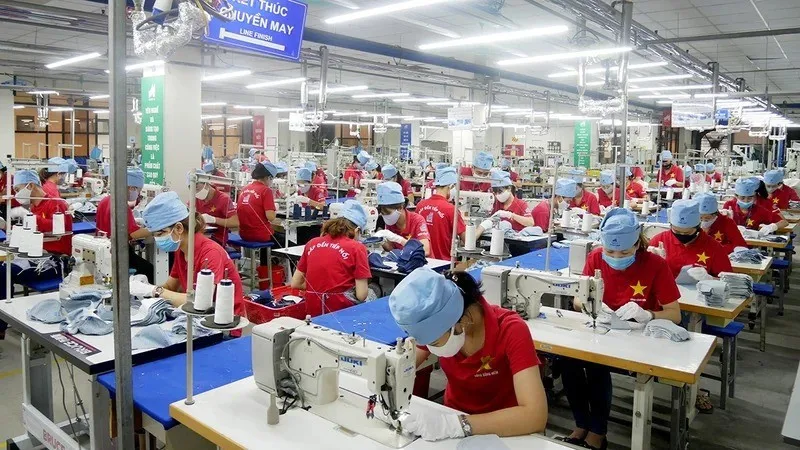
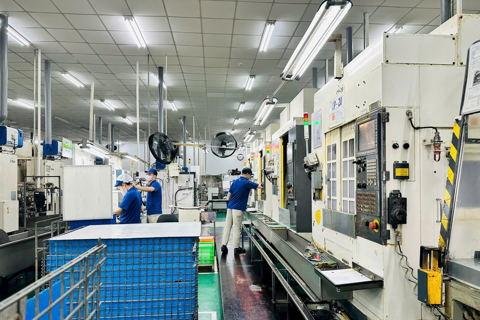
Textile and garment export production at Garment 10 Corporation. Photo: Nhan Dan Newspaper
According to the General Department of Customs, Vietnam’s textile and garment exports in January-September gained 8.6% on-year to early $30 billion. In September alone, the figure was $3.2 billion. However, the figure was down 15.6% on-year.
In 2024, Vietnam’s textile and garment industry recorded a total export value of $44 billion, up about 11% from the previous year, securing the country’s position as the world’s second-largest textile and garment exporter, behind China.
Vietnamese products are now available in 66 countries and territories, covering around 50 different product categories. Other key markets included Japan and South Korea, where textile and garment exports reached $3.3 billion and $2.2 billion, respectively.
According to Vu Duc Giang, Chairman of the Vietnam Textile and Apparel Association (VITAS), part of this success comes from the shift of orders from Bangladesh.
These are mainly basic, low-value orders, suitable only for certain manufacturers, particularly those specializing in mass production.
For 2025, the sector aims for an export value of $47–$48 billion, up 6%–9% annually, driven by free trade agreements (FTAs), supply chain shifts and global economic recovery.
Still, the industry faces challenges such as high input material costs, import dependency and volatile international tariff policies.
To sustain growth, Giang advised local producers and exporters to enhance internal capacity, including workforce training, AI and robotics application in design and production, circular business models and explore other advanced export methods.
He also recommended that Vietnam diversify export markets and expand beyond traditional destinations like the US, EU, Japan, South Korea and Taiwan to potential ones such as China (for high-value goods), Canada, Russia, the UK and ASEAN countries.
The industry must attract green FDI and domestic investment in eco-compliant industrial parks, develop domestic material supply chains to meet rules of origin under FTAs and strengthen the domestic market and Vietnamese brands, he said.