Underground tunnels between metro lines planned in Hanoi
The local authorities plan to spend VND113 billion (US$4.4 million) to build the tunnel connecting two metro lines.
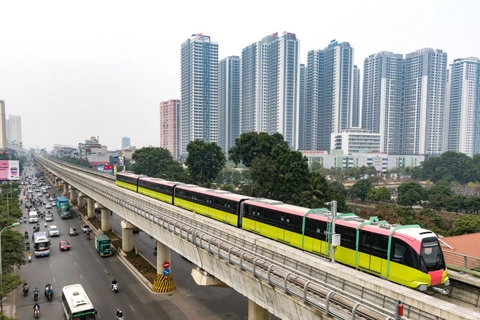
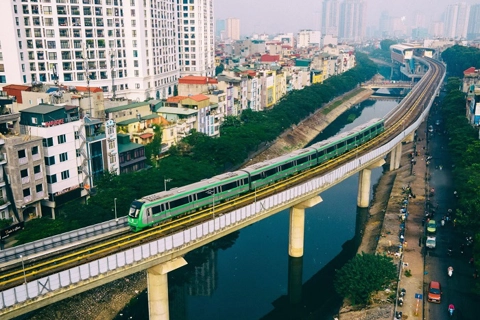
The Hanoi Department of Transport has prepared a proposal and feasibility study report for the construction project of a tunnel between the Cat Linh – Ha Dong (Line 2A) and Nhon – Hanoi Station (Line 3) sections of the urban railway.
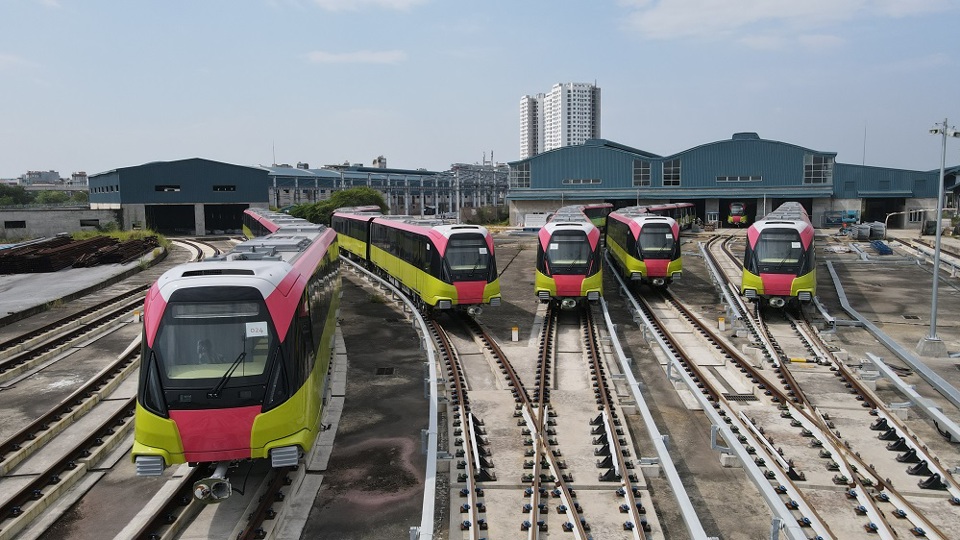
| A tunnel linking these two urban railway lines will enhance connectivity and convenience for commuters. Photo: The Hanoi Times |
This project is one of several key transportation initiatives aimed at alleviating traffic congestion and reshaping the city's infrastructure.
In particular, the agency has proposed a plan to construct pedestrian tunnels and interchanges in the city. The first of these would be the pedestrian tunnel between the elevated Cat Linh Station (Line 2A) in Dong Da District and the underground S10 Station (Line 3) in Ba Dinh District.
The Department submitted the investment proposal and feasibility study to the Hanoi People's Committee and the Department of Planning and Investment for approval.
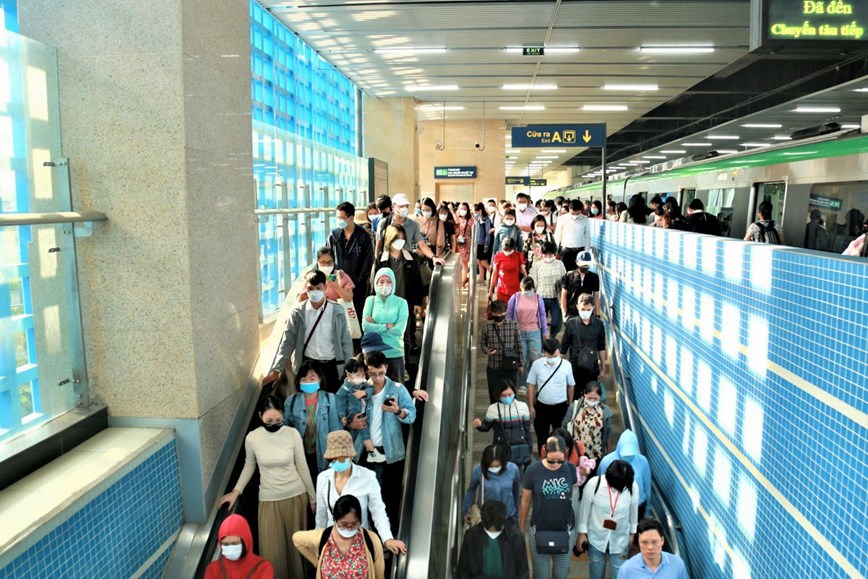
Passengers will use stairs, escalators, and lifts to reach Cat Linh Station (Line 2A) from the tunnel, which will connect to the transfer level of Line 3 Station S10. Hanoi’s Department of Transport has estimated the total investment for this project at VND113 billion ($4.4 million).
The construction of a tunnel linking these two urban railway lines will enhance connectivity and convenience for commuters using the metro. It will also help people to utilize urban railways, promoting green transportation and environmental protection.
| Hanoi aims to complete the urban railway system by 2035. |
Completing urban railway system by 2035
In recent years, Hanoi has focused its resources on the investment and operation of many important transportation infrastructure projects, significantly contributing to the economic and social development of the capital. However, faced with the demands of growth, and urbanization, the city's transportation system is under immense strain due to the rapid increase of private vehicles, traffic congestion, and environmental pollution, resulting in a waste of social resources. Therefore, developing urban railway systems in Hanoi is a key task and necessity for the new development phase.
Recently, the Hanoi Urban Railway Management Board has submitted a proposal for a comprehensive plan to develop the capital's urban railway system until 2035.
The project acknowledges the role of urban railways as the backbone of the city's transportation infrastructure.
Developing the urban railway system is considered necessary and a key driver for the city's fast and sustainable socio-economic development strategy in the coming years, noted the agency.
The development of urban railways is linked to urban development, environmental protection, and the promotion of industrialization and modernization, and provides a boost to regional connectivity in the capital area.
The project also sets specific goals: to start construction of Line 2 from Nam Thang Long to Tran Hung Dao by 2025 to begin preparing investment proposals for urban railway lines with investment plans before 2030; to complete construction and issue resolutions on mechanisms, policies, and special regulations for urban railways to accelerate preparation and simultaneous investment implementation.
By 2030, the city strives to build and put into operation about 96.8 out of 397.8 km (24%) of the remaining lines in the current urban railway network of the capital. The goal by 2035 is to complete the urban railway system in Hanoi, bolstering connectivity with 10 neighboring cities/provinces in the capital region.