UNFPA, KOICA extend support to victims of violence in Vietnam
Anh Duong House provides a wide range of services, including health care, psychological support, counseling, social welfare services, emergency shelters, police protection, legal and justice services, and referrals for GBV survivors
Victims of violence in Vietnam will continue to get support through bridge-phase activities in the innovative One Stop Service Center model, which is commonly known as “Anh Duong House” in a US$2.5-million project funded by the Korea International Cooperation Agency (KOICA).
The latest move demonstrates a grant arrangement under which KOICA will provide financial support worth $250,000 to the United Nations Population Fund (UNFPA) to continue to support Anh Duong House and its hotline for the victims in the project for the period 2017-2021.
The grant arrangement covers a bridge phase through 2023 when a new and larger project is expected to be launched to organize outreach communication activities and advocacy efforts to sustain and replicate the model in other locations.
UNFPA will work in partnership with Vietnam’s Ministry of Labor, Invalid and Social Affairs and Quang Ninh Province to implement the activities to ensure the continuous provision of integrated essential services for survivors of gender-based violence.
| KOICA Vietnam Country Director Cho Han Deog speaks at the signing ceremony held on July 15. Photos: UNFPA |
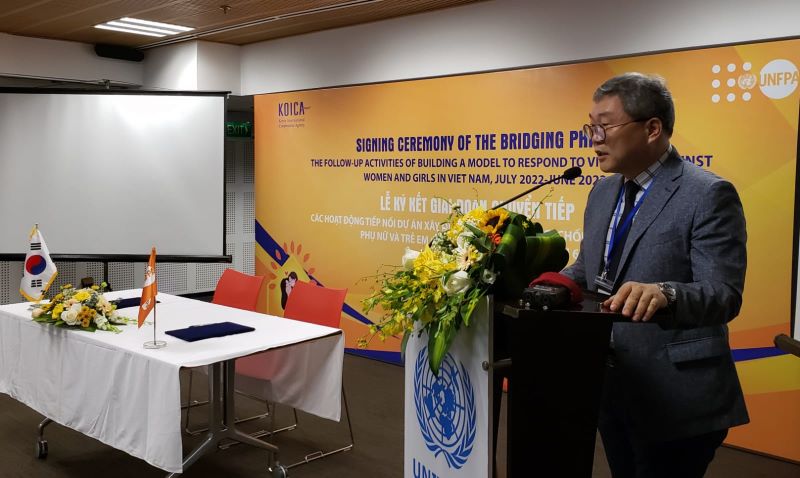
Speaking at the signing ceremony held on July 15, KOICA Vietnam Country Director Cho Han Deog stressed that during his recent visit to Anh Duong House in Quang Ninh, he observed how the House has effectively provided support and helped vulnerable women and girls.
He said: “We want this model to be replicated in other locations. At KOICA, we embrace a zero-tolerance culture that says NO to any forms of gender-based violence (GBV).”
Anh Duong House provides a wide range of services, meeting international standards, including health care, psychological support, counseling, social welfare services, emergency shelters, police protection, legal and justice services, and referrals for many GBV survivors, not only in Quang Ninh Province but also in 20 cities and provinces throughout the country.
Meanwhile, Anh Duong House’s hotline service, which is available 24/7, has so far received more than 15,300 calls in two years. As many as 93.6% of survivors of violence who have called the hotline are female, and most GBV survivors are aged 16–59. Minors under the age of 16 account for 10% of calls.
In addition, nearly 500 service providers from police, justice, health, and social work from both provincial and grassroots levels in Quang Ninh, received training for the provision of essential services for GBV survivors.
With technical support from UNFPA, Anh Duong House has been duplicated in Thanh Hoa, Ho Chi Minh City, and Danang.
| UNFPA Representative in Vietnam Naomi Kitahara at the event. |
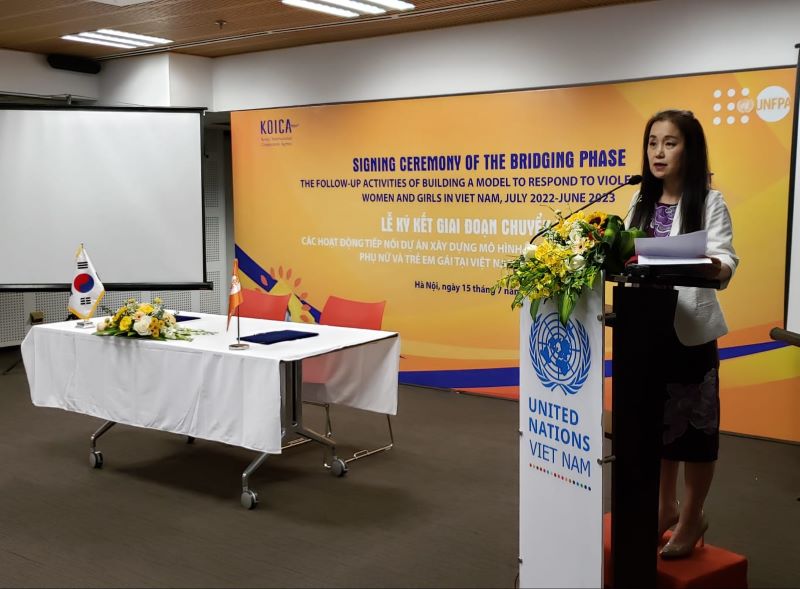
UNFPA Representative in Vietnam Naomi Kitahara said: “Zero GBV and harmful practices” is one of the three main pillars in the new UNFPA Strategic Plan for 2022-2025, and a clear priority for the UNFPA Vietnam’s new country program 2022-2026. UNFPA will scale up efforts to end gender-based violence and harmful practices in Vietnam.”
During the “bridging phase” through the end of June 2023, 8 training courses will be organized for managerial staff and service providers in Quang Ninh province and locations which are planned to set up additional One Stop Service Centers (OSSC).
Two one-day advocacy workshops will be organized for decision-makers in Quang Ninh as well as at the central level to advocate for the allocation of the budget for maintaining and replicating the OSSC model. In addition, five innovative communication events will be arranged to raise public awareness of violence against women and girls and disseminate information on the hotline of the Anh Duong House.
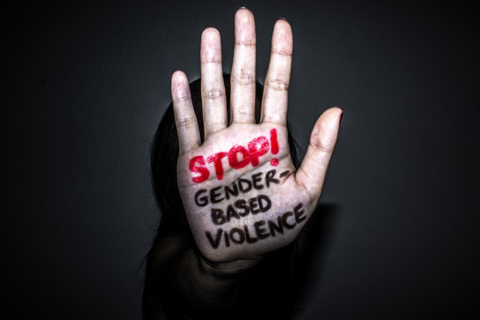
Gender-based violence (GBV) is a manifestation of gender inequality that is deeply rooted in Vietnam. According to the 2019 national study on violence against women, nearly 2 in 3 women aged 15-64 experienced at least one form of physical, sexual, psychological and/or economic violence in their lifetime. GBV is very much hidden in society, when more than 90% did not seek any help from public services, and half of the women who experienced violence told no one about it. This kind of violence costs Vietnam 1.81% of its GDP.