Vietnam accelerates plan to develop new free trade zones nationwide by 2030
Vietnam moves to pilot major free trade zones in major cities next year to drive economic growth and boost competitiveness.
THE HANOI TIMES — Vietnam plans to establish 6-8 free trade zones or similar models across the country by 2030, with the first three in Danang, Haiphong and Ho Chi Minh City scheduled for completion by 2026.
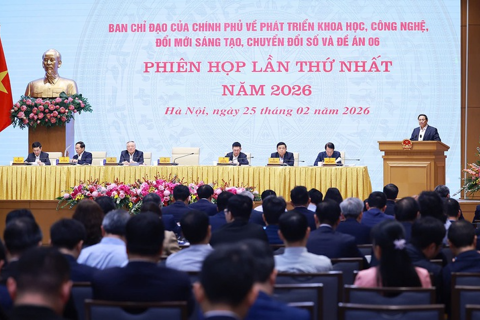
The Ministry of Finance presented the proposal at a government meeting on December 5.
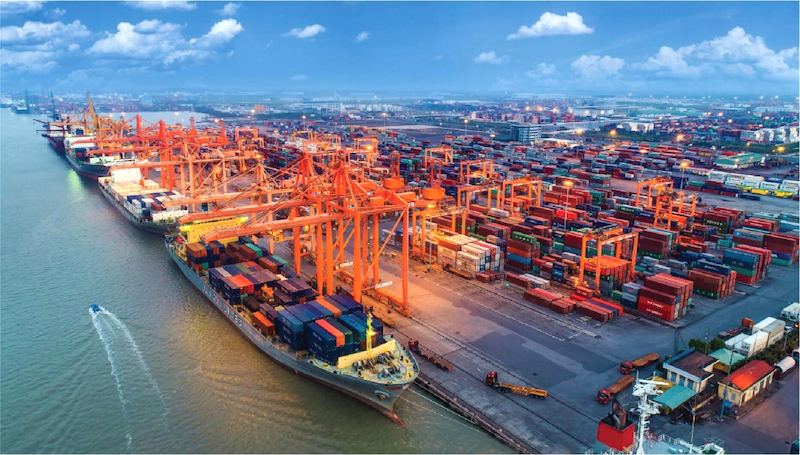
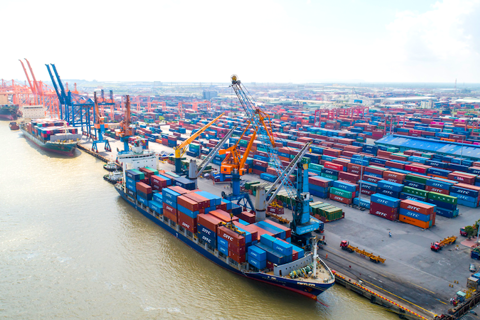
Lach Huyen deep-water port, part of the Haiphong port complex, is among Vietnam’s most modern and largest seaports today. Photo: Cong thuong emagazine
The ministry also aims to develop 8–10 competitive free trade zones by 2045. These zones could contribute 15%–20% of Vietnam’s total GDP.
The ministry noted that more than 7,000 special economic zones and free trade zones operate worldwide and play an increasingly important role in the development strategies of emerging economies.
Modern free trade zones have evolved into multifunctional hubs that combine industry, urban development, services, finance, high technology and innovation. These functions help countries mobilize resources more effectively.
Vietnam still lacks a complete legal framework for free trade zones as no unified regulations currently govern their mechanisms or operations.
In recent years, the National Assembly has allowed pilot policies in Danang and Haiphong, some of which contain elements related to free trade zones.
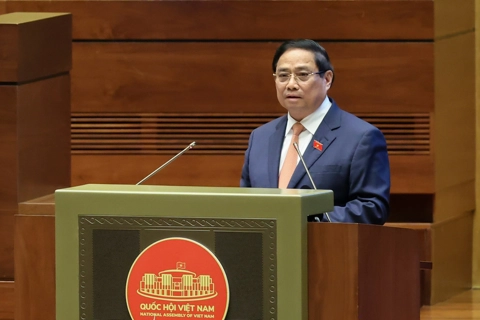
At the meeting, Prime Minister Pham Minh Chinh called for bold and competitive policies to pilot several free trade zones.
He said the model must be feasible, effective and able to contribute meaningfully to socio-economic development.
The prime minister stressed that Vietnam must define clearly what a free trade zone is and how it differs from an international financial center.
Chinh said pilot locations must be selected carefully to ensure regional balance. He noted that the number of zones will be limited and assessed over a set period.
He asked ministries to study international experiences and design breakthrough mechanisms suited to Vietnam’s conditions.
These policies must avoid disrupting the broader investment environment but still include appropriate special rules for the pilot zones, the prime minister added.
To implement the pilot effectively, Chinh urged ministries to turn policy directions into concrete mechanisms, develop infrastructure, attract resources, deploy advanced technology, apply smart management and train qualified human resources.
He emphasized the need to secure social welfare, protect the environment, streamline governance, strengthen decentralization and ensure clear oversight.
Participants at the meeting agreed that the proposal for free trade zones is urgent and essential.
They said the initiative will create the political foundation needed to turn these zones into new growth engines for Vietnam’s economy.