Vietnam eyes top 20 global trading rank with US$900 billion trade goal
With trade expected to reach US$900 billion, Vietnam plans bold reforms to boost productivity, develop AI and the digital economy and sustain growth, targeting GDP expansion of at least 10% and per capita income of US$5,400–5,500 in 2026.
THE HANOI TIMES — Vietnam’s trade is projected to reach about US$900 billion in 2025, nearly doubling over the 2021–2025 period and placing the country among the world’s top 20 trading nations, as the government targets double-digit GDP growth and new growth drivers, including the digital economy and artificial intelligence in 2026.

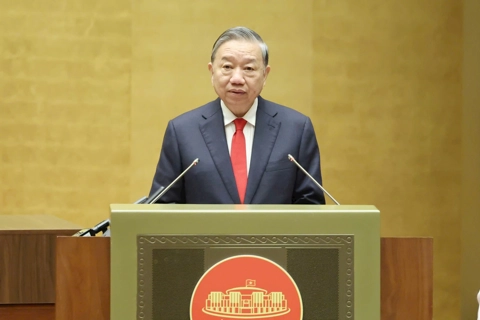
Prime Minister Pham Minh Chinh at the National Assembly meeting. Photos: quochoi.vn
Prime Minister Pham Minh Chinh revealed the figures on October 20 while presenting the 2025 socio-economic development report and the 2026 plan at the opening session of the 10th National Assembly meeting, the final session of the 15th tenure 2021–2025.
The government leader said Vietnam has maintained one of the world’s highest growth rates in recent years. GDP in 2025 is expected to expand by more than 8% with an average annual growth of 6.3% during 2021–2025, compared to the previous term’s 6.2%.
The economy’s size has expanded 1.5 times from US$346 billion in 2020 to about US$510 billion in 2025, moving Vietnam up five places to rank 32nd globally. GDP per capita is projected to be 1.5 times higher at around US$5,000 in 2025, placing the country in the upper middle-income group. State budget revenue is estimated at VND9.6 quadrillion (US$378 billion), 1.36 times higher than the previous term and well above the target of VND8.3 quadrillion (US$327 billion).
To date, about one million businesses are operating nationwide, up more than 20% from 2020. However, the prime minister acknowledged that the economy still faces challenges, including pressure on macroeconomic stability, complex developments in real estate, gold and bond markets and difficulties in several production sectors.
Phan Van Mai, Chairman of the National Assembly’s Economic and Financial Committee, noted that although GDP growth remains high, the quality of growth is limited as the economy still depends heavily on processing and imported materials and technologies.
He added that domestic enterprises, especially private ones, have yet to gain a strong position in global value chains. Supporting industries are developing slowly, with a localization rate of only 36.6%. The foreign-invested sector continues to dominate, accounting for more than 75% of exports and nearly 70% of imports. This poses challenges to enhancing economic self-reliance and long-term competitiveness.
Mai also highlighted the need for a more realistic assessment of the real estate market, as credit to the sector rose nearly 19.7% by end-August while production and trade businesses still face credit constraints.
To achieve the ambitious growth target for 2026 amid global uncertainty, Mai proposed that the government pursue flexible and prudent fiscal and monetary policies, ensure liquidity and tighten oversight of the gold market. He also suggested promoting the domestic market, boosting consumption and expanding sustainable exports to reduce external risks.
He said the early operation of international financial centers in Ho Chi Minh City and Danang, along with next-generation free trade zones, could create new momentum for growth.
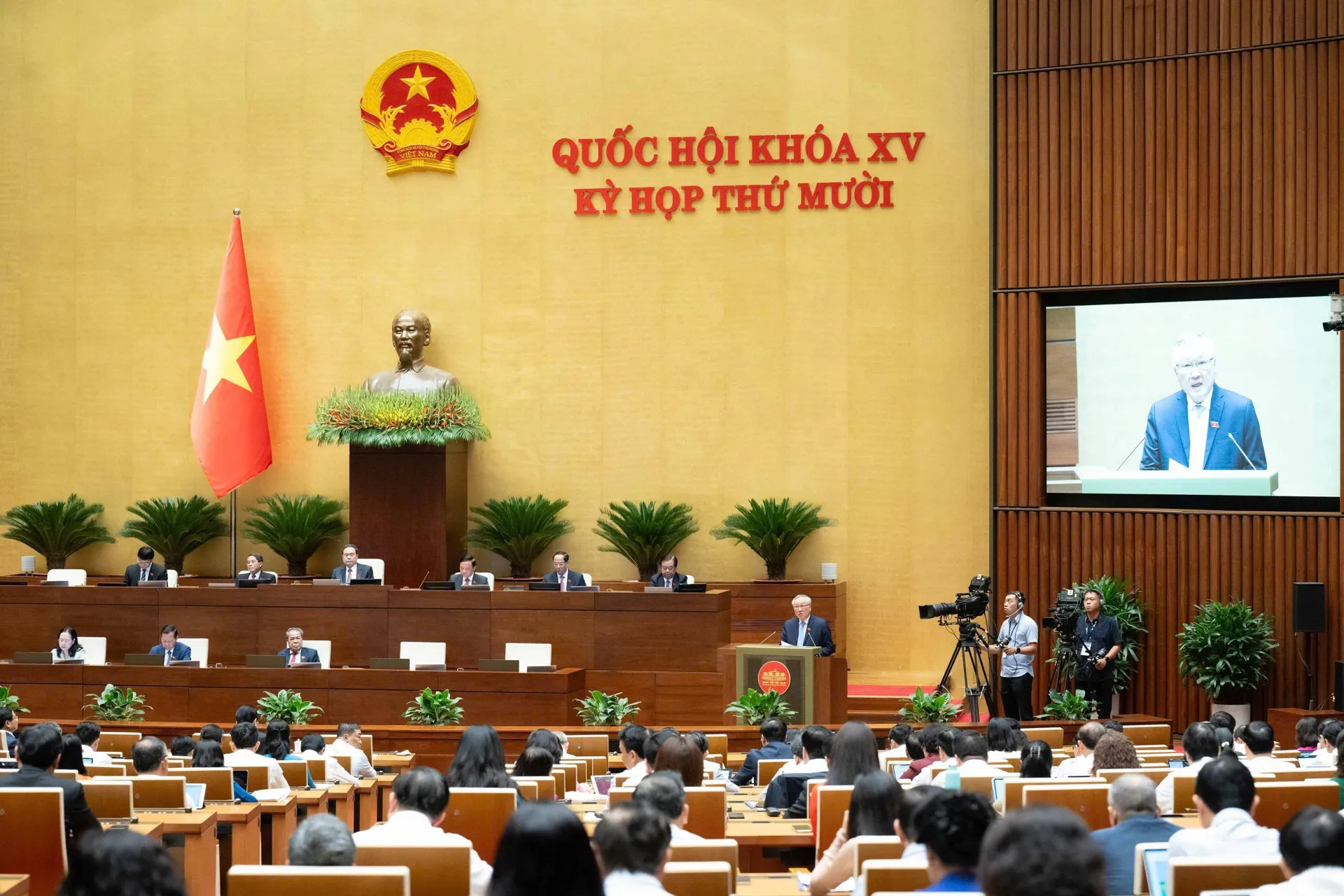
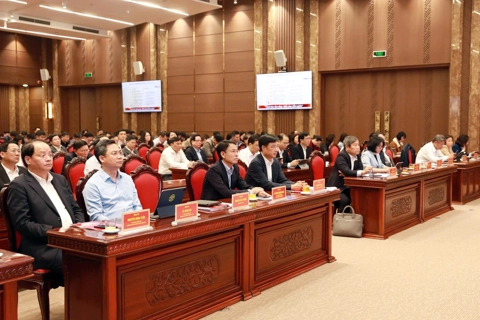
Overview of the meeting.
Priorities for 2026
The prime minister said the government will focus on promoting growth, maintaining macroeconomic stability, controlling inflation and ensuring key economic balances. Chinh added that the economy aims to grow by at least 10% with GDP per capita reaching $5,400–$5,500. Average inflation is expected at around 4.5% and labor productivity is projected to rise by 8%.
To reach these goals, the government will expand new growth engines such as the digital economy, semiconductor industry and artificial intelligence and develop sandbox mechanisms for new business models.
Chinh said the legal framework will be completed to enable synchronized development across financial, securities, gold, science and technology, labor and real estate markets, all of which must be established in 2026. The data market will also be developed along with pilot programs for digital asset markets.
He noted that the State Bank of Vietnam is drafting a resolution to pilot a domestic gold exchange by October, operating in three phases, starting with physical gold trading, followed by raw gold and bullion and eventually derivative products.
In the real estate market, the Ministry of Construction will pilot an online property exchange platform during the 2026–2027 period, allowing citizens to buy, sell, transfer and value real estate online. Properties traded on the platform will include completed homes, future housing, and land plots with infrastructure. Currently, most real estate transactions take place on primary market platforms run by developers.
In the financial and digital asset sector, Vietnam will pilot operations for up to five licensed enterprises over a five-year period, with the Ministry of Finance expected to issue licenses before 2026.
Alongside asset market development, Chinh said the government will finalize mechanisms for special economic zones in Van Don, Van Phong and Phu Quoc, and continue cutting red tape, reducing administrative procedures and business compliance costs by half compared to 2024.