Vietnam and Russia strengthen parliamentary cooperation to boost trade and strategic ties
The top legislators’ talks centered on the implementation of the agreement, mainly in oil, gas and energy to make them the key pillars in the relations.
THE HANOI TIMES — Chairman of the Russian State Duma Vyacheslav Volodin reaffirmed Russia’s strong support for its comprehensive cooperation with Vietnam and expressed readiness to work with the Vietnamese National Assembly to expand mechanisms and open new areas of collaboration.
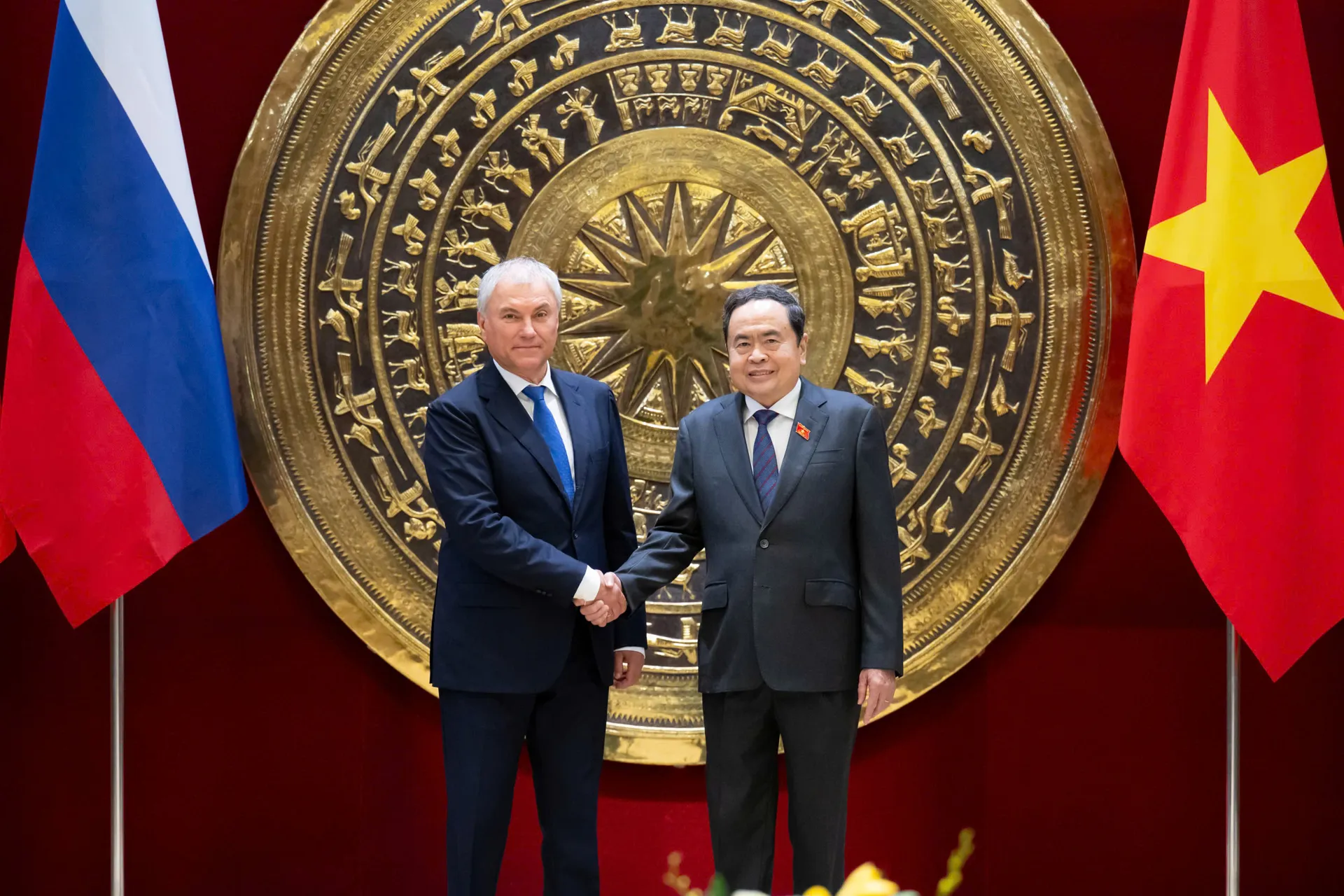
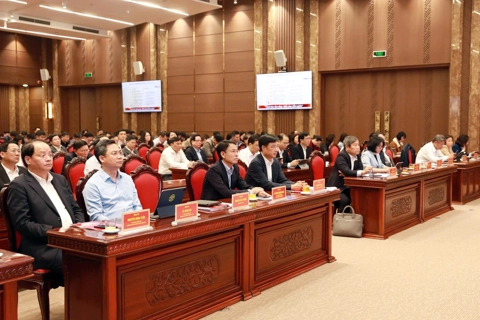
Vietnam's National Assembly Chairman Tran Thanh Man (right) and Chairman of the Russian State Duma Vyacheslav Volodin co-chair the 4th session of the Vietnam-Russia Inter-parliamentary Cooperation Committee in Hanoi on September 28. Photos: Quochoi.vn
His visit on September 28–29 highlights the growing role of Vietnam–Russia inter-parliamentary cooperation as an effective channel to improve the legal framework and promote key bilateral interests.
Vietnamese Ambassador to Russia Dang Minh Khoi noted that the Vietnam–Russia Inter-Parliamentary Cooperation Committee is the highest-level and first mechanism of its kind between Vietnam’s National Assembly and a foreign legislature.
Volodin’s return to Vietnam after two years shows Russia’s commitment to strengthening this channel and deepening the Comprehensive Strategic Partnership (CSP).
During the visit, National Assembly Chairman Tran Thanh Man and Volodin co-chaired the 4th session of the Inter-Parliamentary Cooperation Committee on September 28. The event coincided with preparations for the 75th anniversary of diplomatic ties, reflecting both sides’ efforts to elevate parliamentary cooperation alongside their traditional friendship and CSP.
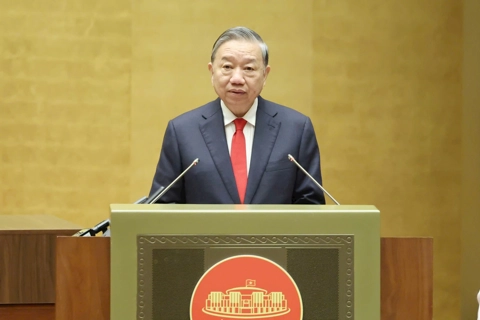
At the talks, NA Chairman Man emphasized Vietnam’s respect for its traditional friendship and CSP with Russia, urging the State Duma to remove obstacles and strengthen coordination in economic, trade, investment, energy and science and technology fields.
Volodin reiterated Russia’s readiness to cooperate more closely with Vietnam’s legislature to translate political commitments into practical results and build new mechanisms for mutual benefit.
Both leaders agreed to step up coordination on economic, trade and investment ties, including the Vietnam–Eurasian Economic Union Free Trade Agreement (EAEU which includes Russia, Armenia, Belarus, Kazakhstan and Kyrgyzstan). They also recognized progress in energy, oil, gas and nuclear power cooperation.

The senior officials visits a display of the Vietnam-Russia friendship in Hanoi.
Significant political event
Ambassador Khoi said that the visit reaffirms both countries' values of their traditional friendship and determination to consolidate the CSP. It also follows major directions agreed at the highest level during Russian President Vladimir Putin’s visit in June 2024 and General Secretary To Lam’s visit in May 2025.
He stressed that parliaments play a crucial role in reinforcing bilateral cooperation, overseeing the implementation of high-level agreements and fostering exchanges between specialized committees, parliamentary friendship groups and at international forums.
The visit also provided an opportunity for leaders to discuss cooperation in trade, economy, energy, science, technology, education, culture, defense, security and people-to-people exchanges, while addressing bottlenecks and exploring new directions.
Besides the Intergovernmental Committee, the Inter-Parliamentary Cooperation Committee is an important tool for advancing bilateral cooperation. Its third session in Moscow in September 2024, with government participation, helped resolve several issues.
If maintained effectively, this parliamentary channel will continue to support major projects, especially in energy. At the third session, Volodin affirmed that Russia regards Vietnam as a close partner and the State Duma supports strengthening friendly relations and the CSP.
Ambassador Khoi suggested expanding cooperation in science, technology, education and training – areas where Russia is strong and Vietnam has high demand – while also considering labor cooperation and easing travel between the two countries.
Russian Ambassador to Vietnam Gennady Bezdetko stressed that the visit aims to monitor the implementation of agreements in trade, energy, science, education, culture and people-to-people exchanges, calling it “of utmost importance.”

During the visit, Volodin paid tribute at the Mausoleum of President Ho Chi Minh and the Monument to Heroic Martyrs. He also met General Secretary To Lam, President Luong Cuong and Prime Minister Pham Minh Chinh, while attending the official welcome ceremony and visiting cultural, educational, technological and historical sites, including the Vietnam–Russia Tropical Center.
Harness the parliamentary channel
Vietnam and Russia have deepened political trust across Party, State, Government and parliamentary channels, maintaining regular high-level exchanges and joint participation in multilateral events.
This cooperation has helped boost bilateral trade, which rose 26% year-on-year to US$4.6 billion in 2024 and reached $3 billion in January–July 2025.
In investment, Russian investors manage $990 million in 207 projects in Vietnam, while Vietnamese investors have $1.6 billion in 17 projects in Russia. Oil, gas and energy remain key pillars, but cooperation has expanded to agriculture, air transport, digital economy, cyber and data protection, intellectual property, clean and nuclear energy and education.
In parliament, both sides maintain friendship groups, exchange delegations and coordinate at forums such as AIPA, IPU, MSEAP and the World Speakers’ Conference. They emphasized the need to broaden inter-parliamentary ties, strengthen cooperation at regional forums, oversee agreement implementation, address global challenges and advance the 2030 Sustainable Development Agenda.
The 4th session aimed to refine the legal framework supporting both countries and turn commitments into practical gains for peace and stability, focusing on trade, energy, multilateralism, science, technology and people-to-people exchanges in education, culture and tourism.
Held in an atmosphere of trust and candor, the session concluded with a Joint Statement on future inter-parliamentary cooperation, with the fifth session scheduled in Russia next year.