Vietnamese exports face growing trade defense pressures
By maintaining transparency and nurturing long-term trust with partners and customers, Vietnamese enterprises not only can safeguard their market share but also confidently expand their presence in the global arena.
THE HANOI TIMES — Vietnamese goods face mounting challenges as export markets tighten trade defense measures and imported goods engage in unfair competition.
In an interview with Hanoimoi Newspaper, Chu Thang Trung, Deputy Director of the Trade Remedies Authority under the Ministry of Industry and Trade, discussed the situation and its implications for Vietnamese exporters.
How many trade defense cases has Vietnam faced, and what challenges do they pose for exports?
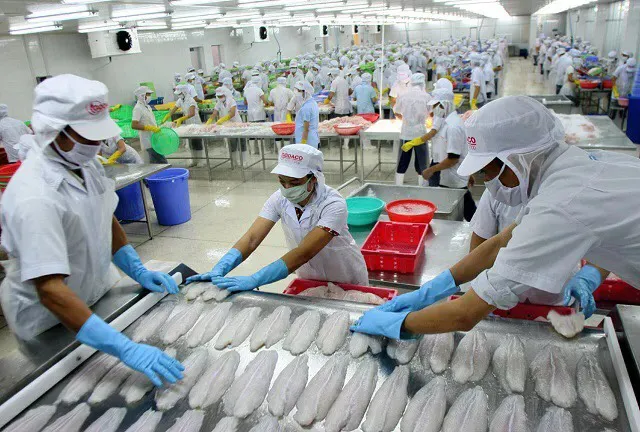
Processing frozen catfish for export at Go Dang Company, My Tho Industrial Park, Tien Giang Province. Photo: Hung Viet/Kinh te & Do thi Newspaper
As of mid-2025, Vietnam has dealt with more than 291 trade defense cases from export markets around the world. In the first six months of 2025, Vietnamese exports were hit with 14 new trade remedy cases from nine markets, one more than the same period in 2024. The United States remains the most active, accounting for six of these new investigations.
In addition to the new cases, the government, industry associations, and Vietnamese exporters are handling over 100 ongoing cases from previous years. Some measures have been in place for decades, such as the US anti-dumping duties on pangasius, basa, and warm-water shrimp, which undergo annual reviews.
In recent years, investigations have grown both in number and complexity, with many countries exploring unprecedented issues. The scope of products under investigation has also widened, creating risks of losing market share in key destinations, raising legal costs, and damaging the reputation of Vietnamese companies.
These challenges require Vietnamese businesses to improve competitiveness, enhance product quality, and increase transparency in production and operations.
What specific measures are in place to prevent unfair competition from imports and protect domestic production?
Vietnam has signed and joined 17 free trade agreements, gradually reducing average import tariffs.
As the country’s production capacity grows, Vietnamese businesses are confident in competing fairly with foreign enterprises in the domestic market.
However, some imported goods, unable to compete with local products, have resorted to unfair practices such as dumping to capture market share and weaken Vietnamese businesses.
To address this, Vietnam applies trade defense tools to investigate and impose measures that restore fair competition and protect domestic industries.
The Ministry of Industry and Trade has initiated 59 trade defense cases, with 31 measures currently in effect. These have delivered tangible benefits, safeguarding and fostering the development of key industries such as metallurgy, chemicals, building materials, and agricultural processing.
Enterprises in these sectors generate an estimated VND500 trillion (US$19 billion) in annual revenue, employ over 36,000 workers directly, and create hundreds of thousands of indirect jobs, contributing to economic security and social stability nationwide.
What trade defense challenges are expected in the coming period?

Chu Thang Trung, Deputy Director of the Trade Remedies Authority under the Ministry of Industry and Trade. Photo: Hanoimoi Newspaper
Trade defense measures, such as anti-dumping, anti-subsidy, safeguard actions, and measures against evasion, will require thorough research and in-depth analysis to ensure compliance with World Trade Organization (WTO) rules and the free trade agreements to which Vietnam is a party.
At the same time, the rising number of trade defense cases from international partners will demand that Vietnamese businesses strengthen their legal capabilities, improve product quality, and operate with greater transparency.
In addition, adapting to fast-changing global trade policies, especially new protectionist trends, will create significant pressure on both state management agencies and the business community.
To overcome these challenges, close coordination among all stakeholders is essential to develop effective trade defense strategies while enhancing the competitiveness of Vietnamese goods in international markets.
What will be the Authority’s key priorities in 2025 to strengthen trade defense capacity?
Our priorities include strengthening research and forecasting of global trade trends to promptly identify potential risks, expanding specialized training for our staff in handling trade defense cases, and developing a modern, integrated database on trade defense measures applied by other countries.
We will also enhance international cooperation to exchange experience and improve our capacity to respond.
At the same time, we will focus on raising awareness among the business community, providing them with practical knowledge on trade defense so they can be more proactive in protecting their legitimate rights.
These measures aim to reinforce Vietnam’s internal capacity and ensure the country maintains a strong position in the increasingly deep and complex process of international integration.
In the increasingly complex legal and trade environment, what should Vietnamese businesses do to protect market share and expand internationally?
Vietnamese businesses should take a proactive approach to strengthening their competitiveness. This means investing in research and development, meeting international quality standards, and increasing the added value of their products.
It is crucial for companies to stay up to date with foreign laws and trade policies to reduce risks and prevent potential violations. Building capable in-house legal and trade teams will enable businesses to analyze regulations, anticipate challenges, and devise effective response strategies.
Expanding international partnerships, participating in industry associations, and making full use of free trade agreements can create more opportunities to access new markets. At the same time, adopting advanced technology and digitalizing production and business operations will help optimize costs, boost efficiency, and better meet customer demands.
Equally important is brand building. By maintaining transparency and nurturing long-term trust with partners and customers, Vietnamese enterprises not only can safeguard their market share but also confidently expand their presence in the global arena.
Thank you for your time!