Vietnam Airlines posts record 2025 revenue as international travel fuels profit growth
Vietnam Airlines reported the highest financial results in 2025, driven by rising international travel and operational efficiency, while outlining ambitious passenger and capacity expansion targets for 2026 amid continued recovery in the regional aviation market.
THE HANOI TIMES — Vietnam Airlines posted record consolidated revenue of more than VND121.4 trillion (US$4.7 billion) in 2025, up 10% from a year earlier.
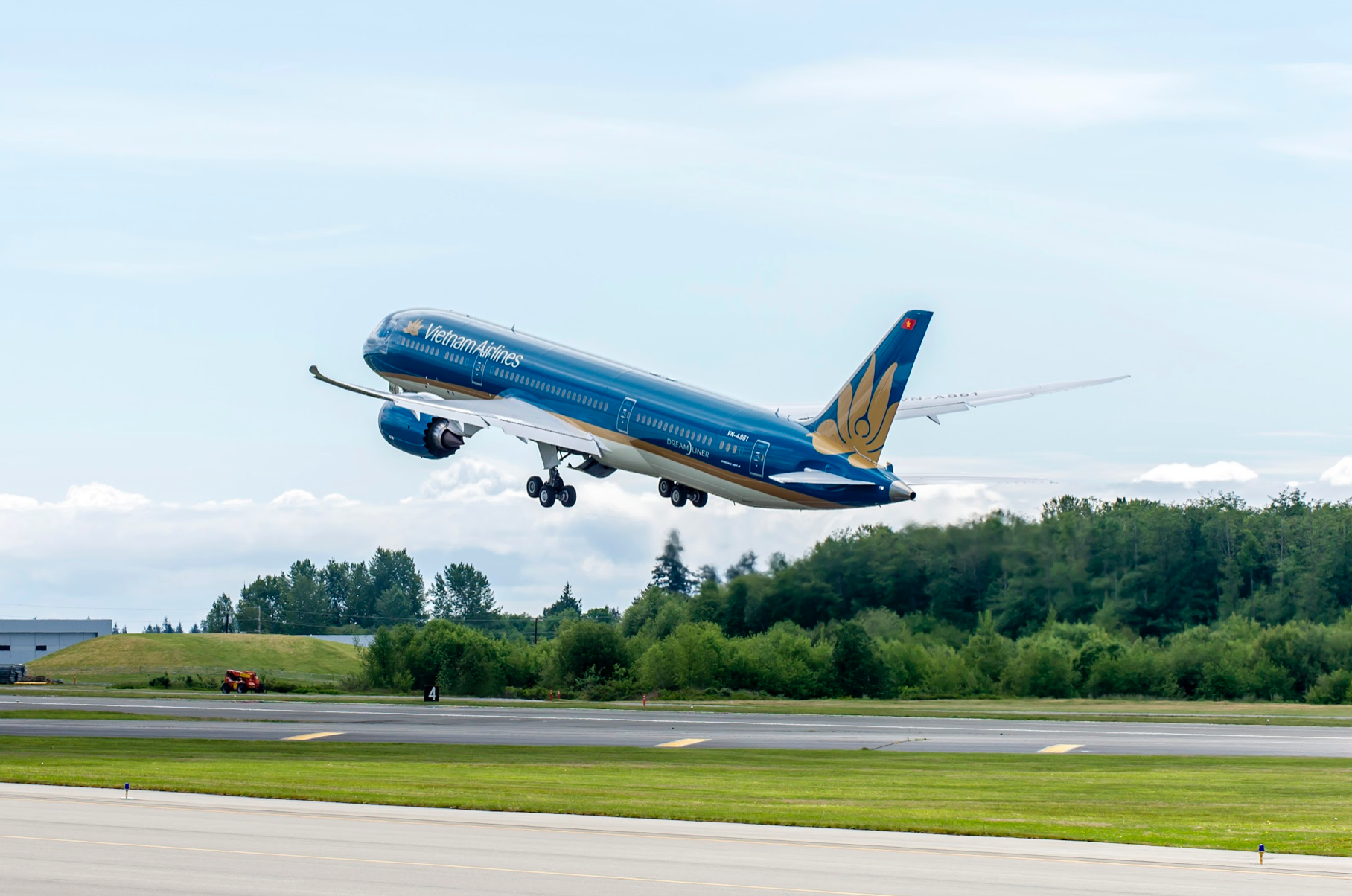
Vietnam Airlines' consolidated profit after tax reached $296.7 million in 2025. Photo courtesy of the company
Consolidated profit after tax exceeded VND7.7 trillion ($296.7 million), while parent-company profit more than doubled to VND5.5 trillion ($212 million), according to the airline’s financial statements.
Contributions to the state budget reached nearly VND3.3 trillion ($127.2 million), up 5%, reflecting the carrier’s expanding role as Vietnam’s economy continued to recover.
Performance remained strong in the fourth quarter of 2025, with revenue rising 12% year on year to more than VND32.3 trillion ($1.2 billion). Pre-tax profit totaled nearly VND540 billion ($20.8 million).
Vietnam Airlines maintained a high seat load factor during the quarter as passenger and cargo volumes increased, particularly on international and regional routes that generate higher yields.
The airline expanded its international network by increasing frequencies on key routes, capitalizing on the year-end peak travel season.
The fourth quarter, traditionally the industry’s strongest period, benefited from rising travel, tourism and trade demand, supporting more efficient fleet utilization and tighter cost control.
Alongside operational gains, the airline continued upgrading service quality and passenger experience. Initiatives included in-flight internet rollout, the launch of its Nha (Elegance) signature fragrance, synchronized services at Tan Son Nhat Airport’s Terminal T3, biometric check-in via VNeID and expanded Lotus Lounge facilities.
In 2025, Vietnam Airlines issued 897 million shares, lifting charter capital to nearly VND9 trillion ($346.8 million) and restoring positive equity for both the parent company and the consolidated group by year-end.
For 2026, the carrier targets more than 29 million passengers, up 13.2% from 2025 and plans to raise available seat kilometers by about 13%, aiming to capture continued growth across the Asia-Pacific market.
Vietnam Airlines had already recorded a profit of more than VND7.9 trillion ($304.4 million) in 2024, as revenue climbed to VND113.7 trillion ($4.4 billion) on the back of a rebound in international travel.