Business
Vietnam better off without China – US trade deal: Brokerage
Since former president Bill Clinton lifted the trade embargo against Vietnam in 1994, relations between the former foes have grown ever warmer, despite or perhaps because of China’s rise as a major regional power.
Tariffs on Chinese goods exported to the US have accelerated manufacturing activity moving from North to Southeast Asia, and Vietnam is best positioned to benefit from this trend, making the country better off without a US – China trade deal, according to Viet Dragon Securities Company (VDSC).
In the January – April period, foreign investors committed to pour US$14.59 billion in Vietnam in the January – April period, marking a four-year high and up 81% year-on-year, revealed the Ministry of Planning and Investment.
Notably, among 51 countries and territories that had fresh projects in Vietnam in the first four months of 2019, China was the largest investor with US$1.31 billion, accounting for 24.53% of the total and nearly double that of Singapore in the second place with US$700 million.
As of present, most attention would go to the Sino-US trade friction given China accounts for nearly half of the total US trade deficit. Although VDSC does not expect this trend to reverse once a deal is struck but it will move Trump’s attention to the next countries that have large trade deficit with the US. And so maybe as long as the focus is solely on China, Vietnam is safe.
Since former President Bill Clinton lifted the trade embargo against Vietnam in 1994, relations between the former foes have grown ever warmer, despite or perhaps because of China’s rise as a major regional power.
Alliances, however, have not deterred the US administration from aggressively pushing the renegotiation of bilateral deals while multilateral deals seem a no-go for Trump. He quickly withdrew from the Trans Pacific Partnership (TPP) upon entering office.
Targeted are those countries with whom the US runs a large trade deficit. Convinced running a trade deficit equals “losing”, the administration has made trade deals one of its priorities. Just recently, President Trump sent a clear message to the international community that his trade wars aren’t finished yet and a weakening global economy will just have to deal with it.
 Among countries that have large trade deficits with the US, Vietnam ranks 5th and is the only country not explicitly and publicly labeled as “making advantage of the US”. Its position is remarkable given it is not a major trading partner accounting for just under 2% of total US trade. But the deficit nearly tripled in the past 10 years. In fact, since the global financial crisis, the trade deficit with Vietnam grew 17.9% per annum on average compared to 7.3% for China over the same period.
Perhaps the US administration is not too bothered by the situation given Vietnam’s main exports to the US are garments, textiles and footwear, accounting for about 40% of total, or perhaps Washington is simply too busy dealing with the EU (US$151 billion trade deficit), Japan and China at the moment.
It is hard to predict when or whether Vietnam will become a target, but it is naive to rule it out on the premise that Vietnam is of strategic importance to the US in Asia, so is Japan.
As little as VietJet Air reconsidering its Boeing purchases on safety concerns could trigger President Donald to tweet. The next day, the market would tremble.

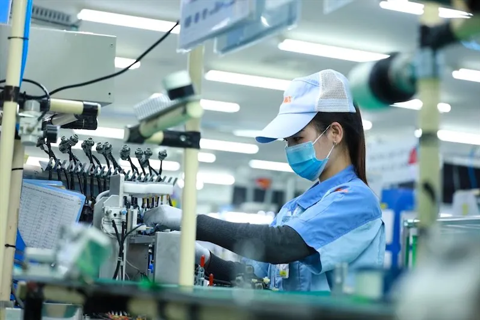
Illustrative photo.
|
Notably, among 51 countries and territories that had fresh projects in Vietnam in the first four months of 2019, China was the largest investor with US$1.31 billion, accounting for 24.53% of the total and nearly double that of Singapore in the second place with US$700 million.
As of present, most attention would go to the Sino-US trade friction given China accounts for nearly half of the total US trade deficit. Although VDSC does not expect this trend to reverse once a deal is struck but it will move Trump’s attention to the next countries that have large trade deficit with the US. And so maybe as long as the focus is solely on China, Vietnam is safe.
Since former President Bill Clinton lifted the trade embargo against Vietnam in 1994, relations between the former foes have grown ever warmer, despite or perhaps because of China’s rise as a major regional power.
Alliances, however, have not deterred the US administration from aggressively pushing the renegotiation of bilateral deals while multilateral deals seem a no-go for Trump. He quickly withdrew from the Trans Pacific Partnership (TPP) upon entering office.
Targeted are those countries with whom the US runs a large trade deficit. Convinced running a trade deficit equals “losing”, the administration has made trade deals one of its priorities. Just recently, President Trump sent a clear message to the international community that his trade wars aren’t finished yet and a weakening global economy will just have to deal with it.
Perhaps the US administration is not too bothered by the situation given Vietnam’s main exports to the US are garments, textiles and footwear, accounting for about 40% of total, or perhaps Washington is simply too busy dealing with the EU (US$151 billion trade deficit), Japan and China at the moment.
It is hard to predict when or whether Vietnam will become a target, but it is naive to rule it out on the premise that Vietnam is of strategic importance to the US in Asia, so is Japan.
As little as VietJet Air reconsidering its Boeing purchases on safety concerns could trigger President Donald to tweet. The next day, the market would tremble.