Vietnam could see strong US investment following upgraded bilateral status: HSBC
The elevation of the US-Vietnam relationship to a comprehensive strategic partnership signifies a deeper commitment to further boost trade and economic ties would lead to an increasing share of US investment soon.
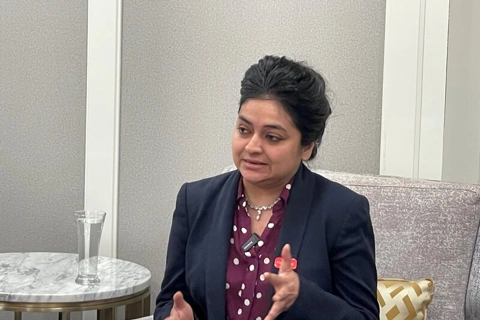
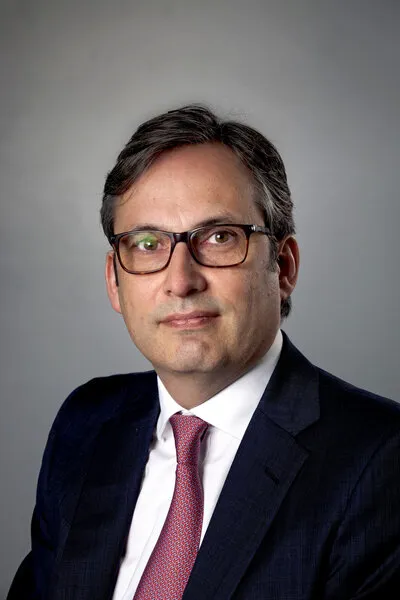
Stephen Brade, the Head of Multinationals at HSBC Asia Pacific, shared his perspective with The Hanoi Times on Vietnam's potential as an appealing foreign investment destination and offered insights on what the country needs to do to maintain its status among global investors.
| Head of Multinationals at HSBC Asia Pacific Stephen Brade. |
How does Vietnam's appeal as a foreign investment destination compare to other Southeast Asian countries?
Compared to its peers, Vietnam remains the second largest FDI recipient in ASEAN, measured as a percentage of GDP, just behind Malaysia. The steady growth of FDI inflows into Vietnam demonstrates a strong interest and a high level of confidence among foreign investors in Vietnam's economic stability and development prospects. Vietnam's investor-friendly policies and regulations, coupled with its stable economic and political environment, strategic geographical location, cost efficiency, abundant workforce, and promising consumer demand prospects, offer significant advantages to foreign investors and position the country well to take advantage of the ongoing supply chain restructuring in Asia.
Meanwhile, Vietnam has made important progress in enhancing administrative procedures and introducing various incentives, including lower corporate income tax rates, exemptions from some import tariffs, and favorable land rental rates. Over the last decade, various types of free trade zones (FTZs) have been developed. The government has focused on supporting industries in specific regions to promote supply chain efficiency. It has implemented policies that are broadly conducive to FDI, particularly for enterprises engaged in export-oriented manufacturing.
Furthermore, the country’s high level of economic integration is crucial. Vietnam has established economic and trade relations with some 224 partners from various countries and regions worldwide. Vietnam's recent progress in free trade agreements (FTAs), notably The EU-Vietnam Free Trade Agreement (EVFTA) and the Regional Comprehensive Economic Partnership (RCEP) creates favorable opportunities for businesses in Vietnam to expand their market presence.
With these fundamental factors in play, Vietnam is poised to continue its upward trajectory as a compelling choice to seize opportunities arising from investor preferences.
| Electronics production at YPE Vina Electronics at Binh Xuyen 2 Industrial Park, Vinh Phuc Province. Photo: Hoang Hung/The Hanoi Times |
.jpeg)
How do you think the upgraded comprehensive strategic partnership between Vietnam and the United States will affect the potential for high-quality foreign direct investment (FDI) in Vietnam, particularly in the technology, energy sectors, and innovation?
The elevation of the US-Vietnam relationship to a comprehensive strategic partnership signifies a deeper commitment to further boost trade and economic ties, enhance technological collaboration, and promote political trust between the two nations. We expect an increasing share of US foreign direct investment shortly, indicating that this commitment is substantial and that US confidence in Vietnam's business environment and potential for economic growth is higher.
Science, technology, digital innovation, and semiconductor manufacturing, among others, would be key focus areas in the coming years.
The prospects of high-quality FDI in the technology, energy sectors, and innovation would be seen as a breakthrough in the comprehensive strategic partnership. Given that the US economy is based on innovation and is widely regarded as a leader in high-tech industries, Vietnam could expect very strong FDI investment, driven by favorable government policies.
What suggestions can you offer to Vietnam to further enhance its economic competitiveness and elevate its position in the global value chain?
I can see that the Vietnamese Government is well aware of the obstacles to the country's economic growth, and has been working hard to address them. To enhance its competitiveness and elevate its position in the global value chain, Vietnam needs to continue improving the market economy mechanism, streamline administrative procedures, develop infrastructure, and build a strong workforce.
Particularly, the Government also needs to consider non-tax incentives to lure FDI into the hi-tech sector, especially after the Global Minimum Tax policy is adopted in Vietnam on January 1, 2024.
Education and training play a more important role than ever before. A private university, FPT University, has recently announced the establishment of the Faculty of Semiconductor Circuits, a good example of the positive integration of the local economy into the global value chain. The country needs more educational institutions qualified to provide the market with a highly skilled workforce.
What is your opinion on the Vietnamese Government's efforts to attract FDI projects focused on green growth, and what benefits or advantages do you see Vietnam offering to potential investors in this sector?
According to the World Bank Group & Asian Development Bank’s Climate Risk Country Profile: Vietnam (2021), Vietnam faces potentially significant social and economic impacts across multiple regions and sectors. Without effective adaptation and disaster risk reduction efforts, multidimensional poverty and inequality are likely to increase. The Vietnamese Government has shown its aspiration to transition to a green economy, as proven by the ambitious goal to achieve net-zero emissions by 2050 in PM Chinh’s remarks at COP26 in November 2021. Given the firm commitment at the governmental level, Vietnam is attractive to investors in the green economy.
Nonetheless, there exist obstacles to be cleared. Take renewable energy as an example. According to the Power Development Plan VIII approved in May 2023, renewable energy is expected to account for around 30-39% by 2030 and up to 67-72% by 2050. This is an aggressive transition. It needs to balance benefits between the off-takers, the investors, and the financiers. There's more to be done to implement the plan. Therefore, perfecting the regulatory framework is now of great importance.
Thank you for your time!

![[Infographic] Hanoi emerges as Vietnam's top destination for FDI](https://cdn-media.hanoitimes.vn/2023/07/08/fdi4.jpg?w=480&h=320&q=100)