Vietnam faces risk of rising trade deficit with RCEP members
There could be a shift in trade movement as Vietnam’s trading advantage against China is diminished given the presence of the RCEP.
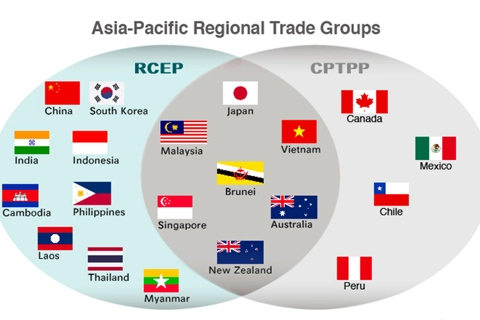
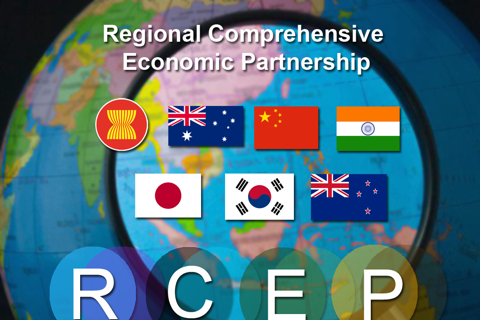
While the Regional Comprehensive Economic Partnership (RCEP) that covers a market of 2.2 billion people, or almost 30% of the world’s population, is no doubt a major opportunity for Vietnam exports, existing trade issues between Vietnam and member countries could become more complicated as the deal comes into play.
| CIEM Director Tran Thi Hong Minh at the workshop. |
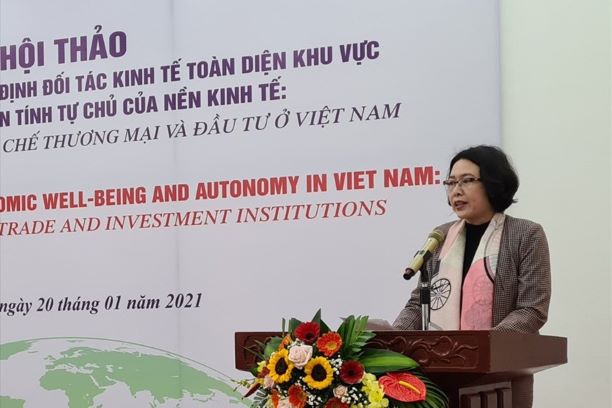
Head of the General Research Department under the Central Institute for Economic Management (CIEM) Nguyen Anh Duong gave the remark at the launch of the report showing the RCEP’s impacts on Vietnam’s economic well-being and autonomy on January 20.
“Domestic products will now face fierce competition from imported ones that enjoy lower import tariffs,” stated Mr. Duong, saying this will likely put more pressure on the trade balance.
This is significant given the fact that Vietnam’s export to RCEP countries prior to the deal had been on the decline from 44% in 2010 to 41.8% in 2019. On the contrary, the country’s imports rose to 70.7% in 2019 from 67.4% nine years ago.
In the 2009-19 period, Vietnam’s trade deficit with RCEP markets tended to widen, particularly with South Korea, China and some countries in ASEAN.
According to Mr. Duong, Vietnam’s trade deficit with South Korea expanded from an average growth rate of 22.3% per year in 2010-14 to 31.4% in 2015-17 after the signing of the Vietnam – South Korea Free Trade Agreement (VKFTA) in 2015.
“Widening trade deficit could affect the balance of payment and the foreign exchange market, and eventually to the macro-economic stability,” noted Mr. Duong.
Another issue come from the RCEP is that there could be a shift in trade movement as Vietnam’s trading advantage against China is diminished.
At present, Vietnam gains considerable competitiveness compared to China thanks to the Vietnam-Japan Economic Partnership Agreement (VJEPA), the VKFTA, and multilateral trade agreements between ASEAN and partners that exclude China.
However, with RCEP, such advantages would no longer remain intact as the likes of Japan and South Korea now open their markets for Chinese products with similar preferential treatments.
| Production for export at Duc Giang Garment Company. Photo: Hai Linh. |
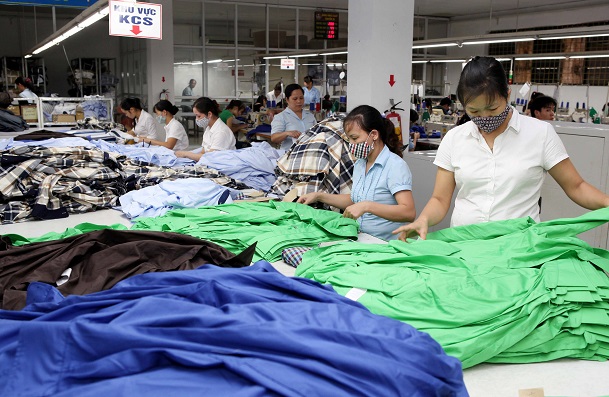
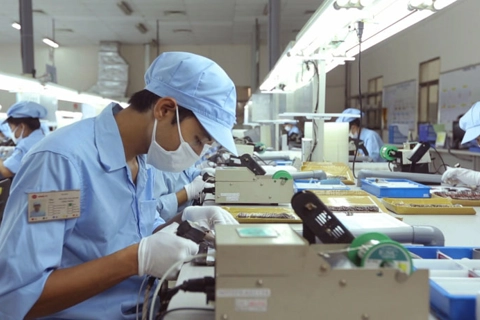
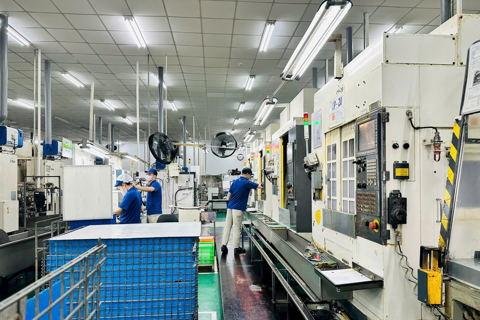
"Compared to other RCEP countries, many Vietnamese enterprises, especially in the textile sector, stand at a disadvantageous position due to limited financial capabilities, equipment and corporate governance," stated Mr. Duong.
Mr. Duong also pointed to certain benefits from the trade deal, including higher quality of imported consumer products, while Vietnamese companies could further integrate into regional value and production chains.
“Vietnam could receive more foreign investment capital as multinationals look to exit China to avoid impacts from trade and technological tensions between the US and China,” he continued.
CIEM Director Tran Thi Hong Minh expected greater central role of ASEAN in the RCEP context could boost Vietnam’s economic autonomy.
“While the bloc played a key role in the negotiation and signing of the RCEP, it should hold a similar position during the subsequent implementation process,” stressed Mrs. Minh.
“Vietnam should continue to support multilateralism to ensure sustainable and rapid development,” added Mrs. Minh, saying the RCEP would not be the only or last free trade agreements that Vietnam would sign with its economic partners.
After eight years of negotiation, the RCEP was signed on November 15, 2020, with the participation of China, South Korea, Japan, Australia, New Zealand and 10 ASEAN countries, making it a mega trade deal with a combined GDP of US$26.2 trillion or about 30% of global GDP, and accounts for nearly 28% of global trade (based on 2019 figures).