Business
Vietnam leads cashless drive in Southeast Asia
Vietnam and Thailand are experiencing a boom in mobile payments as more people use e-wallets to pay for goods and services.
Governments across Southeast Asia are pushing ahead with efforts to create cashless economies, with less developed countries such as Vietnam and Thailand leapfrogging richer ones like Singapore and Malaysia in electronic payments, Nikkei Asian Review reported.
Vietnam and Thailand are experiencing a boom in mobile payments as more people use e-wallets to pay for goods and services without going through an intermediary like a bank.
Vietnam has been promoting electronic payments since 2008. Only about 40% of Vietnam's 95 million people have bank accounts, mostly in urban areas, while there are around 120 million mobile phone subscriptions, and the telecoms network covers the entire country.
Local information technology and telecom companies, including Vietnam Posts and Telecommunications Group, Viettel and FPT, have introduced e-wallets and encouraged people to put away their cash. But none had made much headway until recently.
Now things are taking off, with the number of people making mobile payments in stores growing faster in Vietnam than elsewhere in Southeast Asia, according to a recent PwC report. The percentage of consumers in Vietnam using mobile payments increased from 37% in 2018 to 61% in 2019.
"Mobile payment services also are gaining widespread acceptance, especially in emerging regions that have leapfrogged past landline-based telephone systems and gone straight to mobile and smartphones," the report said.
Payment app Momo, one of the most popular e-wallets in Vietnam, just signed up its 10 millionth customer in November, a tenfold increase compared with just two years ago. The service allows users to pay bills, send money or make purchases at more than 100,000 payment points throughout the country, including Circle K and Ministop shops, two Japanese-owned convenience store chains.
Momo continues to attract funding for its expansion. In January, it held a Series C funding round worth about US$100 million, led by global private equity firm Warburg Pincus. In 2016, it secured US$28 million from Goldman Sachs and Standard Chartered Private Equity.
Another Vietnamese mobile payments startup, ZaloPay, has grown rapidly since its launch in 2017.
It relies on a network of 100 million users registered with its parent company VNG, an online entertainment and social media platform. VNG is considered Vietnam's first unicorn, as unlisted companies valued at US$1 billion or more are called.
Even Singapore's sovereign wealth fund GIC is betting on Vietnam's mobile payments market. It was the lead investor in a round of financing for Hanoi-based VNPay, according to a report published earlier this month by online news website DealStreetAsia. The report added that the round raised "upwards of US$50 million."
In January, the Vietnamese government issued a document asking the State Bank of Vietnam (SBV) to come up with new ways to encourage the use of e-wallets, such as allowing people to add money to their wallets without going through a bank account. It also approved a pilot project that enables money transfers and purchases through mobile phone accounts for small transactions.
Thailand has the largest penetration rate in the region at 67%. Mobile banking is flourishing among Thais, many of whom do not have credit cards or checkbooks. Last March, the country's four largest banks -- Bangkok Bank, Kasikornbank, Siam Commercial Bank and Krung Thai Bank -- reduced fees for account holders conducting internet and mobile transactions at any Thai bank. Some smaller banks followed suit.
More developed countries in the region, such as Singapore and Malaysia, saw lower penetration rates in mobile payments despite government efforts to wean people off cash. Cash and checks still account for 40% of Singapore's payments, as the city-state has an extensive ATM network. In 2017, there were more than 65 ATMs per 100,000 adults in Singapore, according to the World Bank.
However the government is not giving up. Last year, it announced that it aims to further reduce the use of cash and make Singapore check-free by 2025. Last year, the Association of Banks in Singapore launched PayNow, a service that allows bank account holders to send one another money using mobile phone numbers instead of account numbers.

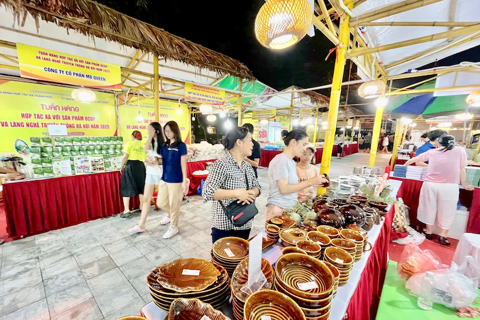
Illustrative photo.
|
Vietnam has been promoting electronic payments since 2008. Only about 40% of Vietnam's 95 million people have bank accounts, mostly in urban areas, while there are around 120 million mobile phone subscriptions, and the telecoms network covers the entire country.
Local information technology and telecom companies, including Vietnam Posts and Telecommunications Group, Viettel and FPT, have introduced e-wallets and encouraged people to put away their cash. But none had made much headway until recently.
Now things are taking off, with the number of people making mobile payments in stores growing faster in Vietnam than elsewhere in Southeast Asia, according to a recent PwC report. The percentage of consumers in Vietnam using mobile payments increased from 37% in 2018 to 61% in 2019.
"Mobile payment services also are gaining widespread acceptance, especially in emerging regions that have leapfrogged past landline-based telephone systems and gone straight to mobile and smartphones," the report said.
Payment app Momo, one of the most popular e-wallets in Vietnam, just signed up its 10 millionth customer in November, a tenfold increase compared with just two years ago. The service allows users to pay bills, send money or make purchases at more than 100,000 payment points throughout the country, including Circle K and Ministop shops, two Japanese-owned convenience store chains.
Momo continues to attract funding for its expansion. In January, it held a Series C funding round worth about US$100 million, led by global private equity firm Warburg Pincus. In 2016, it secured US$28 million from Goldman Sachs and Standard Chartered Private Equity.
Another Vietnamese mobile payments startup, ZaloPay, has grown rapidly since its launch in 2017.
It relies on a network of 100 million users registered with its parent company VNG, an online entertainment and social media platform. VNG is considered Vietnam's first unicorn, as unlisted companies valued at US$1 billion or more are called.
Even Singapore's sovereign wealth fund GIC is betting on Vietnam's mobile payments market. It was the lead investor in a round of financing for Hanoi-based VNPay, according to a report published earlier this month by online news website DealStreetAsia. The report added that the round raised "upwards of US$50 million."
In January, the Vietnamese government issued a document asking the State Bank of Vietnam (SBV) to come up with new ways to encourage the use of e-wallets, such as allowing people to add money to their wallets without going through a bank account. It also approved a pilot project that enables money transfers and purchases through mobile phone accounts for small transactions.
Thailand has the largest penetration rate in the region at 67%. Mobile banking is flourishing among Thais, many of whom do not have credit cards or checkbooks. Last March, the country's four largest banks -- Bangkok Bank, Kasikornbank, Siam Commercial Bank and Krung Thai Bank -- reduced fees for account holders conducting internet and mobile transactions at any Thai bank. Some smaller banks followed suit.
More developed countries in the region, such as Singapore and Malaysia, saw lower penetration rates in mobile payments despite government efforts to wean people off cash. Cash and checks still account for 40% of Singapore's payments, as the city-state has an extensive ATM network. In 2017, there were more than 65 ATMs per 100,000 adults in Singapore, according to the World Bank.
However the government is not giving up. Last year, it announced that it aims to further reduce the use of cash and make Singapore check-free by 2025. Last year, the Association of Banks in Singapore launched PayNow, a service that allows bank account holders to send one another money using mobile phone numbers instead of account numbers.