Growing interest from Chinese investors in Vietnam’s market
Chinese investment has primarily flowed into advanced manufacturing, technology, and professional services sectors.
In Southeast Asia, Vietnam is the second destination gaining the most interest from HSBC’s Chinese clients.
This information was highlighted in a recent analysis by experts at HSBC Asia-Pacific and HSBC Vietnam.
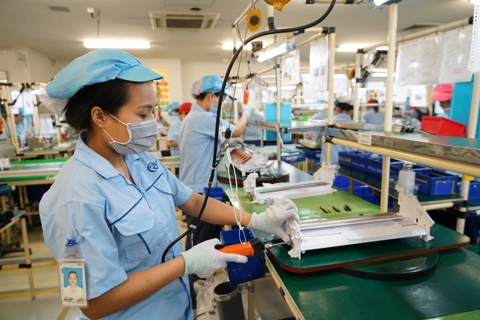
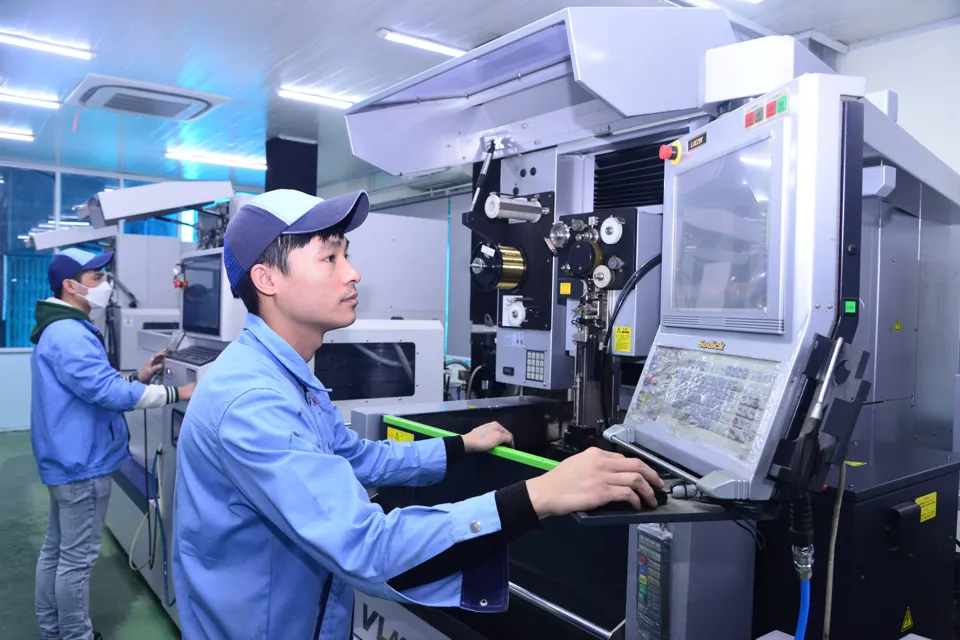
| Electronics production for export at Phu Nghia Industrial Park, Chuong My District, Hanoi. Photo: Pham Hung/The Hanoi Times |
According to data from the Ministry of Planning and Investment, Chinese investors poured nearly US$4.5 billion into Vietnam last year, marking a 77.6% increase compared to 2022.
Additionally, HSBC's report notes that leading Chinese manufacturing companies accounted for almost 20% of newly registered foreign capital in 2023.
In the first eight months of this year, China and Hong Kong ranked second and third in terms of investment in Vietnam, with increases of 14.2% ($1.7 billion) and 11.7% ($1.41 billion), respectively. Chinese investment has primarily flowed into advanced manufacturing, technology, and professional services sectors. Major players include companies such as Goertek, BYD, Radian, Brotex, Wingtech, Deli, and Trina Solar.
Vietnam’s strong appeal to neighboring investors lies in its close economic ties with China, which is a major trading partner with bilateral trade surpassing $106 billion, particularly in electronics, textiles, and machinery.
The Ministry of Planning and Investment believes there is still significant potential for more large-scale FDI projects from China, especially in key industries and high-tech collaborations.
HSBC also highlighted that China-Vietnam trade relations have become one of the top 20 trade corridors in the world over the past decade. The bank’s experts believe that agreements like the Regional Comprehensive Economic Partnership (RCEP) will further strengthen economic ties, particularly in areas like digitalization.
In a survey of 3,500 global businesses conducted by HSBC last year, factors such as a skilled labor force, a growing digital economy, competitive wages, and a relatively large regional market were cited as key attractions in Southeast Asia.
According to HSBC experts, "28% of businesses surveyed stated that the resilience of Vietnam’s economy was a critical factor in attracting international companies."
The bank anticipates that Vietnam will have the fastest GDP growth in ASEAN, which is projected at 6.5% this year. Additionally, the 2023 e-Conomy SEA report by Google, Temasek, and Bain & Company identified Vietnam as the fastest-growing digital economy in the region, with a growth rate of 20%. In terms of Gross Merchandise Value (GMV), Vietnam is expected to become the second-largest digital economy in Southeast Asia by 2030, after Indonesia. Given China's leadership and expansion in digital technologies, it’s unsurprising that Chinese businesses see growth opportunities in Vietnam, according to HSBC.
"The proximity, shared strengths, and complementary capabilities will continue to drive growth in this economic relationship," the experts predict.