Vietnam manufacturing expands for third consecutive month
A more predictable US tariff policy is expected to provide further support to Vietnam’s manufacturing sector next year.
THE HANOI TIMES — Vietnam’s manufacturing sector continued to expand in September, with the Purchasing Managers’ Index (PMI) compiled by S&P Global reaching 50.4 points. This is the third consecutive month above the 50-point threshold, indicating growth momentum.
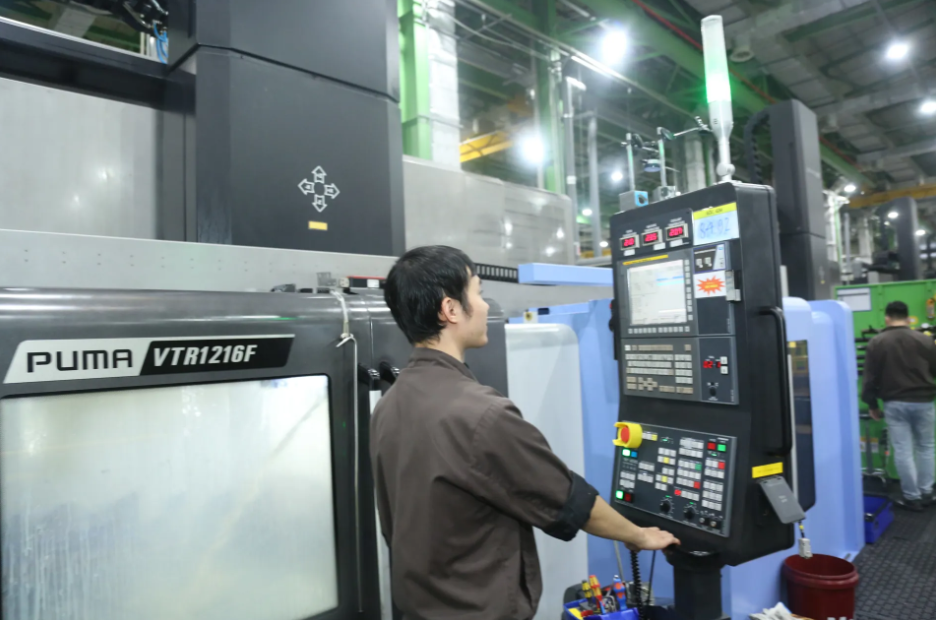
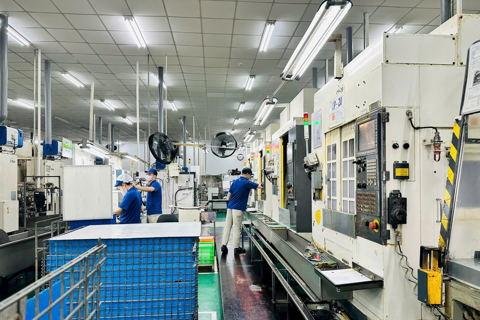
Production at Hanwha Aero Engines Co., Ltd., Hoa Lac Hi-Tech Park, Hanoi. Photo: Pham Hung/The Hanoi Times
According to the US analytics firm, new orders rose again after a slight decline in August, providing support for overall business conditions last month. While international demand remained subdued, greater clarity on tariffs helped some firms secure fresh overseas orders.
“"There was good news on the demand front for Vietnamese manufacturers in September as new orders returned to growth and even exports, which have been falling continuously since late last year, showed signs of stabilizing,” said Andrew Harker, Economics Director at S&P Global Market Intelligence.
The rebound in new orders has now driven output growth for five straight months. He added that a more predictable US tariff policy is expected to provide further support to Vietnam’s manufacturing sector next year.
At an economic forum last week, Nguyen Cam Trang, Deputy Director General of the Import-Export Department under the Ministry of Industry and Trade, said exports in the first nine months of the year rose more than 15%, surpassing the 12% target despite some slowdown in August and September.
“We are confident the full-year export growth target will be achieved if there are no major external shocks,” she said.
Still, challenges remain. S&P Global highlighted inflation pressures, with input costs and selling prices rising steadily in recent months. “If this trend continues, we may start to see price pressures restricting demand,” Harker warned.
Leaders of key industry associations such as textiles, furniture and seafood, which generate tens of billions of dollars in export revenue annually, recently cautioned that orders from the US could slow due to new tariff and technical barriers.
For example, President Donald Trump announced tariffs of up to 50% on kitchen cabinets, bathroom cabinets, and some furniture, effective this month. New rules on wild-caught seafood will also bar crab, tuna, and mackerel exports to the US from 2026.
To navigate growing uncertainty, global trade experts Runa Baksi and Surajit Rakshit from HSBC advised businesses and policymakers to take proactive steps.
According to HSBC’s experts, diversifying export markets is key to reducing reliance on the US. “Companies should actively build demand in Europe, Japan and other regional economies,” they suggested.
They also highlighted the need for supply chain resilience, recommending investment in digital integration and early warning systems to better forecast and mitigate disruptions. Strengthening working capital management, optimizing receivables and payables to shorten days sales outstanding (DSO) while extending days payable outstanding (DPO), would also help improve cash flow.
Looking ahead, Baksi and Rakshit said global trade could become more fragmented but not stagnant. “For Vietnam, the mindset in the years ahead should not be to simply react to every policy shift, but to build a resilient and flexible economy with a diversified strategy,” they concluded.