Vietnam’s agriculture exports reach record $70 billion amid shifting global trade
Vietnam closed 2025 with a landmark export performance in agriculture, forestry and fisheries, reflecting stronger product value, broader markets and more agile trade management.
THE HANOI TIMES — Vietnam’s total export turnover of agricultural, forestry and fishery products rose 12% year on year in 2025 to a record US$70 billion, according to the Ministry of Agriculture and Environment.
The figure exceeded the government’s annual target of US$65 billion.
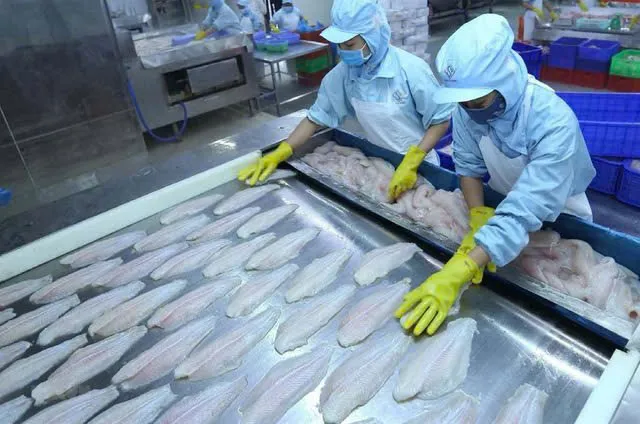
Pangasius is processed for export at the Southern Fisheries Industry Co Ltd. Photo: VASEP
Agricultural products remained the main growth driver, generating US$37.3 billion in export revenue, up nearly 14% from 2024.
Livestock exports climbed 17% to $628 million. Forestry and fishery exports also set new records, reaching $18.5 billion, up almost 7% and $11.3 billion, up nearly 13%, respectively.
Throughout the year, the sector sustained 10 products and product groups with export values above $1 billion.
Wood products earned $11.6 billion, rising nearly 3% year on year. Coffee exports surged to $8.6 billion, an increase of more than 52%, while fruit and vegetable exports reached the same level, growing by over 20%.
By market, Asia remained Vietnam’s largest export market for agricultural, forestry and fishery products, accounting for 42% of total turnover. The Americas followed with a 23.5% share while Europe accounted for 15.6%.
Export value increased across all markets compared with 2024. Europe recorded the fastest growth at 46%, followed by the Americas at 18.7%.
By country, the United States remained Vietnam’s largest importer, taking about one-fifth of total agricultural, forestry and fishery exports. China ranked second with a 17.6% share, followed by Japan at 7.2%.
Exports to the US market rose 16% year on year, despite concerns related to reciprocal tariff measures.
The Ministry of Agriculture and Environment said proactive responses to tariff developments, swift handling of food safety issues, progress in removing technical barriers and sustained market diversification underpinned the strong results.
Authorities addressed key bottlenecks affecting sugar exports and durian shipments to China, while signing a memorandum of understanding to improve the quality of agricultural, forestry and fishery products in bilateral trade.
The ministry also strengthened coordination with international partners, prepared for inspection missions and organized trade promotion delegations in major markets.
Regulators from Europe and China assessed Vietnam’s seafood food safety control system and export-oriented processing facilities.
The ministry acted as a focal point for trade promotion and expanded the list of enterprises eligible to export seafood.
In 2025, the sector operated under a guiding principle of discipline, proactive action, efficiency and breakthrough solutions, while accelerating institutional reform, green restructuring and administrative improvements to support businesses and strengthen long-term competitiveness.