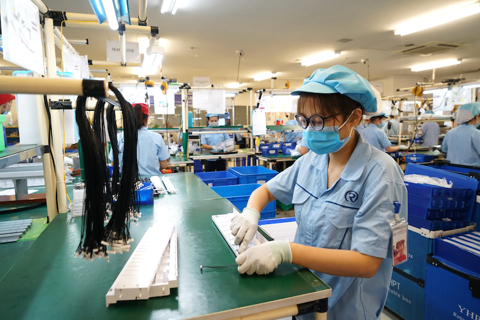
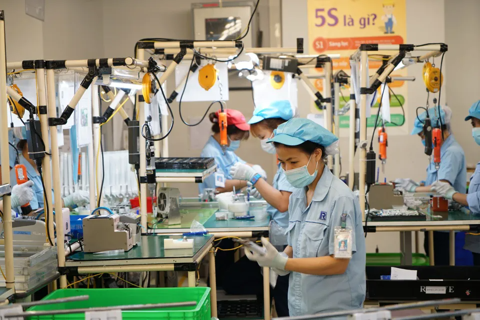
Vietnam's manufacturers boost hiring, wages and benefits as orders rebound in 2026
Vietnam’s labor market is entering 2026 with renewed momentum as manufacturing activity picks up, particularly in export-oriented industries, signaling a shift from post-pandemic recovery toward a more competitive phase of workforce development.
THE HANOI TIMES — As export orders rebound in early 2026, manufacturers nationwide are accelerating recruitment, raising wages and improving benefits to attract and retain workers, especially in major industrial hubs facing persistent post-Tet labor shortages.
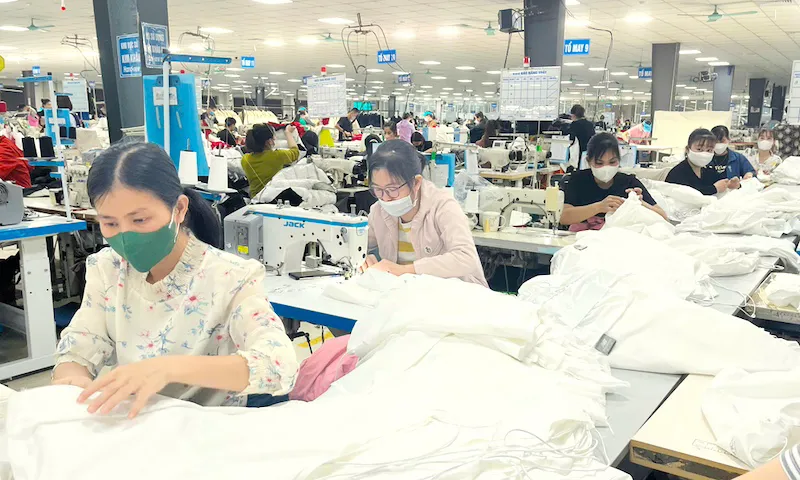
Production line at Yen The BGG Garment's factory. Photos: Bac Ninh Newspaper
Yen The BGG Garment Joint Stock Company in Yen The Commune, Bac Ninh Province, has seen a surge in orders from the United States, South Korea and Europe.
To meet export commitments and support factory expansion, the company has stepped up recruitment for more than a month. It now operates 21 sewing lines, employs nearly 1,000 workers and plans to add 500 more.
This marks one of its largest recruitment drives since the Covid-19 pandemic.
According to Tran Nguyen Ngoc, Head of Administration and Human Resources, the company offers immediate cash incentives to attract applicants.
After signing labor contracts, new hires receive bonuses ranging from VND3 million ($114) to VND8 million ($305), depending on skill levels.
Workers without prior experience receive a guaranteed minimum income of VND7 million ($267) per month during their first three months, while skilled workers earn at least VND8.5 million ($324) per month.
From January 1, official employees also receive company shares worth VND10 million ($380), a rare benefit in labor-intensive industries. New hires qualify for a 13th-month salary bonus of at least VND1 million ($38).
For returning workers, the company counts previous working months toward Tet (Lunar New Year) bonus calculations, encouraging experienced staff to return after the holiday.
Yen The BGG’s hiring push reflects broader labor pressure in Bac Ninh Province, one of northern Vietnam’s largest industrial centers.
In 2025, the province attracted $5.5 billion in foreign direct investment, surpassing its annual target and ranking third nationwide.
More than 26,000 industrial enterprises operate locally, mainly in electronics, components, garments and logistics, employing about 820,000 workers, most of them migrants from other provinces.
With industrial land occupancy above 55% and factories continuing to expand, labor shortages have become more frequent, especially before and after Tet.
According to Bac Ninh Employment Service Center No. 1, recruitment demand in 2026 could reach 180,000 workers following administrative restructuring. Electronics and garment manufacturing account for the largest share, with unskilled labor making up about 80%–85% of demand.
Competition for workers extends well beyond Bac Ninh.
Across Vietnam, manufacturers are racing to secure labor as export orders recover.
A foreign-invested electronics producer at Hanoi’s Thang Long Industrial Park said its early-2026 recruitment targets rising orders and post-Tet workforce turnover.
TOTO Vietnam plans to recruit about 400 workers to expand production capacity.
Pegatron Vietnam in the northern port city of Haiphong, a supplier to Apple and Microsoft, aims to hire about 5,000 workers in the first quarter alone.
Data from recruitment platform TopCV show nearly 70% of surveyed businesses are increasing hiring, with half reporting large-scale expansion.
However, challenges persist. About 47% of companies struggle to find experienced workers, while 42% report shortages in key skills, reflecting high labor mobility and frequent job switching.
Higher wages and stronger benefits drive hiring surge
Beyond wages, companies are competing through improved welfare packages and long-term workforce strategies.
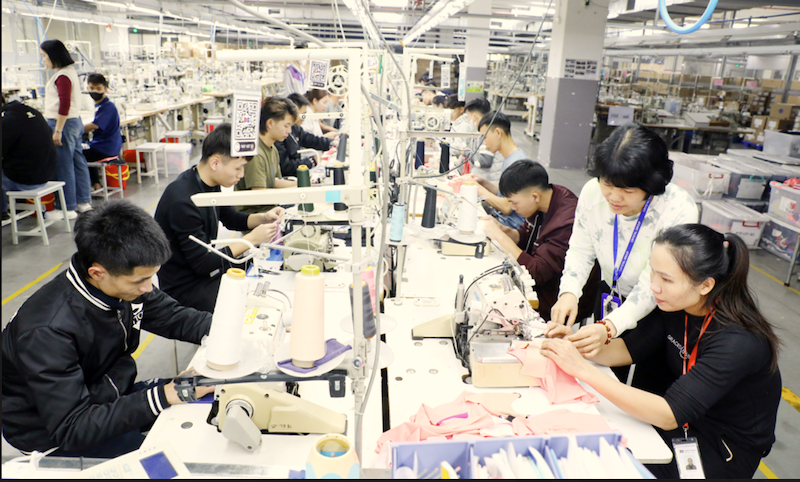
Crystal Martin Vietnam Company sets up dedicated areas to provide free skills training for new workers.
Clear bonus policies, regular health checkups and defined career paths have become essential, alongside stable working conditions and predictable income during peak production periods.
Garment manufacturers stand out for building labor pipelines through on-site training.
Rather than relying solely on external recruitment, firms train new hires directly at factories, with experienced supervisors guiding them from basic skills to full production-line work.
Early exposure to workplace rules and discipline shortens adaptation time, reduces production pressure and improves retention after probation.
Crystal Martin Vietnam at Quang Chau Industrial Park in Bac Ninh Province offers free training to new workers immediately after contract signing since January.
The company provides incentives of VND4.5 million ($171) per worker for new placements and bonuses of up to VND8 million ($305) for those who meet technical standards early.
Base salaries for sewing workers have risen from VND5.8 million ($221) to VND6.2 million ($236) per month, applying to both probationary and official employees.
With orders secured through the end of the first quarter, Crystal Martin needs 300 sewing workers and expects demand to rise to 2,500 within three months after Tet.
The company plans to expand its workforce from about 11,000 to 15,000 employees, with average monthly income reaching VND12.8 million ($487).
According to Nguyen Thi Lan Huong, former director of the Institute of Labor Science and Social Affairs, the combination of expanded hiring, higher pay and better benefits signals a labor market moving toward greater stability.
“Instead of hiring at any cost, businesses now focus on building a committed workforce aligned with long-term growth strategies,” she said.