Vietnam standardizes energy storage systems
Standardizing energy storage systems opens up opportunities to promote a circular economy and reduce electronic waste in Vietnam.
THE HANOI TIMES — Standardizing energy storage systems is essential for Vietnam as it helps increase power system stability, serving the country's net-zero emissions by 2050 target.
Ha Minh Hiep, Chairman of the Commission for Standards, Metrology and Quality (STAMEQ), made this clear at a workshop held in Hanoi on June 26, which focused on sharing experiences on standards, regulations, and management of battery energy storage systems.
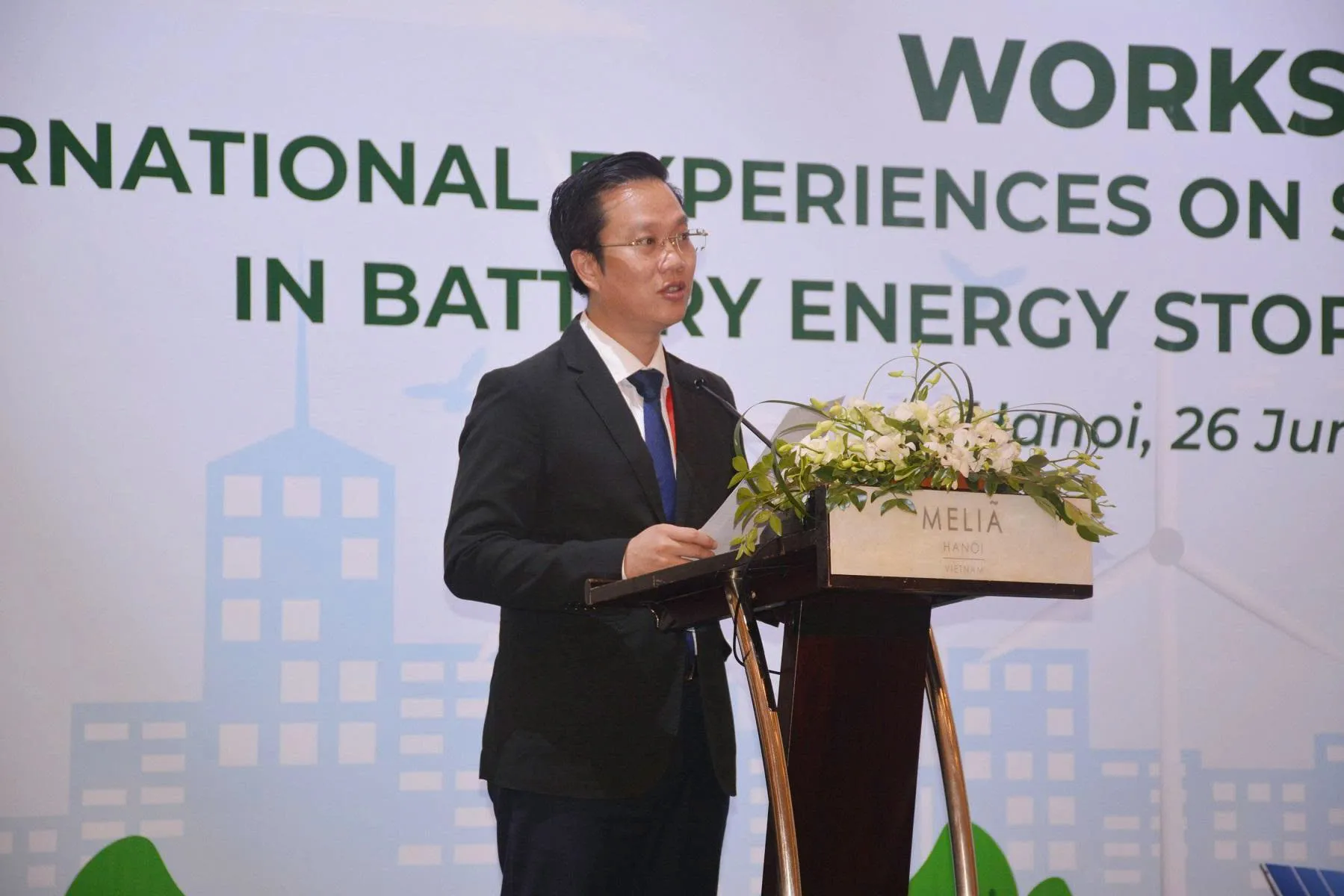
Ha Minh Hiep, Chairman of the Commission for Standards, Metrology and Quality (STAMEQ), makes speech at the event on June 26. Photos: UNDP
“It helps optimize renewable energy sources and enhance backup capacity in increasingly unpredictable climate conditions,” said Hiep.
A suitable system of standards, technical regulations, and management mechanisms is required to deploy battery energy storage systems (BESS) safely and effectively.
For this reason, the workshop was especially significant for Vietnam as it sought to deliver on its commitment to a just energy transition and achieve net-zero emissions by 2050, Hiep noted.
The workshop, which was jointly organized by STAMEQ and the United Nations Development Program (UNDP), aims to strengthen the development of national standards in this field, raise awareness, and enhance international cooperation.
The event also expects to promote the harmonization of national standards with international practices and strengthen Vietnam’s capacity in the development, testing, and use of BESS.
Leading experts from the United States, South Korea, China, Singapore, Malaysia, and Vietnam attended the workshop, as well as representatives from regulatory agencies, businesses, research institutes, and international organizations working in standards and energy.
Anna Gibson, Climate Counsellor at the UK Foreign, Commonwealth & Development Office, said at the workshop that developing standards for energy storage systems is crucial to ensuring safety and reliability, promoting technical consistency and quality assurance, aligning with international practices, supporting financial mobilization, building investor confidence, and enabling effective integration into the power grid.
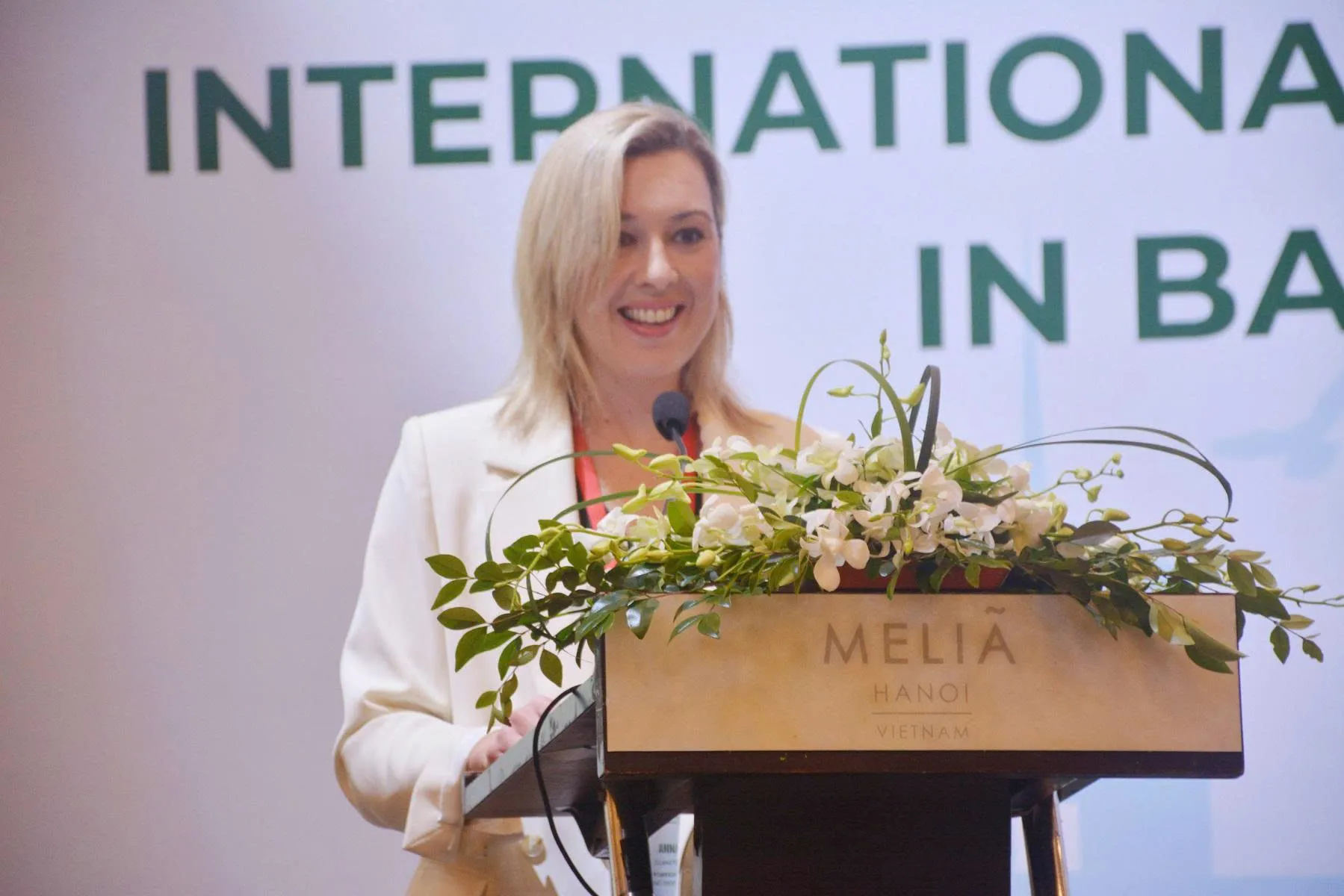
Anna Gibson, Climate Counsellor at the UK Foreign, Commonwealth & Development Office, speaks at the workshop.
Kolin Low, representing UL Standards & Engagement (ULSE), shared insights on international standards related to the safety and installation of BESS, as well as widely adopted technical practices.
The Institute of Energy, under the Ministry of Industry and Trade, presented Vietnam’s policy directions, emphasizing the role of energy storage in demand response and enhancing the operational efficiency of the power system.
Vietnam Electricity (EVN) discussed practical applications of storage systems within the national power grid, which contribute to greater flexibility and adaptability in response to the growing use of renewable energy.
Meanwhile, Kim Taemin, a senior researcher at the Korea Testing Certification Institute (KTC), introduced South Korea's BESS certification program, emphasizing its rigorous technical requirements and inspection procedures.
Vo Le Duy Duc, Director of the Key Accounts Division at Vinenergo Energy JSC, said that developing BESS domestically could reduce import costs, enhance technological self-sufficiency, and promote the local supply chain.
Victor Ho, a council member of the Institution of Fire Engineers in Singapore, shared his experience in developing technical regulations and ensuring safety in Singapore and Malaysia.
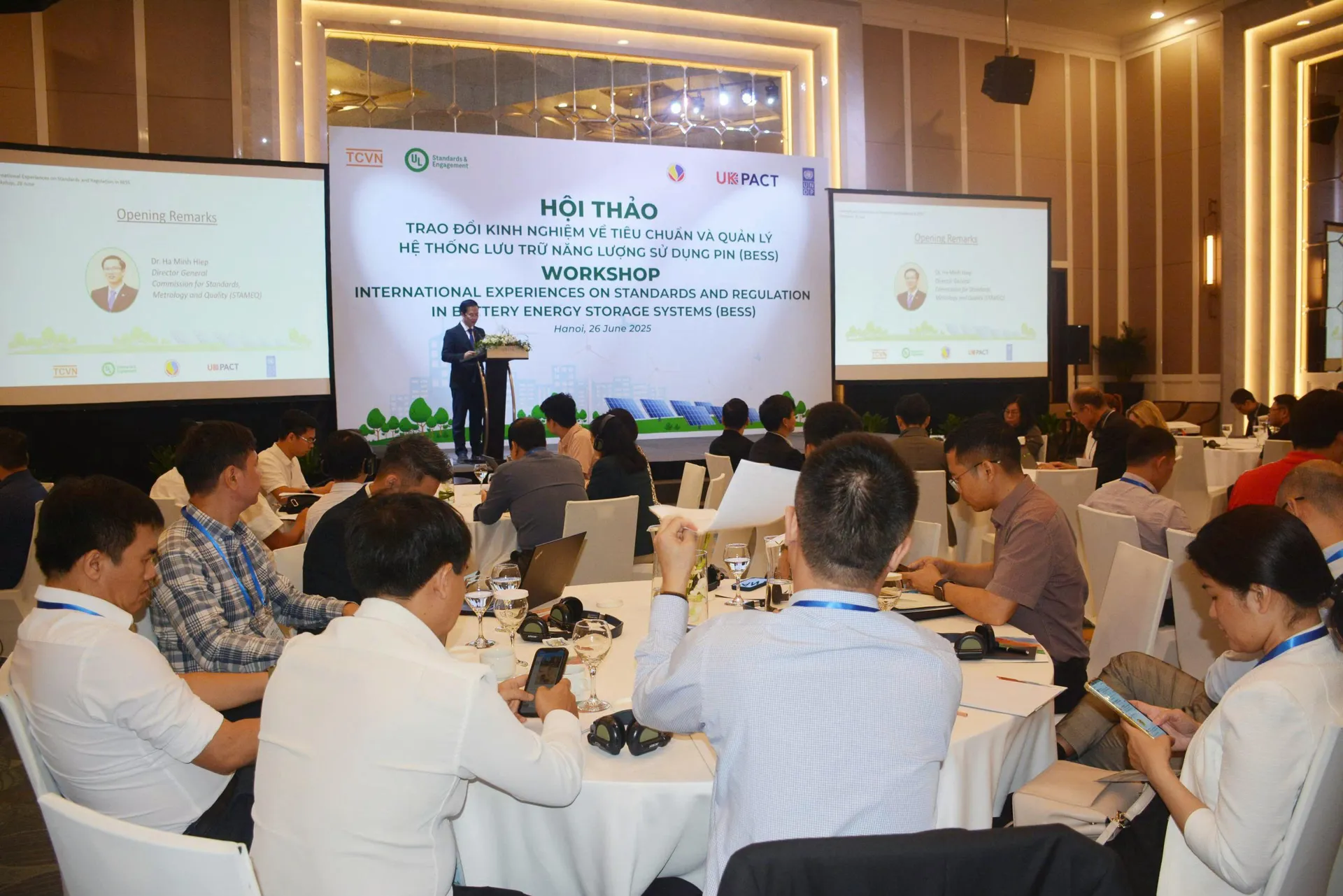
An overview of the workshop.
Closing the workshop, Patrick Haverman, Deputy Resident Representative of UNDP in Vietnam, praised the quality of the presentations and the willingness of stakeholders to collaborate.
“Today’s workshop has demonstrated the tremendous potential of energy storage systems in supporting a just energy transition, while also outlining concrete steps to turn ambition into action."
He said international experiences and discussions on technical challenges brought about a deeper understanding of the role of standards in ensuring that BESS can be deployed safely, efficiently, and at scale.
This serves as a practical foundation for achieving Vietnam’s goals of green, just, and sustainable development. Removing technical barriers and creating an enabling environment will be key to enhancing energy storage capacity in line with the objectives of Vietnam’s Power Development Plan VIII (PDP8).
Through the workshop, the Vietnam Institute of Standards and Quality and UNDP hoped to expand their cooperation with stakeholders in the fields of standards and energy.
Since establishing the Just Energy Transition Partnership (JETP) among Vietnam and international partners in December 2022, the country has responded timely by setting up the JETP Secretariat and specialized working groups and developing the Resource Mobilization Plan (JETP RMP), which outlines key policies and a list of priority projects to realize its energy transition roadmap.
Developing energy storage systems is essential for addressing the intermittency of renewable energy, enhancing system flexibility, improving the reliability and resilience of the power grid, supporting the development of a smart transmission network, and ensuring national energy security.
Creating national standards and regulations for BESS is critical to mitigate technical and financial risks, establish a transparent legal framework, and attract domestic and international investment in Vietnam’s energy transition projects.