Vietnam targets double-digit retail growth under new national market strategy
Prime Minister Pham Minh Chinh has approved the Retail Market Development Strategy to 2030, aiming to modernize the retail sector, boost e-commerce expansion and strengthen domestic purchasing power while promoting Vietnamese products in global markets.
THE HANOI TIMES — Vietnam aims to boost total retail sales of goods and consumer services by an average of 11%-11.5% annually through 2030, under a newly approved national strategy.
The plan targets e-commerce growth of 15%-20% annually, accounting for about one-fifth of national retail sales by 2030, with up to 45% of small and medium-sized enterprises (SMEs) participating on online platforms.
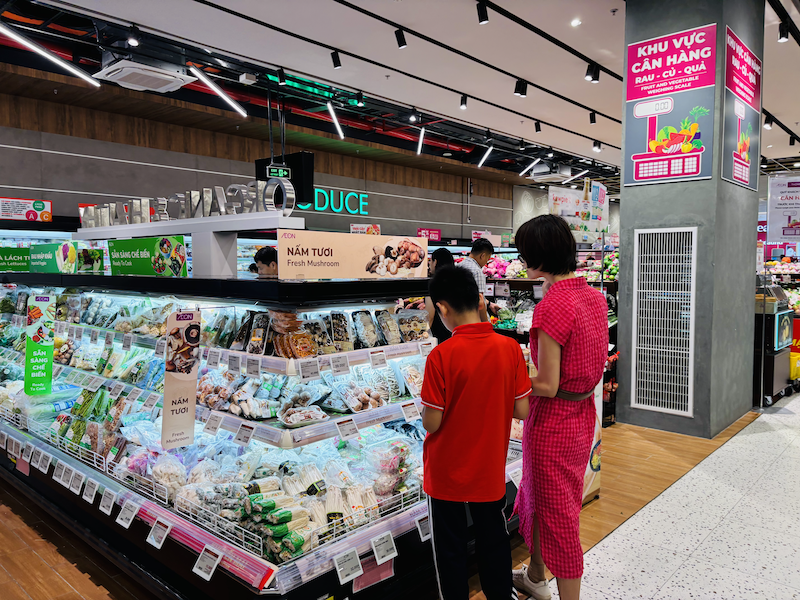
Residents shop at AEON Van Giang. Photo: Phi Nhat/The Hanoi Times
These objectives are set out in Decision No. 2326, approving Vietnam’s Retail Market Development Strategy to 2030, with a vision to 2050, signed by Prime Minister Pham Minh Chinh.
The strategy seeks to build a modern, sustainable and transparent retail market aligned with Vietnam’s domestic trade orientation and international commitments, while embracing global trends in the digital economy, green economy and sharing economy.
The government will enhance retail policies and foster a fair, competitive environment to attract reputable domestic and foreign retailers. Vietnamese enterprises are encouraged to innovate and adopt global-standard retail practices.
Enterprises across all economic sectors are invited to participate in market development at appropriate scales.
Under the plan, Vietnam envisions forming large domestic retail groups led by private enterprises, while supporting smaller players, such as cooperatives, household businesses and individual retailers, through financial, land and policy incentives.
The retail network will diversify across modern formats such as supermarkets, shopping centers, convenience stores and specialty shops, ensuring balanced development alongside traditional markets.
The efforts will focus on building efficient supply chains connecting production and distribution, especially for essential agricultural and food products, to stabilize supply and demand while ensuring quality and food safety.
The government also aims to foster sustainable supply chains with traceable, eco-labeled products meeting international standards.
Small businesses and cooperatives will be encouraged to establish vertical and horizontal linkages to enhance market access and competitiveness. Strengthened cooperation among producers, distributors and service providers will create a stable, high-quality supply base for the domestic retail market.
E-commerce will serve as a cornerstone of Vietnam’s retail transformation.
The government plans to develop a competitive and sustainable digital market by expanding online trading platforms and promoting omni-channel models that integrate physical and digital retail. The strategy also supports retail via mobile devices, television and social media, aligning with future consumer trends.
To support this transformation, the government will refine the legal framework and introduce pilot mechanisms for innovative digital platforms, ensuring equal treatment for all business models in line with global e-commerce standards and Industry 4.0 developments.
According to Mordor Intelligence, Vietnam’s retail market may reach US$309 billion by 2025 and $546 billion by 2030. Modern retail currently accounts for 12%-15% of total market share, leaving ample room for businesses to scale up and diversify their models.
The Ministry of Industry and Trade forecasts that retail sales and consumer service revenue in 2025 will grow by 10.5%-12%, maintaining strong momentum in domestic consumption.
In January-September of 2025, total retail sales of goods and consumer service revenue rose by 9.5% year-on-year, or 7.2% after adjusting for inflation, compared to a 5.8% increase during the same period last year.
In 2024, Vietnam’s total retail and consumer service revenue was estimated at US$350 billion, up 8.8% from the previous year.
The e-commerce market is projected to grow by 25.5% in 2025 as consumer spending peaks during the year-end shopping season. This forecast exceeds the initial annual growth target of 20%-22%.
From January to August, the sector already surged 27%, outperforming expectations by seven percentage points, a sign of the sector’s accelerating digital transformation and consumer appetite for online shopping.