Vietnam to complete national traceability system by 2035, elevating quality of Vietnamese products
Vietnam outlines a phased roadmap to build a national agricultural traceability system to strengthen food safety, transparency and consumer trust.
THE HANOI TIMES — The Ministry of Agriculture and Environment is preparing a roadmap to implement a comprehensive national traceability system covering all agricultural products and inputs by 2035, aiming to strengthen consumer confidence in the quality, food safety and origin of Vietnamese goods.
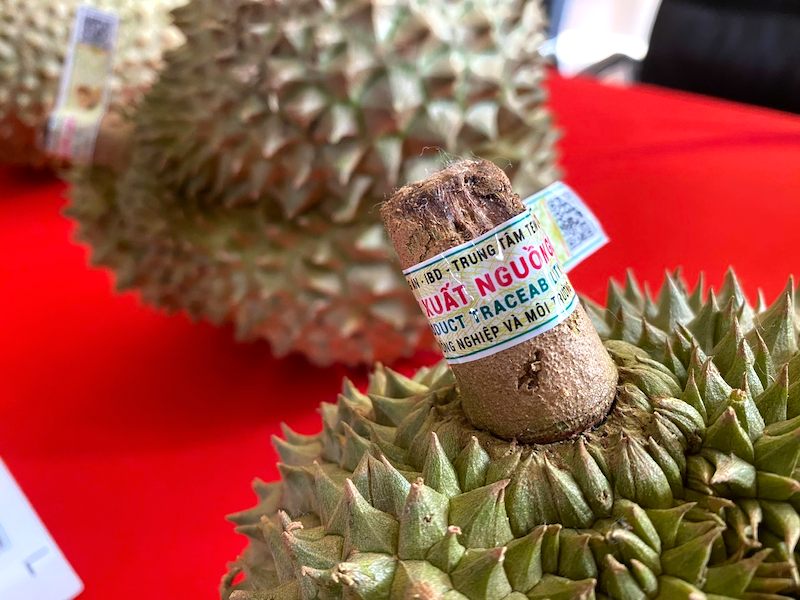
Vietnam will pilot the national traceability system with durian, one of Vietnam’s key export fruits. Photo: Dan Viet Newspaper
In the first half of 2026, the ministry will pilot the system with durian, one of Vietnam’s key export fruits. By year’s end, authorities plan to extend traceability to other agricultural products.
The pilot will use digital planting-area records and cultivation diaries, alongside strict monitoring of production inputs such as fertilizers, animal feed, pesticides, veterinary drugs and chemicals.
Nationwide, the ministry will develop a unified data framework for exchanging traceability information to ensure consistency across regions and product categories.
During 2027-2030, the system will upgrade to record and manage information across the full value chain, from production and procurement to processing, packaging, transportation and distribution, with product information available through QR codes.
Investment will prioritize digital infrastructure, data security and system interoperability to ensure seamless links with the national traceability portal and related databases.
The ministry also plans to identify key agricultural products subject to mandatory traceability, refine policy and regulatory frameworks and operate a centralized traceability database covering agriculture, forestry and fisheries.
Based on standardized data, authorities will deploy analytical tools, monitoring systems and early-warning mechanisms, with gradual application of artificial intelligence to support food safety management, quality control and market oversight.
To support implementation, the ministry will complete the legal framework and technical guidelines on agricultural traceability, invest in or outsource required infrastructure and equipment and strengthen international cooperation.
Partnerships with foreign organizations and global barcode and identification agencies will facilitate technology transfer and mutual recognition of traceability outcomes.
Training and communication efforts will intensify to raise awareness among farmers, businesses and consumers about product safety and the benefits of traceability.
The overall approach places people and enterprises at the center, encouraging broad participation while ensuring shared benefits across the agricultural value chain.
Launched in late December, the national traceability system for agricultural products will roll out in phases and integrate fully with the National Traceability Information Portal, local traceability platforms and other national databases.
Once fully operational, the system will create a unified and transparent framework that tracks products from farm to market and benefits all stakeholders in the agricultural sector
The initiative forms part of a newly issued ministerial plan that positions traceability as the backbone of a broader digital ecosystem for agriculture.
By standardizing data and linking digital applications, the system will accelerate agricultural digital transformation and innovation, improve state management efficiency and enhance the competitiveness of Vietnamese agricultural products at home and abroad.