Vietnam moves toward mandatory digital traceability for textile products
Experts believe that each product needs a "digital passport" containing all production information for traceability, not just a label.
THE HANOI TIMES — Product traceability requires an integrated technological system capable of tracking the entire supply chain, from raw materials and manufacturing to packaging, trading and market distribution, said experts at the workshop “Textile product traceability: the importance of transparency and digital transformation for sustainable development,” held on December 17 as part of the ongoing Hanoi Textile & Garment Industry and Fabric Garment Accessories Expos 2025.
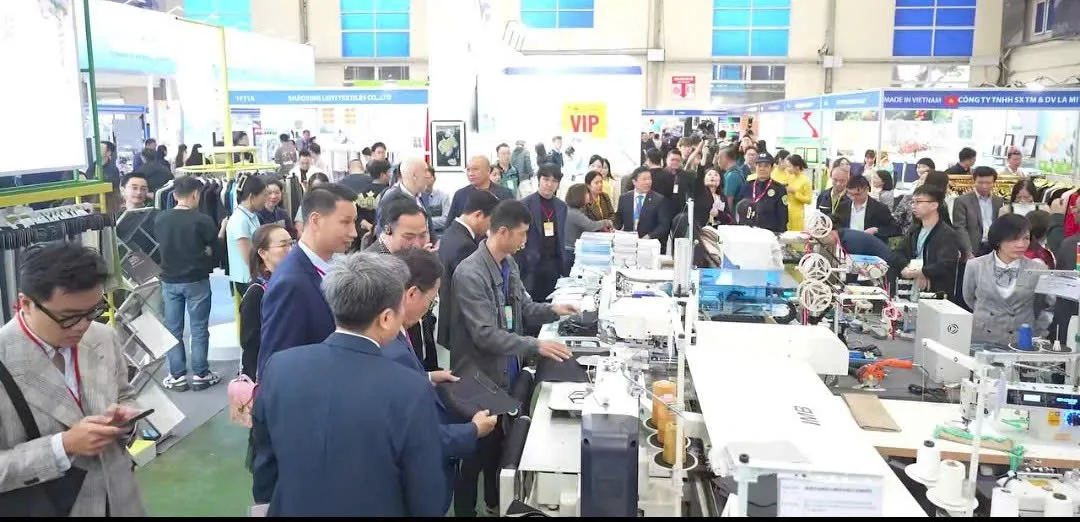
Numerous experts and visitors pay attention to the Hanoi Textile & Garment Industry and Fabric Garment Accessories Expos 2025 (HanoiTex & HanoiFabric 2025). Photos: Anh Kiet/The Hanoi Times
According to Pham Van Quan, CEO of Checkee Technology JSC, QR codes or chips embedded in many products are largely used for promotional purposes. When scanned, they typically direct users to a website or social media page, which is technically accurate but represents only a small fraction of what comprehensive product traceability entails.
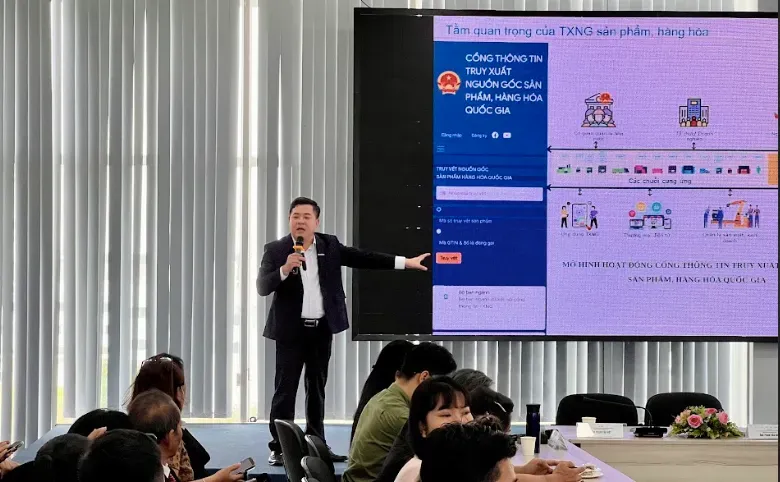
Pham Van Quan, CEO of the Checkee Technology JSC, makes speech at the workshop.
Vietnam’s amended Law on Product and Goods Quality, effective January 1, 2026, will require traceability for all high-risk products.
To comply, Quan proposed that each product have a digital passport, storing all data under a single unique code to prevent duplication.
The passport must include information specified by the Ministry of Science and Technology, such as product name, image, unit, address, production details, traceability code, trademark, expiration date and compliance with state standards.
Linked to the national portal, the system allows consumers to access full product information by scanning with a smartphone. “Technology is essential for transparency and credibility, and digital traceability solutions help businesses meet market demands and enhance competitiveness,” Quan said.

Bui Thi May, Director of Maya DIY Trading and Service Co., Ltd. (center), exchanges information with foreign partners at the event.
Echoing Quan, Bui Thi May, Director of Maya DIY Trading and Service Co., Ltd., said traceability is necessary for businesses in the new era, especially in international expansion.
"This is a vital factor if businesses want to improve quality, expand export markets and join more deeply in the global supply chain," she told The Hanoi Times.
She said businesses use physical anti-counterfeit labels, QR codes, barcodes, SMS-based electronic labels and proprietary local systems. However, challenges remain, including fragmented systems, inconsistent identifiers and unreliable data authentication.
“In the market, I see three defining trends: traceability will become mandatory and fully standardized; technology will shift from physical to digital anti-counterfeiting and intelligent data systems; and traceability data itself will emerge as a business asset,” said May.

Way Chuan, Business Manager of SAB Industrial (Vietnam) Company Limited, joins the event.
Way Chuan, Business Manager of SAB Industrial (Vietnam) Company Limited, highlighted the role of modern traceability technologies in helping businesses demonstrate transparency and accountability, enhance product value, strengthen competitiveness and improve the customer experience.
"Vietnam will move fast in this field, just as it did with digital tax systems, e-invoicing and QR-based payments. The companies that are more transparent, more trusted, more data-driven and more compliant with standards will be the ones to thrive sustainably," Way Chuan talked with The Hanoi Times.
Traceability in Vietnam is moving from ad-hoc adoption to standardized and regulated implementation, especially in exports. The government has planned a legal framework, national standards and technical guidelines.
In June, the Ministry of Public Security announced that it is collaborating with the Ministry of Industry and Trade and VNPT to develop a system for tracing the origin of goods. Once operational, the platform will help people trace the origin of products, contributing to preventing trade fraud, counterfeit and smuggled goods.
|
The Hanoi Textile & Garment Industry and Fabric Garment Accessories Expos 2025 (HanoiTex & HanoiFabric 2025) opened at the I.C.E International Exhibition Center on December 16, bringing together more than 250 exhibitors from nine countries and territories to showcase cutting-edge technologies and solutions for the textile and garment industry. The three-day event is regarded as one of the largest and most influential textile trade fairs in northern Vietnam, drawing strong participation from India, South Korea, Hong Kong (China), Japan, Singapore, Switzerland, China, Taiwan (China) and Vietnam. |