Vietnam to implement first child-centered Juvenile Justice Law in 2026
Vietnam has taken a major step toward child-centered justice with the adoption of the Juvenile Justice Law, a landmark outcome of four years of international cooperation aimed at strengthening protections for children across the criminal justice system.
THE HANOI TIMES — Vietnam has strengthened child-centered justice with the adoption of its first Juvenile Justice Law, set to take effect on January 1, 2026, making a dedicated legal framework to protect children’s rights throughout the criminal justice system nationwide.
The law was highlighted on December 17 as a key outcome of the four-year project “Strengthening Child Justice in Vietnam,” implemented since December 2021.
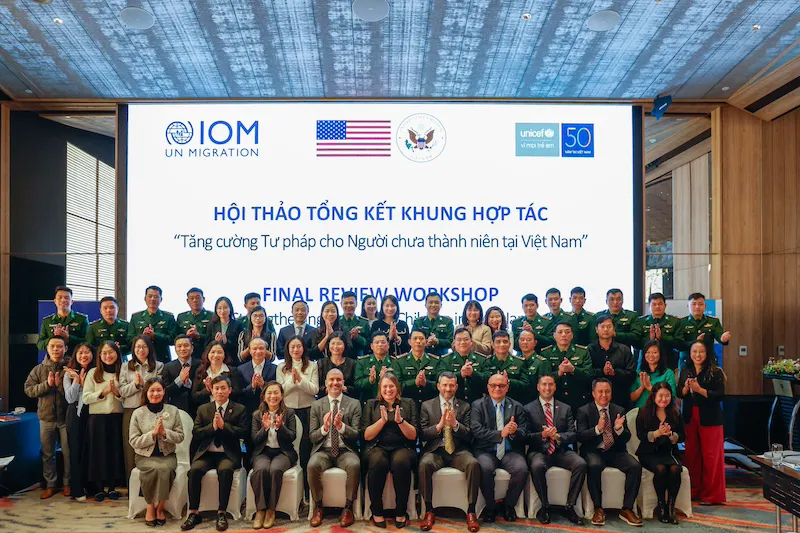
Delegates at the closing ceremony of the project “Strengthening Child Justice in Vietnam” on December 17. Photos: IOM
According to Michael Swanberry, Acting Deputy Chief of Mission at the US Embassy in Vietnam, the Juvenile Justice Law marks a historic milestone by establishing a separate, child-centered legal framework that safeguards minors at every stage of judicial proceedings.
The project addressed an urgent reality, as an estimated 80,000 children enter Vietnam’s justice system each year, including around 8,000 children in conflict with the law, 2,000 child victims of crime and about 70,000 children involved in family-related legal cases.
For many children, exposure to traditional justice procedures such as interrogation or trial causes fear and psychological stress.
The US diplomat praised the efforts done by Vietnam, the International Organization for Migration (IOM), UNICEF and others to improve the criminal justice process for children, including the passage of the Juvenile Justice Law.
The United States remains committed to supporting Vietnam’s efforts to protect children from transnational crimes such as child trafficking, so that together we can build a strong and prosperous future, Swanberry spoke at the project's closing ceremony.
Strengthening frontline capacity and child-friendly approaches
Beyond legal reform, the project focused strongly on building the capacity of frontline professionals who work directly with children.
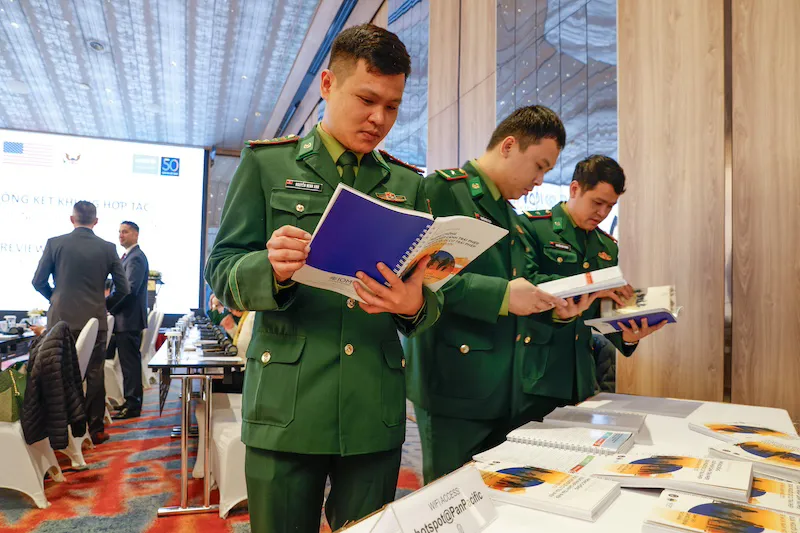
A training toolkit for frontline border guard officers on display at the event.
Over four years, thousands of police officers, border guards, prosecutors, judges, lawyers and social workers received training in child-friendly procedures that prioritize the best interests of the child.
According to Kendra Rinas, IOM Chief of Mission in Vietnam, the project developed specialized training programs on combating human trafficking and migrant smuggling.
These programs equipped 310 officers working at border checkpoints with skills in document screening, risk assessment and victim identification while promoting child-centered and victim-centered approaches.
At the same time, partners introduced new technical guidelines to help child victims of violence access comprehensive support services and reduce the risk of re-traumatization during legal processes.
Ziad Nabulsi, UNICEF Representative and Officer-in-Charge, praised the project’s outcomes, saying the interventions enable children to share their experiences more safely within the justice system.
“These efforts offer stronger protection for child victims and help them speak out with less risk of further trauma,” he said.
He added that children in conflict with the law now have greater access to community-based support, which supports rehabilitation and reintegration while reducing the risk of re-offending, trafficking and irregular migration.
While welcoming these achievements, partners stressed that sustained effort remains essential. Passing legislation marks only the first step and effective implementation will determine whether progressive legal provisions deliver real and lasting improvements for every child across Vietnam.