Where to trace Vietnam’s independence in Hanoi
Hanoi, with its rich tapestry of culture and history, holds many treasured landmarks that echo the spirit of Vietnam’s 20th-century struggle for independence.
THE HANOI TIMES — Walking through Hanoi today, travelers can step directly into the nation’s most defining moments. Ba Dinh Square, where President Ho Chi Minh proclaimed independence on September 2, 1945, still welcomes visitors with its solemn grandeur.
Just a short walk away, the streets that once echoed with the chants of the August Revolution now invite exploration, offering a vivid connection between past and present.
From revolutionary museums to monuments and preserved relics, the capital turns history into a living journey. Each site not only tells the story of Vietnam’s struggle for freedom but also lets visitors feel the spirit of a city where modern life unfolds alongside milestones that shaped the nation.
August Revolution Square
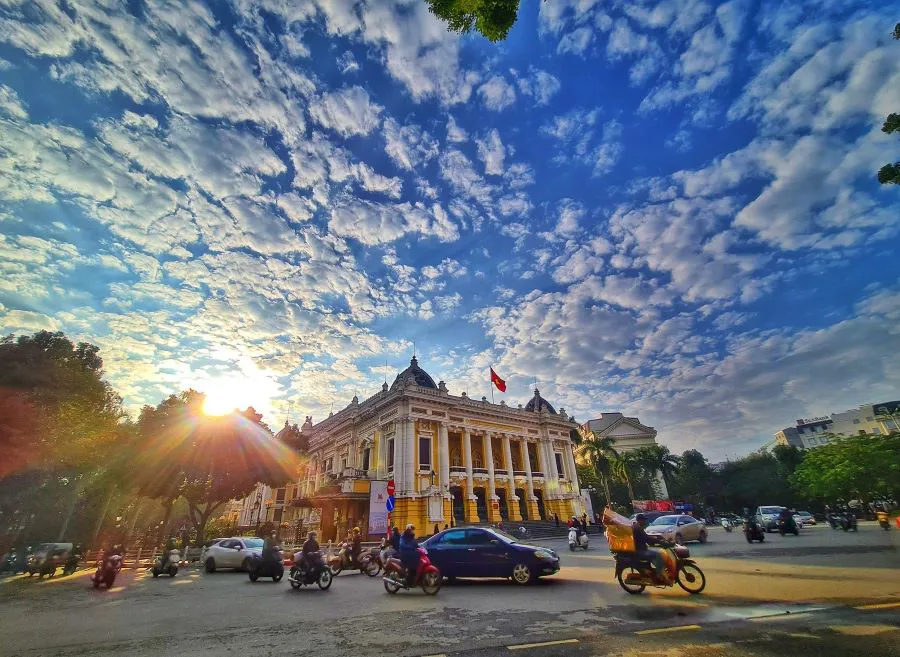
The historic August Revolution Square is located in front of the Hanoi Opera House. Photo: Dang Dung/Chuyen cua Ha Noi Group
Once known as Opera House Square during the French colonial period, this historic site lies in front of the majestic Hanoi Opera House. On the morning of August 19, 1945, tens of thousands of Hanoians gathered here in a mass rally that marked the beginning of the August Revolution.
What began as a peaceful assembly quickly turned into a powerful demonstration, as the crowd surged through Paul Bert Street (now Trang Tien Street), spreading the revolutionary spirit throughout the city.
Today, August Revolution Square is not only a venue for major national events but also a favorite stop for visitors exploring the capital. Surrounded by elegant French-style architecture and bustling city streets, the square remains a lasting symbol of Hanoi’s resilience and spirit.
Ba Dinh Square
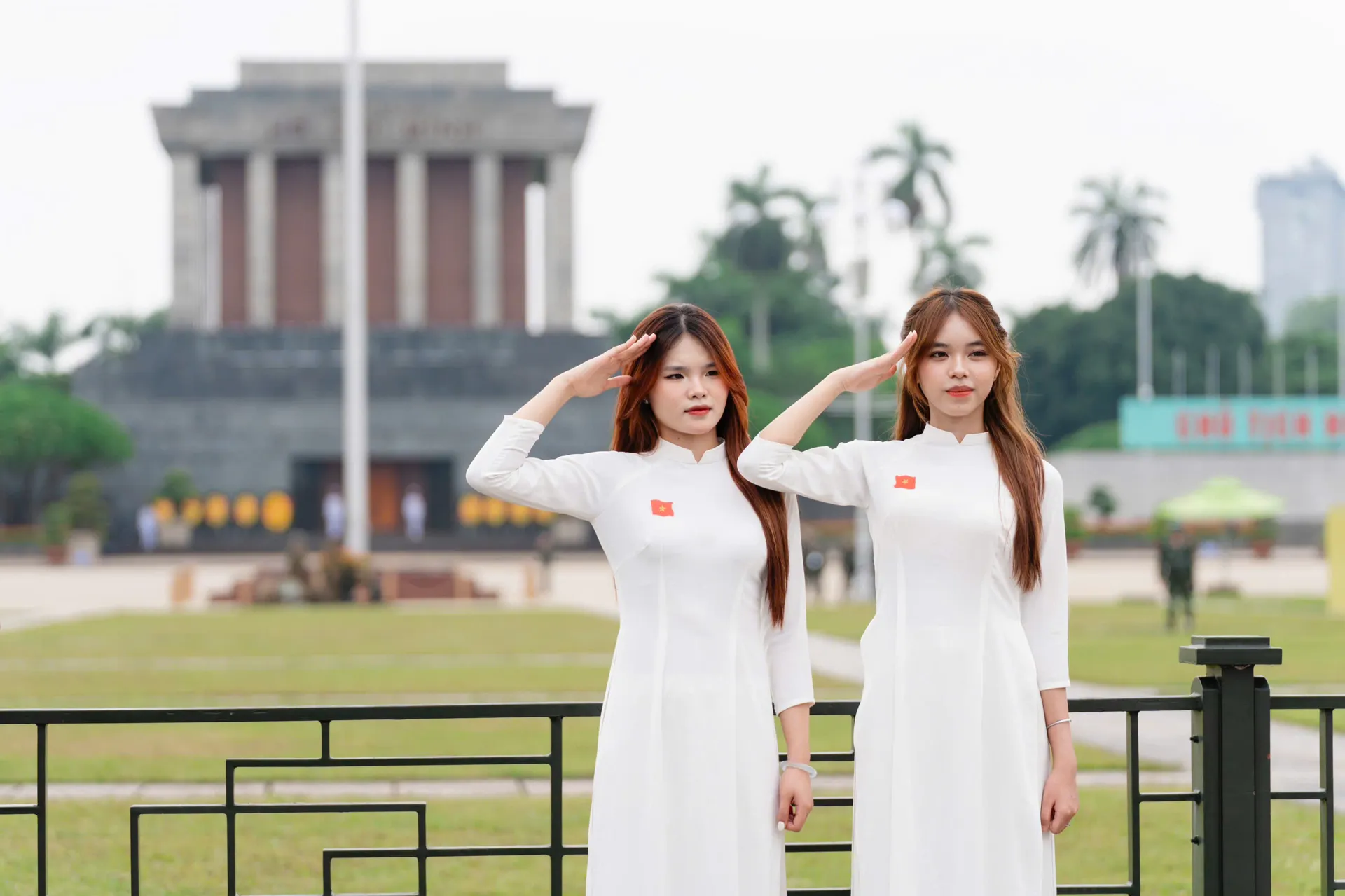
Tourists dressed in traditional ao dai take photos at Ba Dinh Square ahead of Vietnam’s National Day, which falls on September 2. Photo: Duy Khanh/ The Hanoi Times
Ba Dinh Square stands as a silent witness to some of Vietnam’s most historic moments. Originally part of the West Gate of the Thang Long Imperial Citadel, it was once known as the Round Square or Puginier Park.
On September 2, 1945, the site saw President Ho Chi Minh stand before the nation and read the Declaration of Independence, marking the official birth of the Democratic Republic of Vietnam and sealing the victory of the August Revolution.
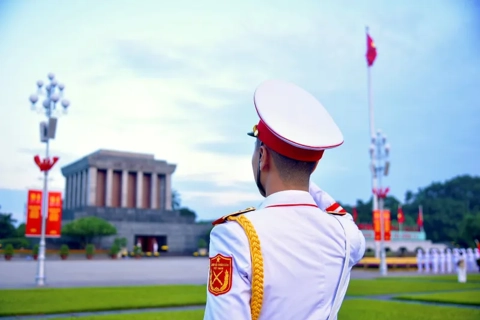
Today, the square is a deeply meaningful space for locals and travelers. Surrounded by the solemn Mausoleum of President Ho Chi Minh, it offers a place for reflection and remembrance.
Every day, the national flag is raised in the morning, and lowered at night. Both ceremonies are performed in a solemn, sacred space, filled with patriotic pride.
This year, on September 2, a grand military parade will take place at Ba Dinh Square to commemorate the 80th anniversary of the August Revolution and National Day.
House No. 48 Hang Ngang Street

Beneath its simple exterior, the house at No.48 Hang Ngang Street hides many mysteries. Photo: MyHanoi.vn
Tucked away in Hanoi’s charming Old Quarter, the historic house at No. 48 Hang Ngang Street once belonged to patriotic merchant Trinh Van Bo and feminist leader Hoang Thi Minh Ho.
From August 25 to September 2, 1945, it was home and headquarters for President Ho Chi Minh and the Party Central Committee.
It was within these modest walls that key policies were discussed, decisions were made about the interim government, and preparations for the first Independence Day took shape.
Most notably, this house is where President Ho Chi Minh drafted the Declaration of Independence - a moment that marked a new chapter in Vietnam’s history.
Today, the house is lovingly preserved by the Hanoi Relic and Landscape Management Board. Following a short period of renovation and improvement, it reopened on August 18, complete with a new commemorative plaque marking the grand 80th anniversary.
Le Tonkin Palace
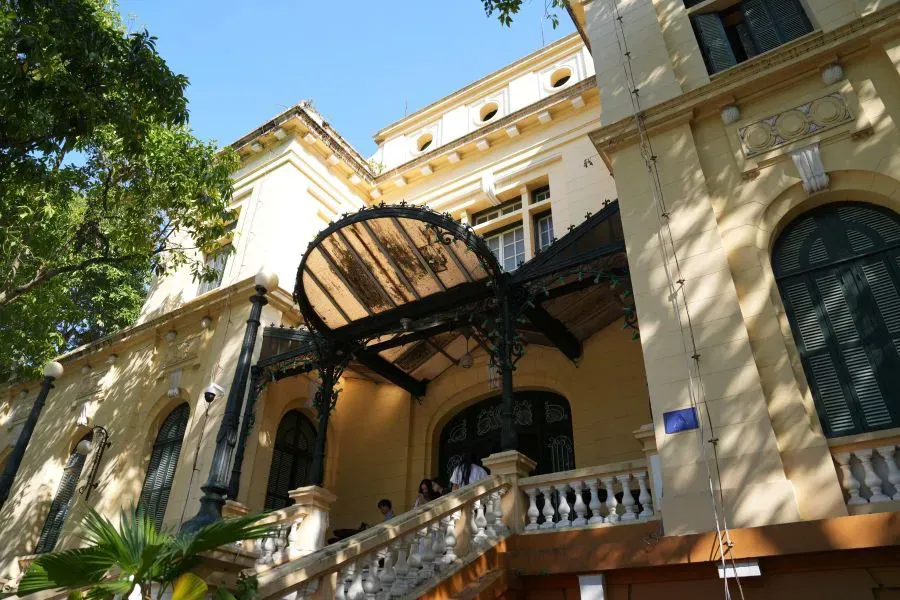
The former Tonkin Palace, now the Government Guest House, at No.12 Ngo Quyen Street, Hoan Kiem Ward, was originally designed to house the French Superior Resident of Tonkin. Photo: Ngoc Tu/ The Hanoi Times
Known today as the Government Guest House, the Tonkin Palace was once a symbol of colonial power. It was built in the neoclassical style by Auguste Henri Vildieu in 1918-1919, and housed the French Superior Resident of Tonkin.
During the August Revolution rally, Hanoi’s citizens marched to the palace and seized power from the colonial government. The guards surrendered without resistance.
Following the revolution, the building became the workplace for President Ho Chi Minh and the Provisional Revolutionary Government. It was here that key national decisions were made during the early days of the Democratic Republic of Vietnam.
After 1954, the palace was restored and renamed the Government Guest House. In 2005, a plaque officially recognized its historical significance as a Revolutionary Relic.
Today, this elegant building continues to host important diplomatic events. It stands as a relic of history and a meaningful stop for visitors exploring Hanoi’s political heritage.
Bao An Binh Barrack
Located next to Ho Guom Theater, the Gate of Bao An Binh Barrack is a rare historical relic left after the August Revolution of 1945.
The barrack was designed in the late 19th century by French architect Henri Vildieu, who was also the designer of famous buildings in Hanoi during the French colonial period, such as the Presidential Palace 1900-1906, the Supreme Court, Hoa Lo Prison, and others.
The camp was once the garrison of 1,000 French blue-belted militiamen, provincial guards (garde indigene or local guards), tasked with maintaining order and security for the colonial government in Hanoi.
There is an illustrated plaque hanging on one side of the historical monument that reads: "This place was the Bao An Binh Barrack in 1945. On August 19, 1945, the Vietnamese revolutionary forces disarmed the enemy and occupied this position."
Thanks to its great historical significance, Bao An Binh Barrack Gate is a witness to the most important event in Vietnamese history.
After being restored to its original form, the monument has attracted the attention of locals and international visitors alike.
The Hanoi Department of Public Security
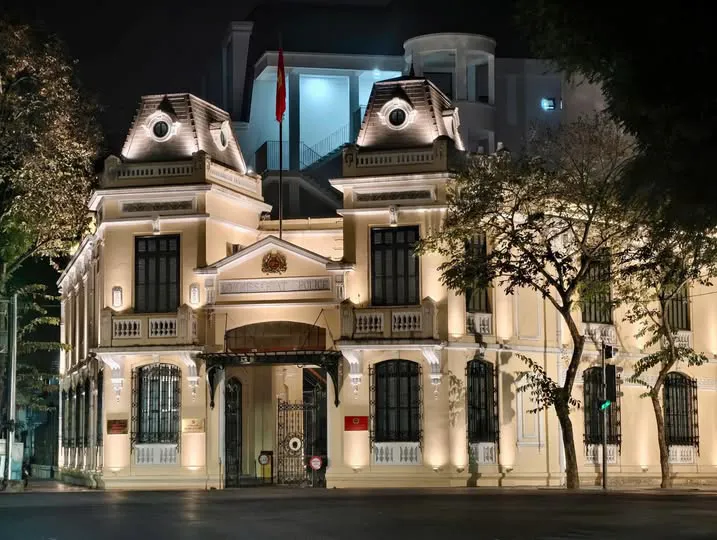
The elegant Hanoi City Police building at the Hoan Kiem facility. Photo: Vi Binh Yen Hoan Kiem
At No. 2 Trang Thi Street stands a grand building with French architectural charm - home to the current Hoan Kiem Station of the Hanoi Department of Public Security. Built in 1915, it once served as the headquarters of the colonial Central Police Department.
During the 1945 Uprising, after the Tonkin Palace was seized, revolutionary forces moved swiftly to take over this police station. Soon after, the Tonkin Secret Service and Police Service were established here to maintain public order in the newly liberated city.
Today, the building still fulfills its public service role. It reminds us of Hanoi’s historical journey, serving as an architectural gem with stories etched in every stone.
The House in Alley 319 An Duong Vuong Street
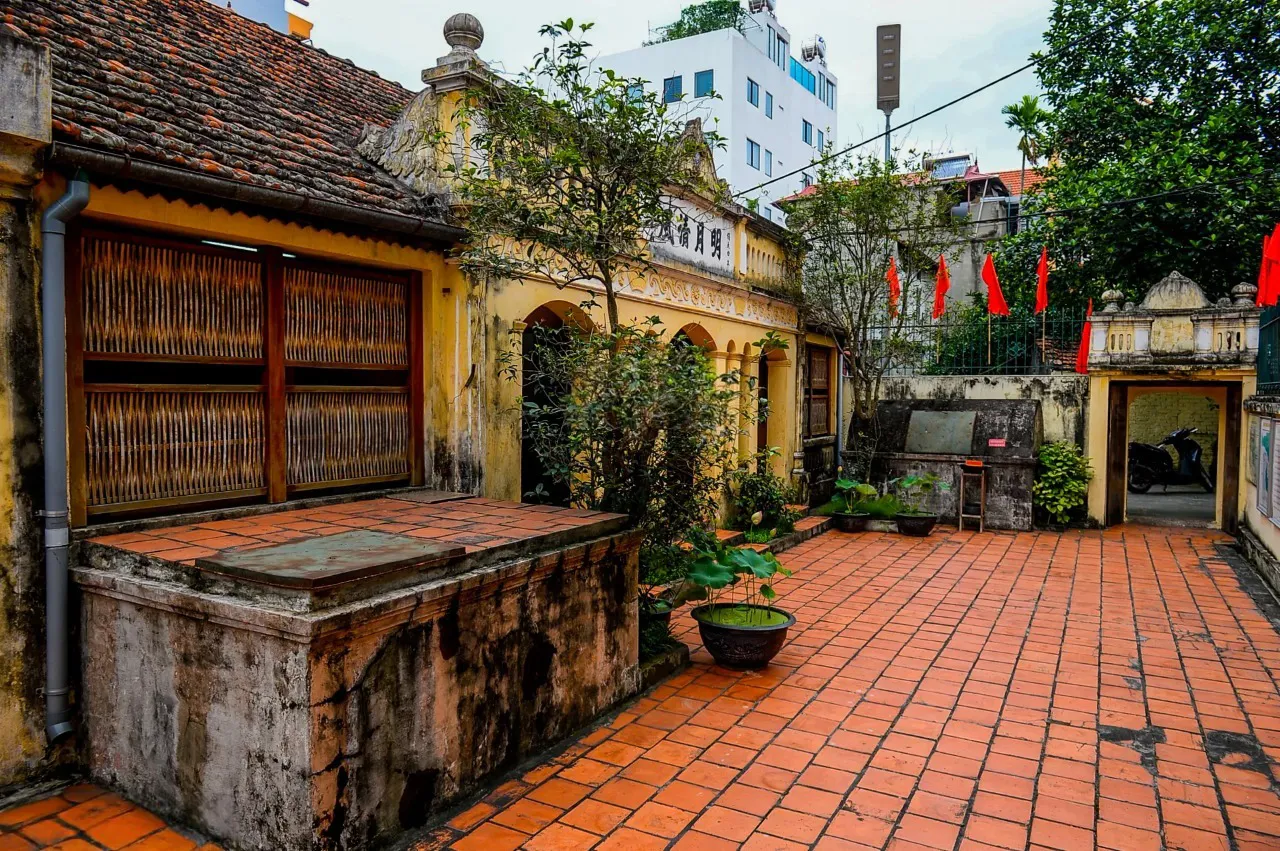
This simple yet elegant house in the heart of Hanoi is a typical Vietnamese home with three historic landmark linked to Vietnam’s August Revolution of 1945. Photo: Ngoc Tu/ The Hanoi Times
Nestled in a quiet neighborhood of Phu Thuong Ward is the house of the Cong family with a special place in Vietnam’s revolutionary story.
After returning from the Viet Bac resistance base to Hanoi, President Ho Chi Minh stayed at this house from August 23 to August 25, 1945.
During those days, he met with key figures like Truong Chinh, Vo Nguyen Giap, and Tran Dang Ninh to discuss the success of the nationwide uprising and prepare for the National Day.
A year later, on November 24, 1946, Uncle Ho returned to the house after attending the National Cultural Conference, an event fondly remembered by the family and local community.
In 1984, the Hanoi People’s Committee honored the house with a plaque, recognizing it as a revolutionary and resistance relic.
The home now includes a memorial hall dedicated to Uncle Ho, along with its original gate, yard, and supporting structures.