A Hanoi artisan turns straw into appealing tourism product
Artisan Nguyen Tan Phat makes amazing toy creatures such as buffaloes, horses, birds and dragonflies from straw that is discarded after each harvest. His creations catch the attention of locals and visitors alike.
Duong Lam Ancient Village in Son Tay Town, Hanoi, is a magnet for tourists, thanks to myriad historical and cultural relics associated with national heroes and figures.
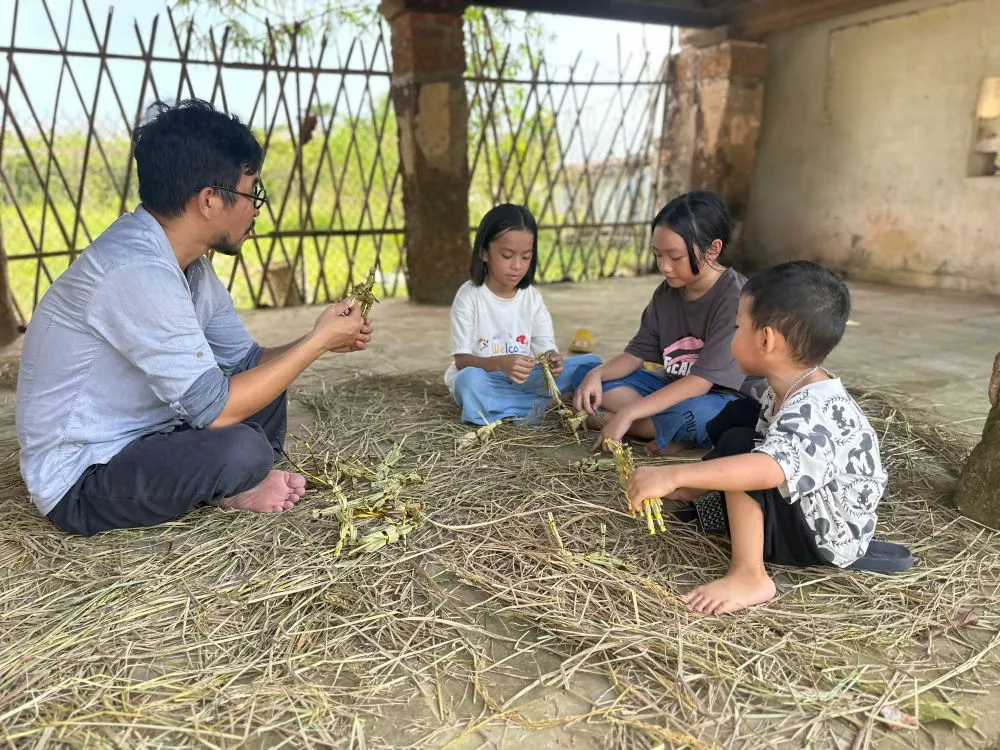
| Artisan Nguyen Tan Phat teaches children to make straw buffaloes and horses. Photo: Huy Pham/The Hanoi Times |
Characterized by centuries-old laterite houses, the village has seen its tourism boom in recent years. One of the most popular destinations for visitors to Duong Lam is the toy-making workshop of artist Nguyen Tan Phat.
Raised in the countryside of northern Vietnam, Phat spent most of his childhood in rice fields playing folk games. Memories of straw became the inspiration for him to create toys from this material. "Making buffaloes out of a straw is very easy, even children can learn it fast. With just patience, they will have their own safe, inexpensive, and environmentally friendly toys," he said.
Do Van Binh, a villager from Duong Lam, expressed his gratitude to Phat, saying, "On average, there is about a quintal of straw left after a harvest season. Phat buys it and helps us earn more income without polluting the environment because since there is no landfill, villagers usually burn straw and stubble in the fields after harvesting."
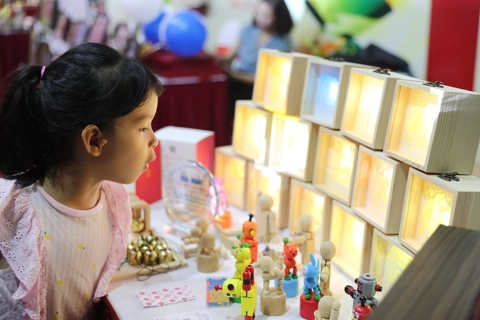
| Artist Nguyen Tan Phat's straw toys for children. Photo: Huy Pham/ The Hanoi Times |
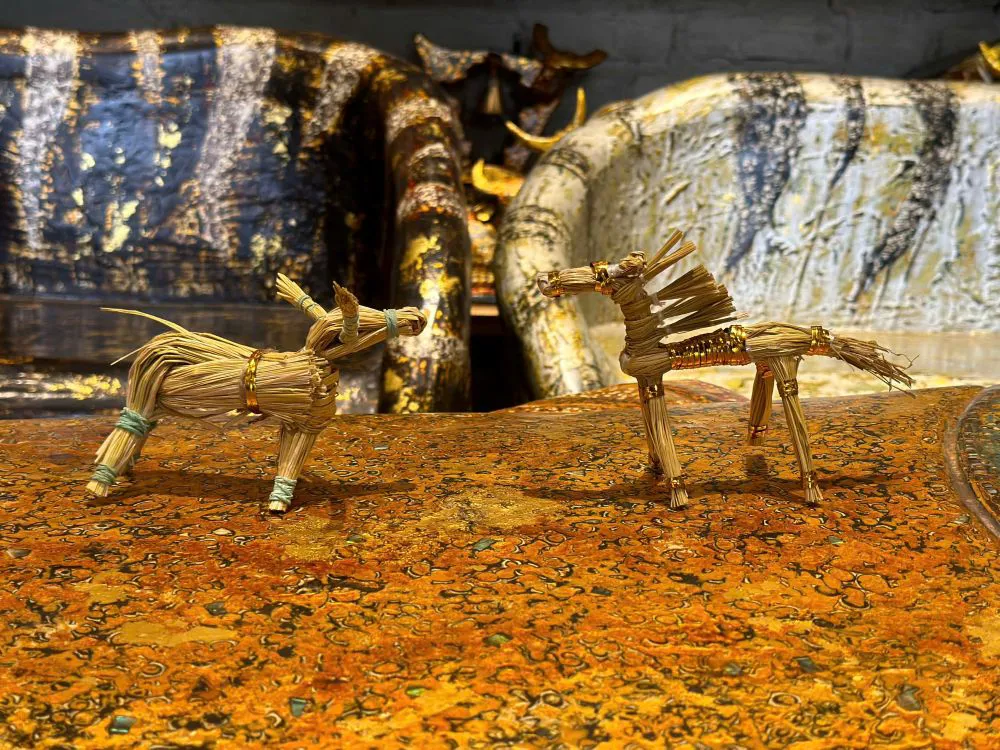
After drying and cleaning, the strongest and most beautiful straws are selected and neatly sorted into groups. Each group is used to create a specific body part, such as a head, buffalo horn, horse mane, leg, or tail, which are then skillfully woven together. Straw is a difficult material to work with due to its unstable strength, requiring careful craftsmanship to avoid deformation. The artisan admitted that straw toys are not very durable, so he and his team often have to restore such products to their original shape after a period of time.
As Phat recalls, the first straw buffalo he tried to make took him a total of four hours from straw selection to completion. This was an important milestone in his journey of "playing" with straw that shaped his current style and direction.
In terms of aesthetics, straw toys are very common, but it is difficult to reach the same level of intricacy as wooden or ceramic products. They require artisans to capture and accentuate characteristic details, such as buffalo horns or horse manes so that viewers can easily recognize the animals. Over time, with hundreds of finished products, Phat has made significant improvements, and his toys are now both charming and flexible.
| Local children enjoy the experience of crafting straw toys. Photo: Huy Pham/ The Hanoi Times |
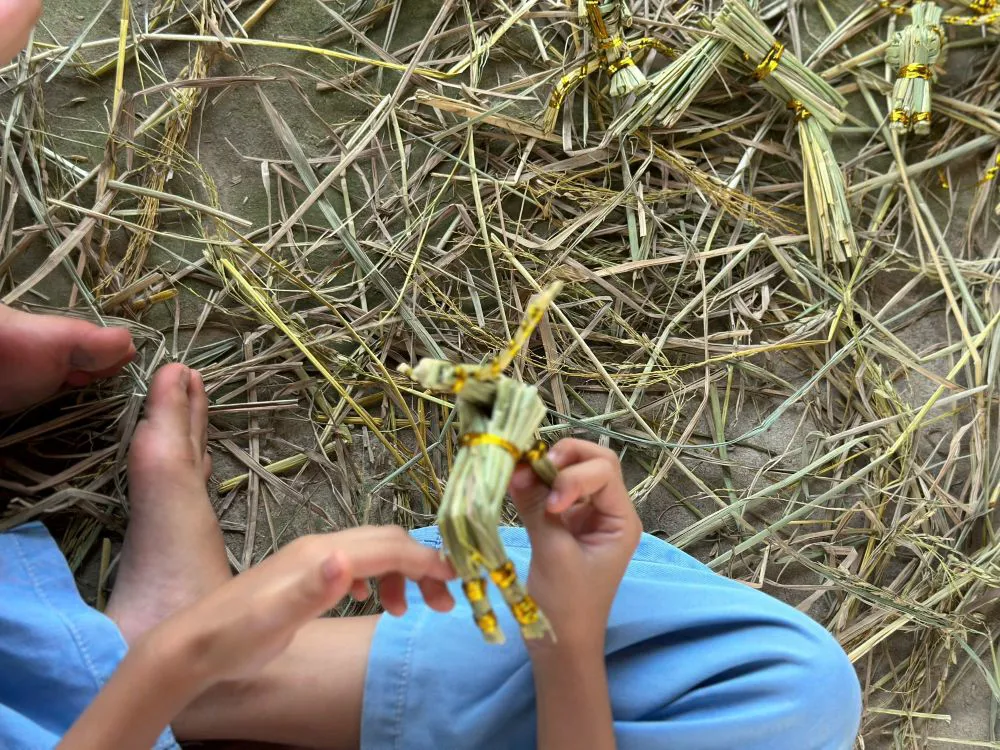
"These products not only bring joy to children in the village but also help promote local tourism," Phat said. According to the artisan, tourist groups coming to Duong Lam Ancient Village often like to experience traditional products, especially those with novelties. This suggests that straw can become a resource with high economic value and efficiency instead of just agricultural waste.
“In the future, I’ll try to release new creative products made of straw like this, to help farmers earn more income from the discarded material and promote the typical folk values of Vietnamese villages”, the craftsman added.
Nguyen Tan Phat's straw toys have been enthusiastically embraced by the local community. Realizing that straws are a great source of creative inspiration, he and members of the Son Tay Fine Arts Club continue to design new animal models and small toys. In addition, the team plans to make larger straw products such as scarecrows or highly practical items such as lamps and bags.
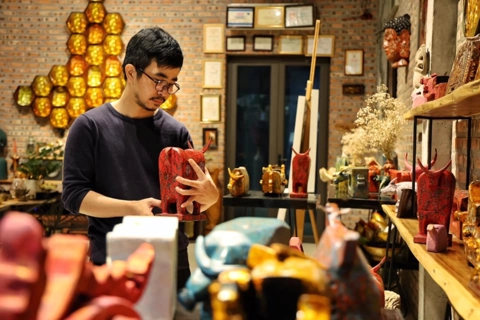
| Straw toys made by artisan Nguyen Tan Phat are displayed at his exhibition space in the center of Duong Lam Ancient Village. Photo: Huy Pham/ The Hanoi Times |
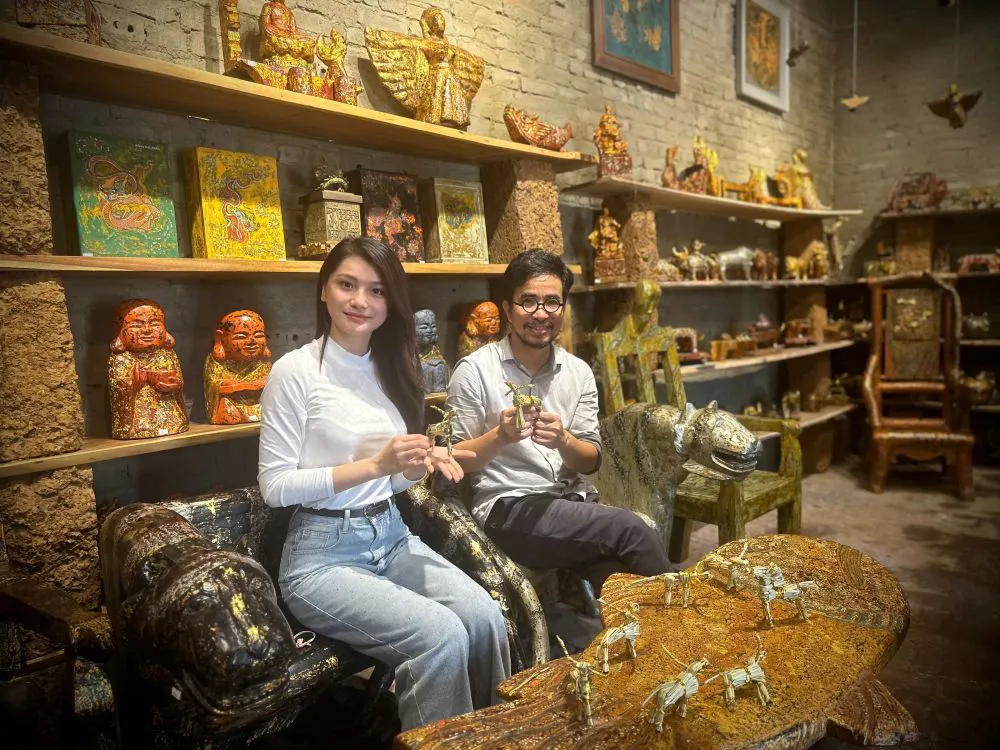
Besides making children's toys, Phat also opens free, hands-on lacquer art classes. Over the years, he has trained nearly 200 apprentices, from locals to people from other provinces and cities across the country. In the summer of 2023 alone, his gallery welcomed about 5,000 visitors.
Phat is also a pioneer in combining traditional arts with tourism. His activities under the theme "Ancient Village Night" provide visitors with unique cultural experiences and contribute to the development of the local night economy.
Artist Nguyen Tan Phat was born in 1983 into a family with a multi-generational passion for fine arts. After graduating from high school, he pursued professional painting by attending the Hanoi University of Industrial Fine Arts, majoring in lacquer painting.
Throughout his 22-year career, Phat has learned from skilled artisans in Hanoi's artisan villages and the Old Quarter. He has always stayed true to traditional craftsmanship, and his creations always convey important messages to the community.