ADB revises up Vietnam’s GDP growth for 2025
Vietnam’s economy is gaining momentum despite global headwinds, supported by strong exports and accommodative fiscal and monetary policies.
THE HANOI TIMES — The Asian Development Bank (ADB) has revised up Vietnam’s economic growth forecast to 6.7% in 2025, 0.4 percentage points higher than its previous projection in July.
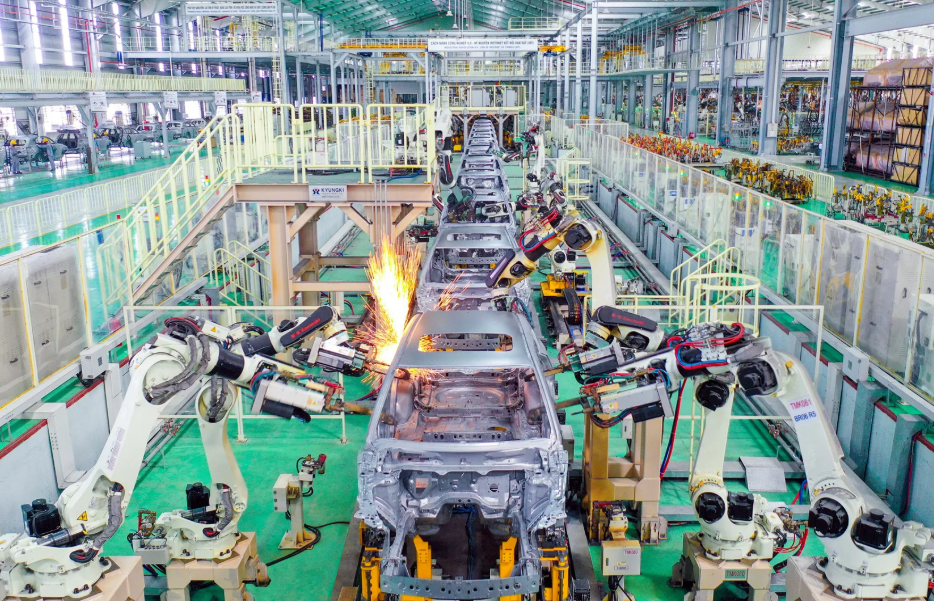
Automated robotic welding system at THACO Mazda factory. Photo: Pham Hung/The Hanoi Times
“A surge in exports ahead of the US tariff hikes and the government’s expansionary policies fueled economic growth in the first half of 2025,” ADB Country Director for Vietnam Shantanu Chakraborty said at the launch of the bank’s flagship annual economic publication today [September 30].
However, growth is expected to slow for the rest of the year due to the impact of the reciprocal tariffs that took effect on August 7. While the domestic economy remains resilient, growth is expected to moderate from the strong performance in the first half of 2025.
“Better coordination between fiscal execution and monetary policies will help avoid overburdening monetary tools and preserve macro-financial stability,” said Chakraborty.
“In the long term, wide-ranging regulatory reforms must tackle structural challenges, like ensuring climate resilience, boosting private sector competitiveness, enhancing the efficiency of state-owned enterprises, tax modernization and digital transformation. This is vital for a more balanced growth model.”
Echoing Chakraborty, ADB Principal Country Economist Nguyen Ba Hung added that effective public investment is key to sustaining growth and easing infrastructure bottlenecks.
With public debt at under 34% of GDP, well below the 60% ceiling, Vietnam still has significant fiscal space to support growth.
“Strong institutional reforms will help streamline the legal environment, improve disbursement efficiency and boost the domestic economy,” Hung said.
Given this favorable fiscal position, the government can stimulate growth through targeted tax cuts, lower compliance costs for businesses and increased social spending for low-income households.
“Coordinating structural reforms to improve the business climate and labor productivity will generate the strongest results. The budget deficit is projected at 3.8% of GDP in 2025,” the ADB Chief Economist noted.
However, capacity constraints in planning, implementing and managing projects at all levels continue to affect the timely disbursement of funds.
Domestic consumption remains supported by accommodative monetary and fiscal policies. Retail sales rose 9.4% on year in the first eight months of 2025, driven by a VAT cut, lower fuel taxes, a restructured corporate income tax for SMEs, and broader reforms that reduced costs.
At current prices, retail sales grew 7.2%, compared to 85% in the same period last year. The expansion of retail networks, deeper penetration of e-commerce and the recovery of tourism-related services are expected to strengthen domestic demand.
Meanwhile, manufacturing and exports have weakened as US tariffs may reduce demand for logistics, finance and business services in the second half of 2025. “If trade tensions persist, investment could slow, weighing on growth in high-value service industries in 2026,” said Hung.
On interest rates, the central bank continues to maintain growth-supportive policies. With credit growth likely to reach or exceed the 16% target for 2025, combined with the State Bank of Vietnam’s more flexible management approach, lending is expected to expand toward the end of the year.
However, the ADB expert cautioned that concerns over asset quality, loan portfolio risks and underlying inflationary pressures remain. In the short term, rising nonperforming loans and declining bank profits will limit the room for additional monetary easing.