14TH NATIONAL CONGRESS OF THE COMMUNIST PARTY OF VIETNAM
Log in
Property

Around 70,000 new apartments to be delivered in Hanoi

Hanoi’s apartment market is on the rebound and entering a new cycle, with prices remaining high due to strong demand.

Nearly 70,000 units from 91 new appartment projects are expected to be launched in 2026, mainly in Hanoi's suburban areas such as Dong Anh, Hoai Duc and Hoang Mai.

This information was highlighted in a recent market report by real estate consultancy Savills, which predicts a significant increase in new apartment supply in Hanoi from 2025.

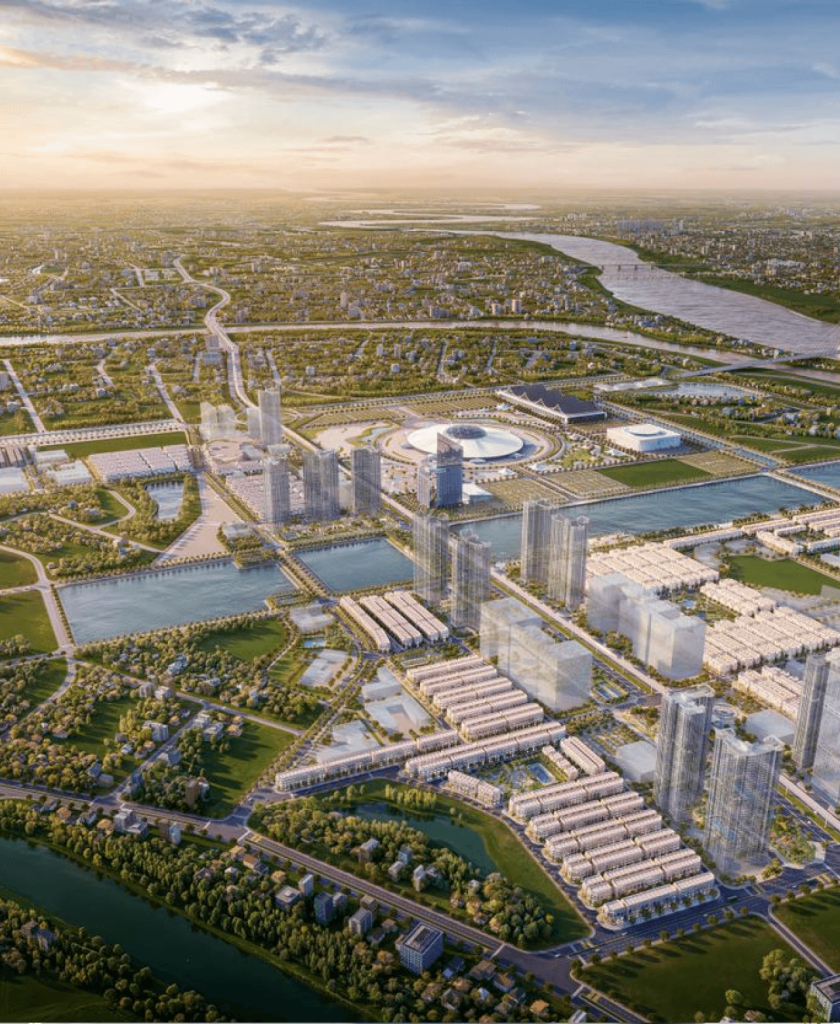
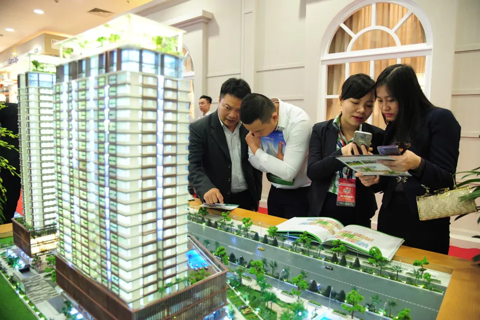
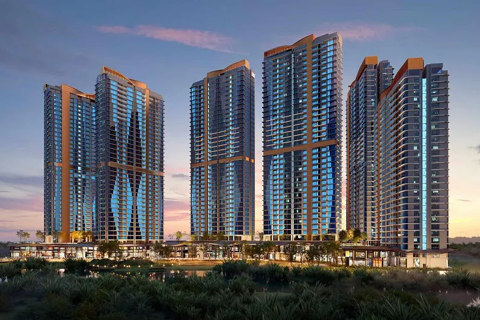
 A 3D model of Vinhomes Global Gate Co Loa in Dong Anh District. Photo: Vinhomes

Specifically, around 25,200 apartments will be delivered this year, with those in large urban projects in the mid-range segment accounting for 70% of the market share.

Do Thu Hang, Senior Director of the Consulting and Research Department at Savills Hanoi, noted that the apartment market has recovered and entered a new phase.

She added that nearly 25,000 new units were launched in the capital last year, the highest in five years, largely driven by the Vinhomes Smart City (Nam Tu Liem District) and Vinhomes Ocean Park (Gia Lam District) projects. In the fourth quarter alone, nearly 13,000 new units were launched, representing a quarterly increase of 146% and an annual increase of 351%.

This upward trend has been corroborated by various research agencies.

Another real estate firm, CBRE, reported that the number of newly launched apartments in Hanoi in 2024 could have tripled year-on-year, marking the highest annual supply since 2020.

The firm predicted that over 31,000 new units will be available in the capital in 2025, surpassing last year's figures. New supply is expected to come from the south (Hoang Mai District), east (Long Bien District), and west (Dan Phuong District).

The year 2025 will mark the beginning of a new cycle in the residential market as supply increases and competition among developers intensifies, according to CBRE.

Housing prices to stabilize in 2025

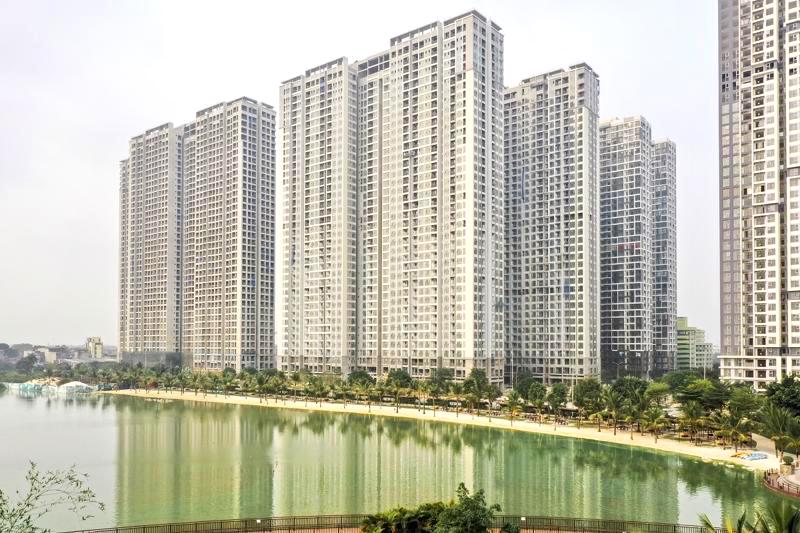
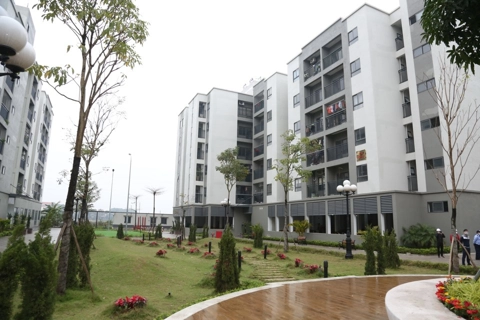
 An apartment building in Hanoi. Photo: Masteri West Height

According to Duong Thuy Dung, Executive Director of CBRE Vietnam, residential prices in Hanoi are expected to remain stable in 2025, with growth rates slowing to around 5-8% compared to 2024.

According to Savills, apartments priced above VND4 billion ($157,576) accounted for 59% of total sales in 2024, a significant increase from just 2% in 2020. Meanwhile, units priced between VND2-4 billion ($157,576-$78,788) made up 40%, with only 1% of apartments priced below VND2 billion ($78,788).

The firm attributes the pricing challenges to a mismatch between supply and demand, with most new supply concentrated in the mid-range (Class B) segment, while high-end (Class A) units are contributing to rising prices. As a result, apartment prices are unlikely to decline in 2025 and could either stabilize or continue to rise, the report said.

The firm added that from 2020 to 2024, the average price of existing apartments in Hanoi saw an annual increase of 22%. Class C apartments increased by 26% per year, class B by 20%, and class A by 19%.
Reactions:
Share:
Trending
Most Viewed
Related news
Tet renovation rush strains Hanoi crews, lifts finishing material costs prices

Tet renovation rush strains Hanoi crews, lifts finishing material costs prices

Hanoi’s home renovation market has entered its busiest stretch of the year, as year-end demand tightens contractor availability and raises the cost of finishing materials.

Vietnam construction materials rebound as prices rise and public investment accelerates

Vietnam construction materials rebound as prices rise and public investment accelerates

Rising steel and cement prices, stronger public investment spending and improving consumption across key material segments point to a broad recovery in Vietnam’s construction materials sector as 2026 begins.

Hanoi sets 40 sq.m housing space goal to lift urban living standards

Hanoi sets 40 sq.m housing space goal to lift urban living standards

Raising average housing space marks a people-centered shift in urban policy as the capital works to improve living standards, expand social housing and ensure that rapid economic growth goes hand in hand with safer and more livable neighborhoods.

Prime Minister urges measures to boost supplies and control house prices

Prime Minister urges measures to boost supplies and control house prices

Vietnam’s government is stepping up efforts to rebalance the real estate market as Prime Minister Pham Minh Chinh urges faster policy action to expand housing supply, address affordability pressures and ensure the sector supports both economic stability and social welfare.

Ho Chi Minh City forms first professional association for apartment management

Ho Chi Minh City forms first professional association for apartment management

Amid rapid urban growth, Ho Chi Minh City has established a professional body for apartment management, becoming the first locality in Vietnam to do so.

Real estate credit surge prompts tighter oversight to safeguard Vietnam’s financial stability

Real estate credit surge prompts tighter oversight to safeguard Vietnam’s financial stability

Vietnam’s real estate sector has absorbed a sharp rise in credit, supporting market recovery while raising concerns over capital concentration, speculative risks and the need for tighter policy coordination.

Revised housing roadmap doubles social housing targets for Hanoi

Revised housing roadmap doubles social housing targets for Hanoi

Vietnam’s push to accelerate affordable housing has significantly raised expectations for major cities, with Hanoi now tasked with delivering a far larger volume of social homes as part of the national goal to build more than one million units by 2030.

Social housing supply exceeds targets in 2025 as Vietnam tackles property imbalances

Social housing supply exceeds targets in 2025 as Vietnam tackles property imbalances

Vietnam surpassed its social housing construction target in 2025, marking progress in housing policy, but supply mismatches, high prices and legal bottlenecks continue to weigh on the real estate market.