14TH NATIONAL CONGRESS OF THE COMMUNIST PARTY OF VIETNAM
Log in
Property

Vietnam to invest US$290 million in power line to import electricity from China

The 500 kV Lao Cai - Vinh Yen power transmission project will help release 2,000 MW of capacity from hydroelectric plants in the northwest and increase the ability to import electricity from China.

The project, which crosses the province of Yen Bai, was inaugurated by the Vietnam Electricity Group (EVN) on March 3.
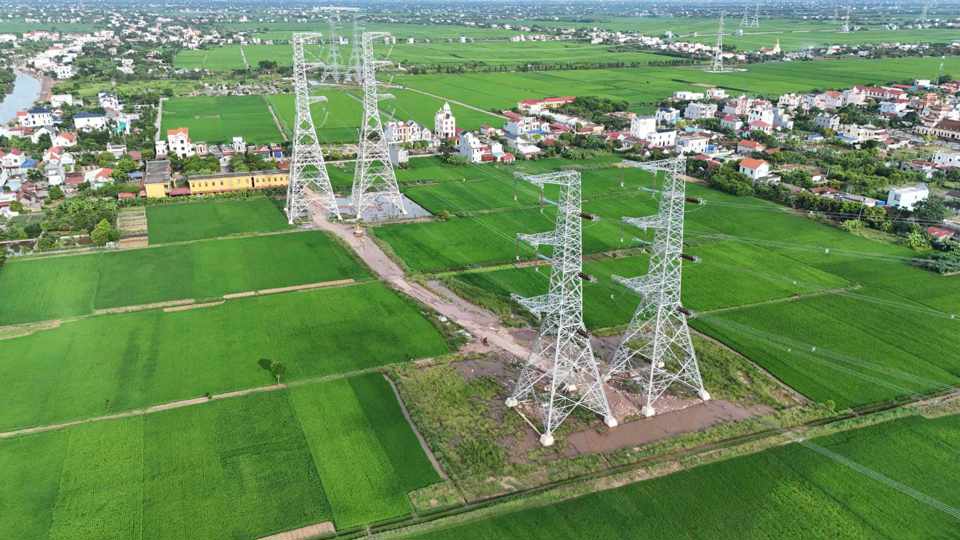
The 500kV project from Quang Trach (Quang Binh) to Pho Noi (Hung Yen). Photo: Xuan Tien/The Hanoi Times

This is a national key project approved by the prime minister in October 2024.

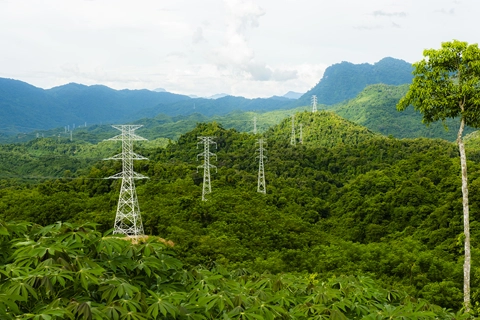
The project consists of a double circuit with a total length of 229.5 km and 468 pole foundations. The transmission line will pass through four provinces: Lao Cai, Yen Bai, Phu Tho, and Vinh Phuc. The starting point is the 500 kV Lao Cai substation and the ending point is the 500 kV Vinh Yen substation. The total investment is over VND7.41 trillion (US$290 million), of which 80% is financed by JSC Bank for Foreign Trade of Vietnam (Vietcombank) and the rest by EVN's own capital.

It is expected to be completed within six months, with an anticipated startup date before September 2. Once operational, it will help release approximately 2,000 MW from hydropower plants in the northwest and neighboring provinces.

According to EVN officials, the 500 kV Lao Cai - Vinh Yen power line will also strengthen the country's ability to import electricity and provide standby capacity for power purchased from China when needed. Earlier, the Ministry of Industry and Trade (MoIT) announced that EVN is studying the possibility of purchasing an additional 3,000 MW of electricity from China through a substation at the Vietnam-China border, with an estimated annual output of 15 billion kWh. If approved, this imported power would be connected to the 500 kV Lao Cai substation and transmitted mainly through the 500 kV Lao Cai - Vinh Yen transmission line.

Along with domestic sources (such as hydropower, gas, and renewables), imported electricity is one of the solutions to meet energy demand in the coming years as the country aims for high growth.

In the draft of the revised Power Development Plan VIII, the MoIT calculates that the share of imported power could reach 5% of the total installed capacity by 2030. This is about 1.7% higher than the current plan and 4% by the end of 2024. Specifically, the ministry proposes to import about 3,700 MW of electricity from China by 2030, an increase of 3,000 MW from the current Power Plan VIII. In addition, Vietnam plans to raise electricity imports from Laos, with an expected capacity of 6,800 MW by 2030 under a high-growth scenario, nearly 1.6 times higher than the current Power Plan VIII forecast of 4,300 MW.

According to the MoIT, the volume of imported electricity has increased steadily in recent years, reaching 5 billion kWh by the end of 2024. 
Reactions:
Share:
Trending
Most Viewed
Related news
Vietnam set to increase power imports

Vietnam set to increase power imports

17 Feb, 14:03

Vietnam is pushing for double-digit economic growth in the coming years, which is expected to drive annual electricity demand growth of 12-14%.

Revised housing roadmap doubles social housing targets for Hanoi

Revised housing roadmap doubles social housing targets for Hanoi

Vietnam’s push to accelerate affordable housing has significantly raised expectations for major cities, with Hanoi now tasked with delivering a far larger volume of social homes as part of the national goal to build more than one million units by 2030.

Social housing supply exceeds targets in 2025 as Vietnam tackles property imbalances

Social housing supply exceeds targets in 2025 as Vietnam tackles property imbalances

Vietnam surpassed its social housing construction target in 2025, marking progress in housing policy, but supply mismatches, high prices and legal bottlenecks continue to weigh on the real estate market.

Online building permits promise faster approvals and transparency in Vietnam

Online building permits promise faster approvals and transparency in Vietnam

Lengthy and complex construction procedures may soon be replaced by faster online approvals as Vietnam rolls out reforms to ease housing pressures and improve transparency in land management.

Hanoi apartment market set for steady growth as suburban supply reshapes demand

Hanoi apartment market set for steady growth as suburban supply reshapes demand

Hanoi’s primary apartment market is entering a more measured expansion phase, driven by growing supply in outlying areas and softer price movements, with infrastructure upgrades and end-user demand expected to anchor the primary apartment market through 2026.

Hanoi plans 39 social housing projects to meet 2030 affordable housing target

Hanoi plans 39 social housing projects to meet 2030 affordable housing target

Hanoi is accelerating its social housing program to expand affordable supply for workers and low- to middle-income residents while managing rising costs and price pressures.

Vietnam real estate market poised for new growth cycle in 2026

Vietnam real estate market poised for new growth cycle in 2026

With more open institutions and stronger trust, real estate will remain a key sector supporting double-digit GDP growth from 2026.

Affordable housing to boost Vietnam’s real estate market

Affordable housing to boost Vietnam’s real estate market

Affordable housing should be viewed as a long-term socioeconomic policy rather than a short-term support measure.

Van Cao – Hoa Lac metro line opens prospects for Hanoi’s urban development

Van Cao – Hoa Lac metro line opens prospects for Hanoi’s urban development

The line is a strategic infrastructure project that plays a key role in shaping urban development and sustainable transport in the new phase.