Infrastructure plans fuel surge in Hanoi suburban land auctions
Surging land auctions in Hanoi’s outlying communes, marked by sharply higher winning bids, point to returning capital and renewed confidence, while also stirring debate over speculation risks and whether prices truly reflect long-term demand and market fundamentals.
THE HANOI TIMES — Auctions of land-use rights around Hanoi in early 2026 have drawn large crowds and bids far above starting prices, signaling renewed investor interest in the capital’s real estate market.
Authorities in Tay Phuong Commune on February 8 auctioned 44 land plots in Binh Xa Village and the Dong Nga and Ma Co areas.

Bidders at the land auction in Tay Phuong Commune on February 8. Photo: Hanoimoi Newspaper
The auction attracted heavy participation, with the highest winning bid reaching nine times the starting price. Investors cited the plots’ proximity to Provincial Road 419 and Viet Hung University of Industry as key attractions.
Around the same time, authorities in Ha Bang Commune auctioned 34 residential plots in the Muc Uyen 2 area, ranging from 125m2 to 180m2, with starting prices of VND8.5 million to VND13 million ($328-$506) per square meter.
All plots were sold, with the highest price reaching VND90 million ($3,480) per square meter. Total proceeds from the auction exceeded VND275 billion ($10.6 million).
On January 30, Quang Minh Commune held a land auction in which bids rose as much as 12 times from a starting price of VND10.9 million ($420) per square meter to a peak of VND130 million ($5,020).
The plots, measuring between 75m2 and 211m2, all carried long-term residential land-use rights. The auction generated more than VND57.5 billion ($2.2 million), exceeding the initial valuation by over VND50 billion ($1.9 million).
According to Nguyen Van Dinh, Vice Chairman of the Vietnam Real Estate Association, the surge in suburban land auctions reflects several converging factors.
He said land prices in Hanoi’s inner areas have risen beyond the reach of most small- and medium-sized investors, shifting demand toward suburban areas with lower entry costs and perceived upside.
Market sentiment has also improved amid greater stability in monetary policy. Lending rates have eased from earlier peaks and while real estate credit remains tightly controlled, lower borrowing costs have encouraged cautious investor returns, Dinh said.
Many investors are focusing on segments viewed as reasonably priced and relatively liquid.
Expectations around infrastructure and urban planning have further fueled demand. Information on Hanoi’s urban expansion, satellite city development and major transport projects such as Ring Road 4 and inter-regional connectors has boosted interest in suburban land.
Investors expect these projects to support medium- and long-term price growth once completed.
Dinh said land acquired through official auctions offers stronger legal certainty than informal transactions.
In an environment of lingering uncertainty, that legal clarity provides reassurance, even if short-term profit potential remains limited, he said.
“If immediate resale is not viable, investors can still hold the land or build homes for future use,” the specialist said.
Warning against speculation
Despite the active bidding, experts warn of risks linked to localized speculation.
When investors converge on the same areas and push prices up rapidly, the risk of inflated valuations increases, they say.
High winning bids may not reflect genuine housing demand and could instead stem from competitive bidding driven by short-term resale expectations.
Nguyen The Diep, Vice Chairman of the Hanoi Real Estate Club, said past cycles offer a clear warning.
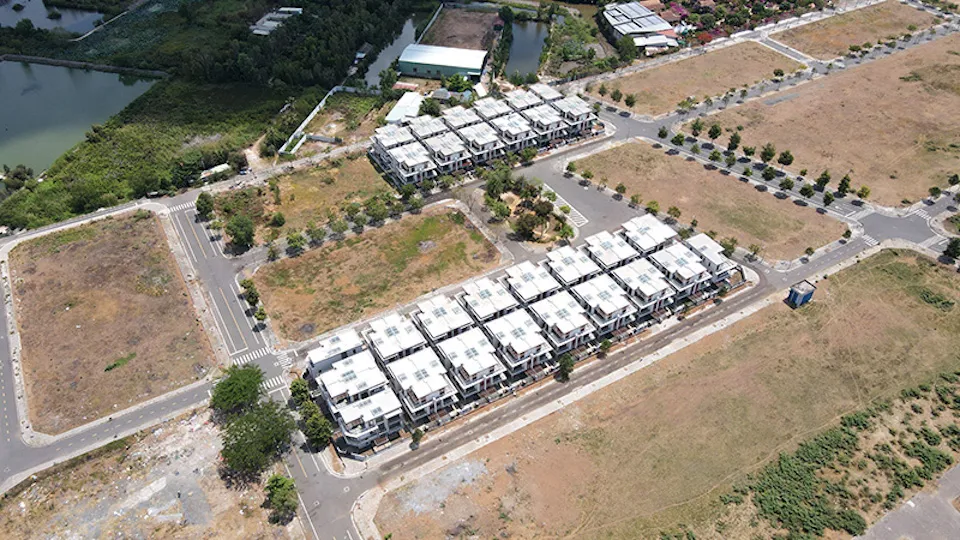
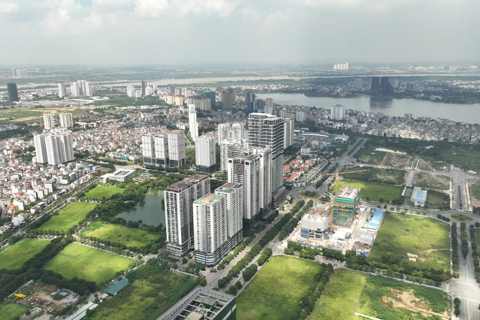
Hanoi’s real estate market has witnessed a noticeable revival through a series of land-use rights auctions held in several suburban areas. Photo: Kinh te & Do thi Newspaper
Suburban land around Hanoi has experienced sharp booms before, followed by rapid cooling that left some investors holding illiquid assets for extended periods, he said.
“This risk remains, especially amid global and domestic economic uncertainties,” Diep said.
Echoing that view, Dinh warned that winning auctions at excessively high prices can complicate exit strategies, particularly in areas far from the city center where infrastructure and real housing demand remain limited.
He advised investors to carefully assess their financial capacity, avoid heavy short-term borrowing and closely examine zoning plans, infrastructure timelines and actual land usability before bidding.
In his view, rapid price spikes do not fully reflect market fundamentals.
“Some investors may place excessive expectations on planning announcements, while implementation could take much longer. In such cases, capital may remain tied up for years,” he said.
From a broader perspective, the early-2026 surge suggests capital is gradually returning to Hanoi’s property market, but in a more selective manner than in previous boom cycles.
Investment is concentrating on assets with clear legal status, reasonable pricing and long-term infrastructure prospects rather than spreading widely.
Economic expert Tran Kim Chung said any recovery is likely to be uneven and gradual.
Areas with clear planning, strong connectivity and existing residential communities are likely to rebound sooner, he said.
From this perspective, active auctions in certain suburban areas may represent a market test driven by long-term expectations rather than pure short-term speculation.
In 2026, auctioned land is likely to continue attracting attention, but a broad-based land fever appears unlikely, Chung said.
Market differentiation will intensify and only areas with tangible infrastructure progress and genuine housing demand are expected to maintain liquidity and stable prices.
For investors, early-year optimism should be balanced with careful assessment.
Over the longer term, Hanoi’s real estate market can develop sustainably only if growth aligns with balanced urban planning and real demand, rather than short-lived auction-driven excitement.