Hanoi sets 40 sq.m housing space goal to lift urban living standards
Raising average housing space marks a people-centered shift in urban policy as the capital works to improve living standards, expand social housing and ensure that rapid economic growth goes hand in hand with safer and more livable neighborhoods.
THE HANOI TIMES — Hanoi has set a target to raise average housing space to at least 40 square meters (sq.m) per person by 2030, marking a decisive shift in urban living standards and placing people at the center of housing policy.
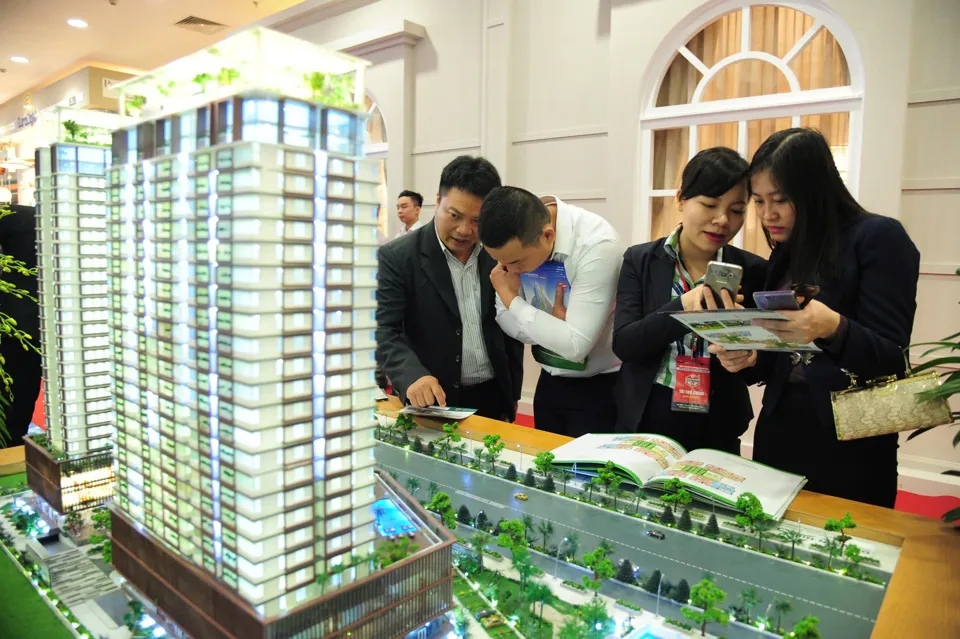
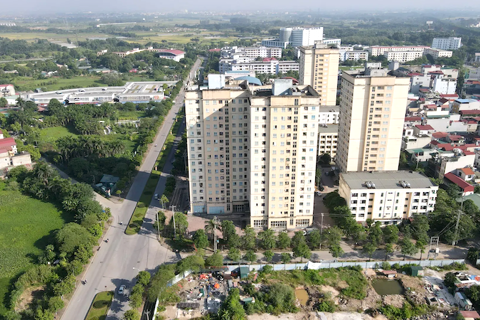
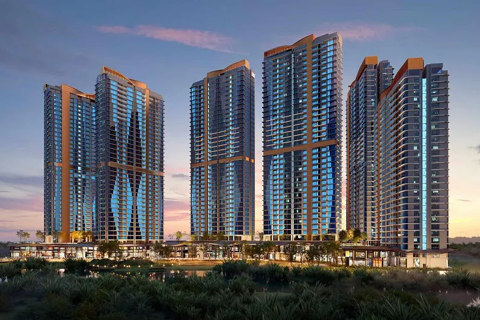
Prospective buyers seek information on a housing project in Hanoi. Photos: Kinh te & Do thi Newspaper
The goal is part of the adjusted Housing Development Program for the 2021-2030 period approved earlier this week at the 31st session of the municipal People’s Council.
Under the revised program, the capital plans to develop about 255 million sq.m of housing floor area during 2021-2030, equivalent to more than 1.82 million units, lifting average housing space from 32 sq.m per person to at least 40 sq.m by 2030.
The revision updates GRDP and population forecasts under the Capital Master Plan with a 100-year vision and aligns with the National Housing Development Strategy through 2045.
In the 2031-2035 period, Hanoi plans to add another 127.5 million sq.m, raising average housing space to at least 45 sq.m per person and moving toward 50 sq.m by 2045.
Speaking at the session, Duong Duc Tuan, Deputy Chairman of the Hanoi People’s Committee, said the adjustment reflects updated forecasts for population and economic growth and aligns with Hanoi’s long-term development strategy.
“To keep pace with rapid urbanization and rising living standards, our housing policy must ensure adequate space for residents and strengthen Hanoi’s capacity to attract skilled workers,” Tuan told the council while presenting the resolution, adding that the target will guide future development projects and infrastructure planning across the city.
According to Associate Professor Dr. Dang Hung Vo, former Deputy Minister of Natural Resources and Environment, the higher housing space target reflects a fundamental shift in urban governance.
“Housing is no longer viewed merely as shelter. It is now linked to public health, labor productivity and social stability, especially in large cities like Hanoi, where population pressure is intense.”
This approach echoes the National Housing Development Strategy approved by the prime minister, which identifies adequate housing space as a prerequisite for improving quality of life and narrowing social gaps.
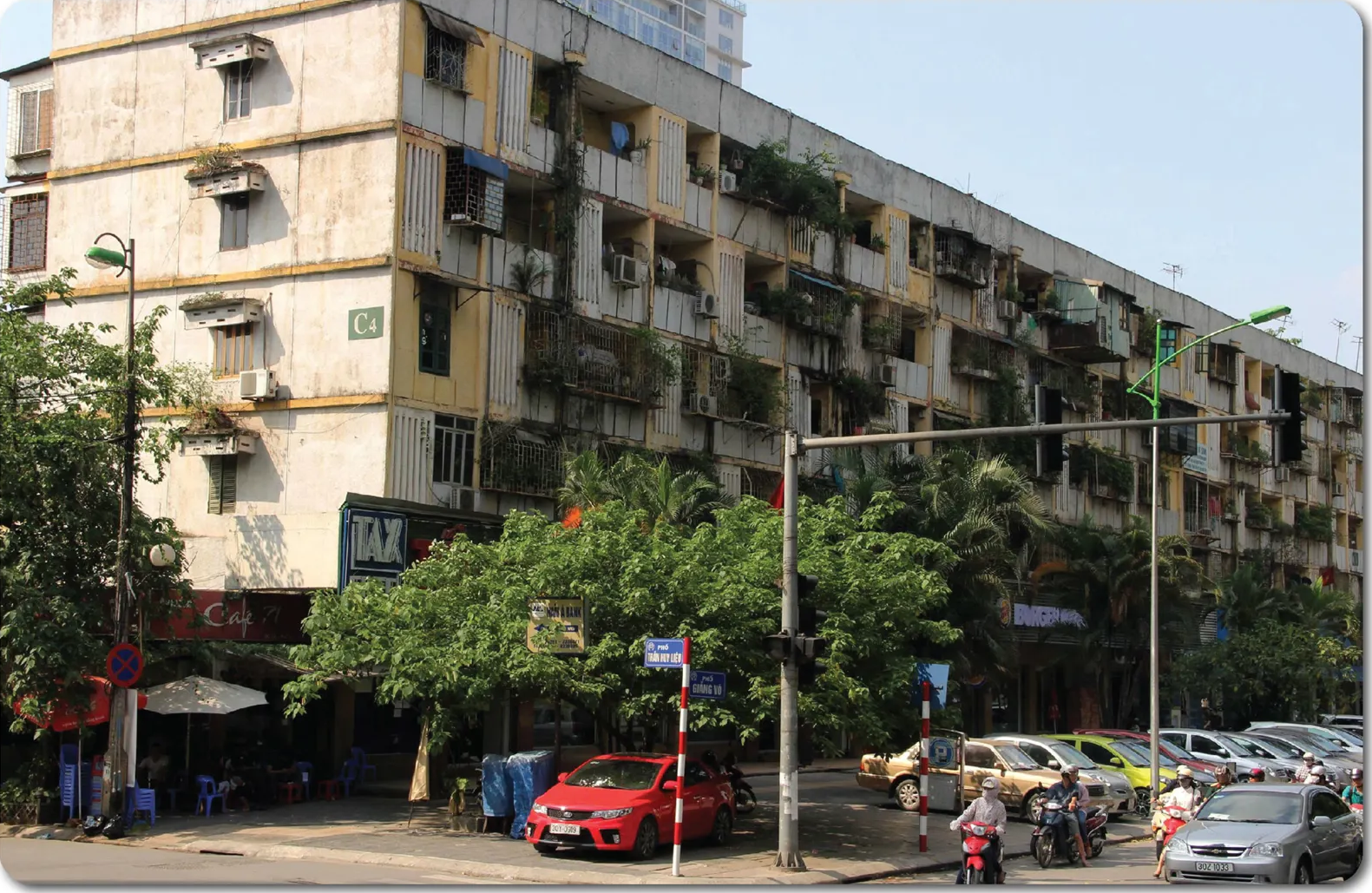
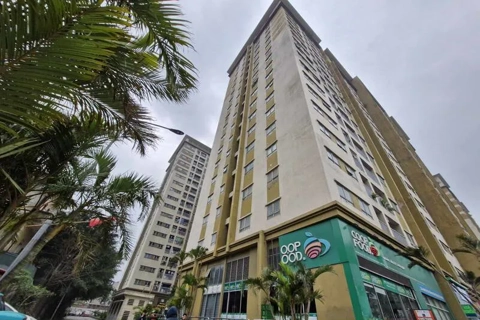
An old apartment building in Hanoi's Giang Vo Ward.
Meanwhile, Dr. Nguyen Quoc Hien, former Director of the Housing and Real Estate Market Management Department under the Ministry of Construction, said insufficient housing space has long been a hidden constraint on urban development.
“When living space is too limited, it affects family well-being, workforce retention and even birth rates. Raising per capita housing space is a humane policy choice that supports long-term demographic balance,” he stressed.
Hanoi’s revised program places quality alongside quantity. By 2030, all housing in urban and rural areas is expected to meet solid or semi-solid standards, ending substandard and makeshift homes that persist in some suburban areas.
The city will continue eliminating temporary housing and supporting poor and near-poor households in building or repairing homes under the national “three solid criteria,” requiring solid foundations, walls and roofs.
Social housing is placed at the core of this people-centered orientation. Hanoi plans to develop at least 144,000 social housing units during 2021-2030, with a longer-term target of at least 500,000 units by 2035.
According to the Ministry of Construction, industrial workers, public employees and young families are among the groups most affected by rising housing prices in major cities.
To address this gap, Hanoi is adjusting eligibility rules, easing income conditions, revising unit size frameworks and expanding access to purchase, rent and lease-to-own schemes.
Under Government Decree 302 issued in November 2025, Hanoi is allowed to flexibly convert among social housing, commercial housing, resettlement housing and rental housing through the city’s Development Investment Fund, helping avoid idle housing stock and better match real demand.
Urban renovation is another pillar of the program. Many old apartment blocks built decades ago no longer meet safety or space requirements.
During 2026-2030, Hanoi aims to complete the reconstruction of unsafe old apartment buildings covering about 1.5 million sq.m, or nearly 20,000 units. By 2035, all 2,160 old apartment buildings in the city are targeted for renovation.
“These projects must ensure residents can return to improved homes rather than being pushed to the outskirts. That is the true measure of humane urban renewal,” said architect Nguyen Luong Tam, Vice President of the Vietnam Association of Architects.
With estimated housing investment needs of about VND2.8 quadrillion (US$112 billion) for 2021-2030, Hanoi has emphasized transparency, land-use efficiency and measures to curb speculation.
Within this framework, the target of at least 40 sq.m of housing space per capita by 2030 serves as the central benchmark guiding social housing expansion, apartment renovation and urban spatial planning.
The target underscores Hanoi’s shift toward linking economic growth with safer housing, more livable neighborhoods and long-term social stability.
It also marks a move from expanding supply alone to prioritizing housing quality, fairness and urban resilience across the capital.