Western West Lake area poised to become Hanoi’s next-generation office center
Driven by expanding metro lines, ring roads and a renewed West Lake master plan, Tay Ho Tay or the western area of the West Lake is emerging as a strategic office hub under Hanoi’s shift toward transit-oriented urban development.
THE HANOI TIMES — Tay Ho Tay is emerging as a future office hub of Hanoi, supported by strong regional connectivity, synchronized planning and a distinctive green, waterfront setting.
The shift comes as Hanoi restructures its urban space under a transit-oriented development (TOD) model, in which metro lines, ring roads and radial corridors are designed to anchor new growth poles rather than merely relieve congestion.
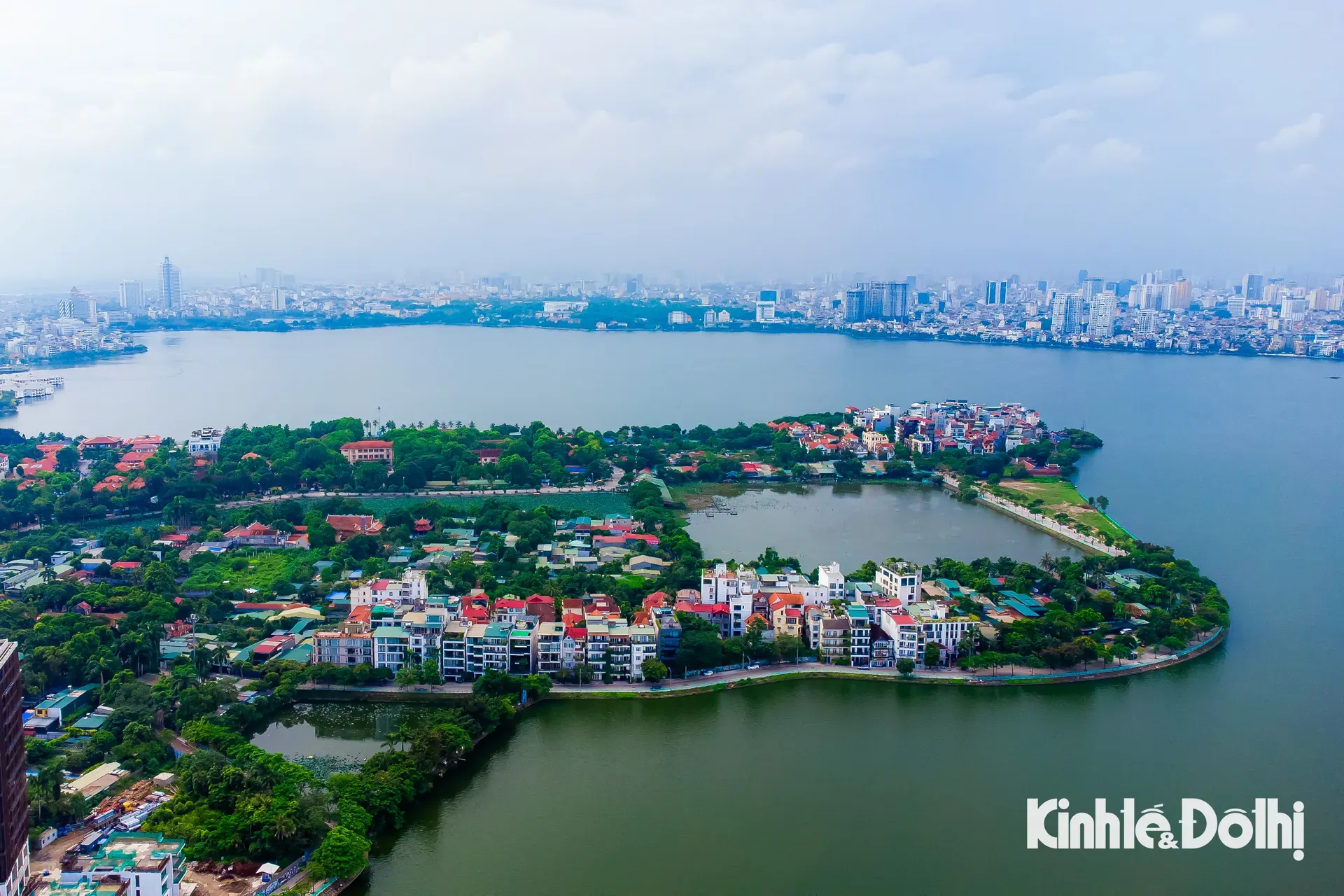
The overview of the West Lake. Photo: Duy Minh/The Hanoi Times
Instead of isolated projects, the city is promoting mixed-use clusters built around public transit hubs, integrating offices, housing, retail and services within walking distance.
Tay Ho Tay, or the western side of the West Lake, sits on a strategic axis linking the historic core with northern growth zones. Over time, it will benefit from Metro Line 2 (Nam Thang Long–Tran Hung Dao), Line 4 (Me Linh–Sai Dong–Lien Ha) and Line 6 (Noi Bai–Ngoc Hoi).
Once operational, these lines will shorten travel times to the city center and improve connections to Noi Bai International Airport and satellite towns.
Ring Roads 2, 3 and 3.5, along with radial routes and Red River bridges, further link the area to Dong Anh, Me Linh and satellite cities such as Soc Son, Son Tay and Hoa Lac.
This network underpins the TOD model, concentrating density and urban functions around transit nodes to reduce dependence on private vehicles.
Urban planning expert Ngo Viet Nam Son said TOD is not simply about building high-rises near metro stations, but about reorganizing urban structure. It creates multifunctional centers within a 400-meter to 800-meter radius of transit hubs, where residents can live, work and access services on foot.
In areas with ample land and coordinated planning such as Tay Ho Tay, integrating TOD from the outset proves more effective than retrofitting dense inner-city districts, Son said.
When transport infrastructure forms the backbone, office and commercial projects align along these corridors, creating long-term competitive advantages.
William Gramond, Director of Commercial Leasing at Savills Hanoi, said the shift toward newly planned districts has accelerated in recent years.
Companies now look beyond a single building, weighing public transport access, surrounding environment and image alongside rental costs.
When metro lines begin operating, TOD-oriented areas will gain clear advantages, particularly in the Grade A segment, where multinational firms require high standards for operations and sustainability, Gramond added.
Tenant preferences
Beyond its infrastructure and geographic location, Tay Ho Tay draws strength from its proximity to West Lake and its green, waterfront landscape.
Hanoi recently approved a plan to preserve and enhance the West Lake area, covering about 2,440 hectares, including the lake, parts of the Red River and connected green corridors.
The plan envisions a tourism, cultural and commercial hub built around an integrated urban ecosystem. The city is also upgrading more than 11.5 kilometers of lakeside roads through public-private partnerships.
Urban planning expert Nam Son said waterfront preservation should align with TOD strategy. Transit systems will struggle to create lasting value if they do not connect with high-quality public spaces such as parks and plazas. Meanwhile, direct links between public transport and green space can significantly lift area value.
As Hanoi’s office market enters a new cycle with substantial Grade A supply expected in the next two to three years, Tay Ho Tay remains a focal growth area. Market occupancy stands at around 85%, indicating stable demand despite rising supply.
Within the Starlake urban area, projects such as Parc Hanoi and IFC Hanoi are set to open soon, adding premium office stock and reinforcing Tay Ho Tay’s emerging status.
Gramond said projects in well-planned districts that benefit from TOD are likely to achieve stronger occupancy and rental performance as competition intensifies. As companies integrate office space into branding and talent strategies, infrastructure, landscape and community environment become decisive factors.
Taken together, metro expansion, ring roads, bridge links, coordinated planning and West Lake preservation give Tay Ho Tay a structural advantage.
While the traditional downtown has long dominated due to its historic position, TOD-driven districts are gradually redefining the concept of centrality.
In the long term, once public transport networks mature and lakeside upgrades are completed, Tay Ho Tay could serve as a model for Hanoi’s TOD strategy, anchoring growth around transit, green space and workplace quality.