Hanoi taps Red River corridor to support ambition of double-digit growth
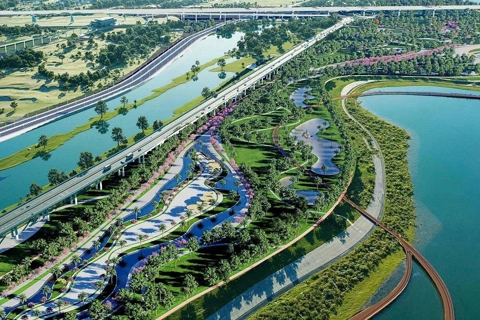
Looking toward the next century, Hanoi now has an opportunity to restore the Red River’s strength and reflect the stature of a capital city moving toward sustainable development.
THE HANOI TIMES — Hanoi is positioning the Red River Landscape Boulevard as a central pillar of its long-term development strategy, aiming to unlock new urban space, attract investment and power the capital’s ambition of achieving double-digit economic growth.
Tran Huy Anh, a Standing Committee Member of the Hanoi Architects Association, spoke with The Hanoi Times about the vision of the “Red River Miracle” in the Capital’s Master Plan and his expectations for Hanoi’s development over the next 50 to 100 years.
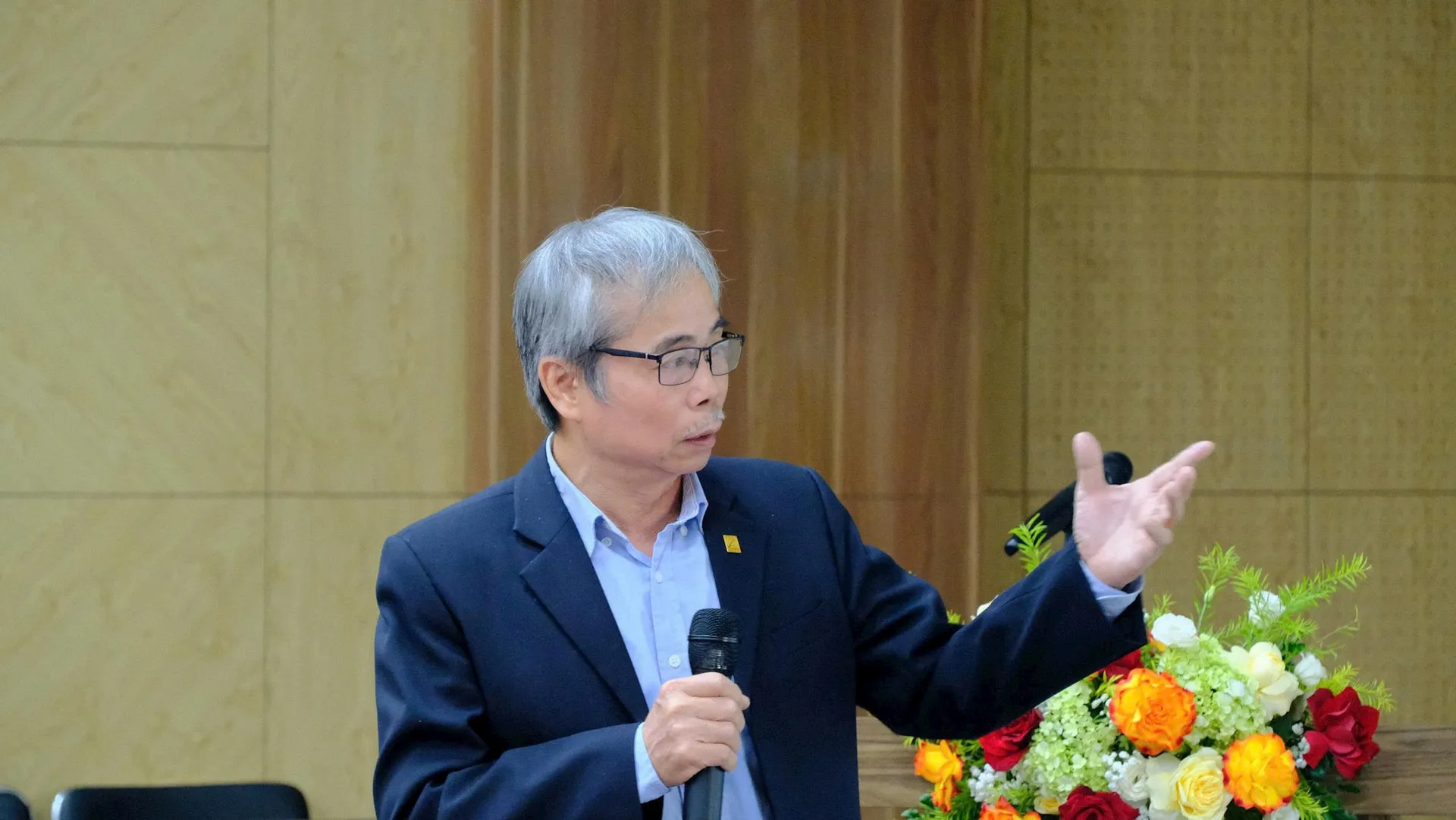
Architect Tran Huy Anh.
In the Capital Master Plan, the Red River spatial axis is identified as a a strategic pillar for Hanoi’s long-term development. What is the strategic significance of this orientation for Hanoi’s long-term development?
The plan aims to expand growth space and strengthen regional connectivity with the Red River Delta, the northern midland and mountainous areas and the wider metropolitan region.
Hanoi is restructuring its urban model to create fundamental changes in architecture, landscape, housing and heritage, shifting from “preservation and renovation” to “value reconstruction” to establish a new spatial structure, unlock land resources and remove infrastructure bottlenecks.
The city also places culture at the center of its development strategy. The two banks of the Red River are being studied as a large-scale public cultural and artistic space, envisioned as a symbolic landmark in the capital’s next phase of growth.
With a 100-year vision, the Red River spatial axis is positioned as a key growth driver to support Hanoi’s ambition of achieving double-digit economic expansion, under a development model defined as multi-polar, multi-center, multi-layered and multi-dimensional.
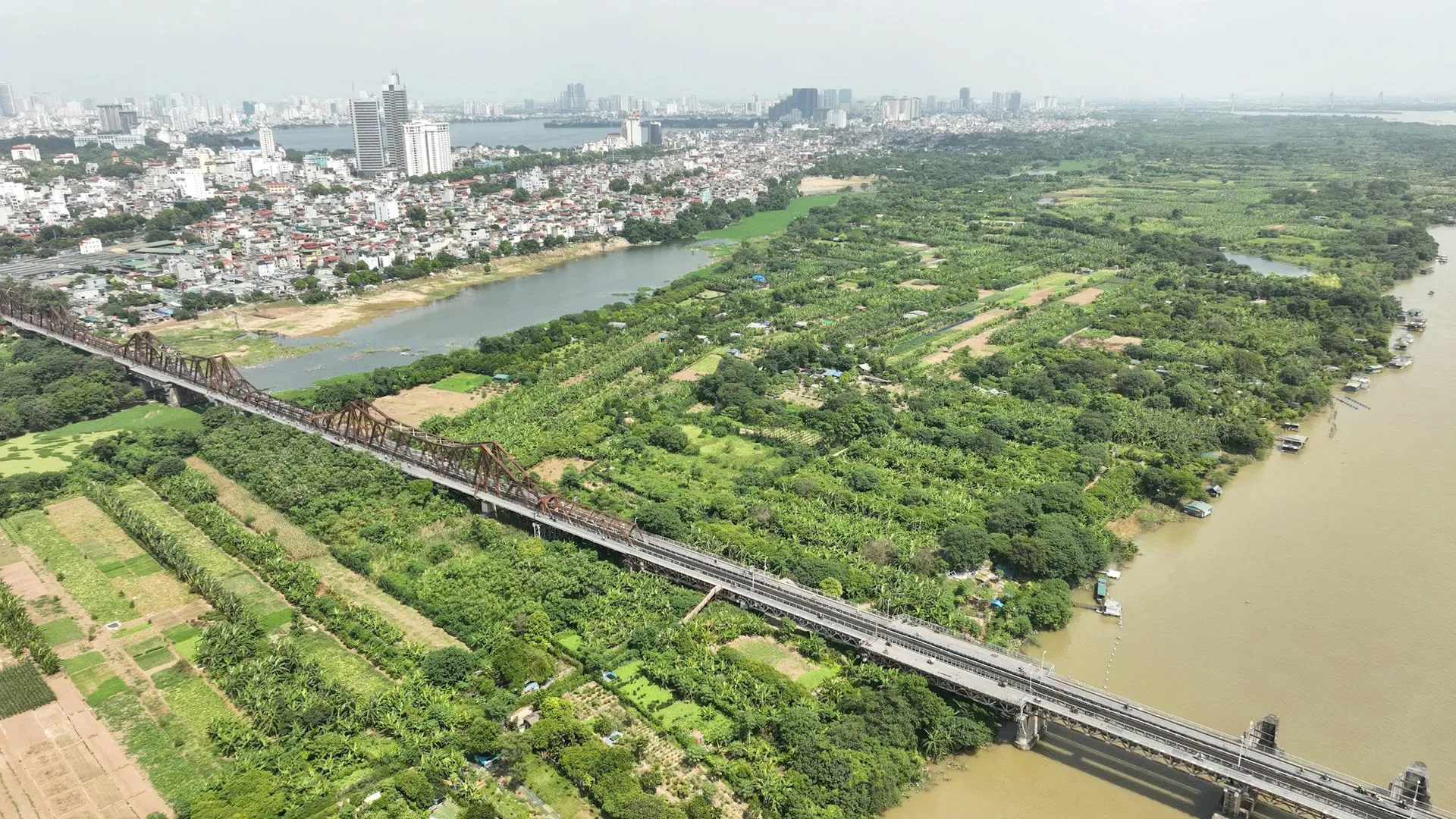
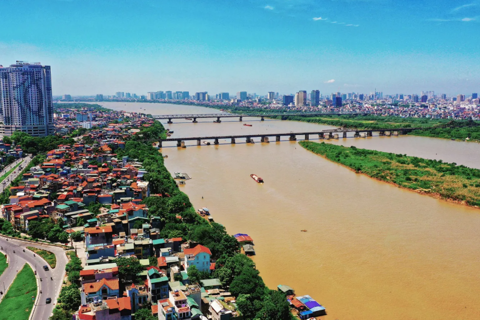
The Red River flows through Hanoi. Photos: Pham Hung/The Hanoi Times
The Red River’s landscape, ecological and cultural potential should not be confined to a 40-kilometer scenic axis. It needs to be considered across the nearly 160 kilometers of river within Hanoi, with a floodplain of about 300 square kilometers defined by the two dike systems.
Although this area represents only a fraction of Hanoi’s total land, it is part of the 1,149-kilometer Red River system and the Red River-Thai Binh basin, the country’s largest watershed, serving more than 32 million people. The Red River space in Hanoi therefore holds not only local but also regional and national significance.
For centuries, settlement along the river shaped the Red River civilization and the cultural identity of Thang Long-Hanoi. Today, its landscape, ecology and heritage are resources not just for urban restructuring but also for creating new growth momentum.
In the Capital Master Plan, the Red River is not simply a landscape or land-use issue. It is a strategic task of reorganizing development space, unlocking new growth drivers and reinforcing Hanoi’s role as a national development hub in the next phase of growth.
From an architectural and urban design perspective, how should the Red River riverside space be organized to remain modern while preserving Hanoi’s identity?
The General Secretary has requested that planning place Hanoi within the broader national development strategy, with people and quality of life as the highest priorities.
The plan must balance modernity and tradition, maintain a long-term vision and open development space and position Hanoi as a national center of innovation and knowledge. It must also ensure national defense, security and social safety while being implemented in a scientific, democratic, transparent and consistent manner.
Architecture and urban design along the Red River should follow these principles while fully complying with disaster prevention and dike management regulations.
This approach provides a critical foundation for long-term sustainability, not only for Hanoi but also for the entire river basin, particularly in the face of climate change and extreme weather such as major storms, floods, drought, salinity intrusion and water pollution that could lead to water shortages. Both the city and the region must ensure safe, modern living conditions while preserving cultural identity over the long term.
How should the development of both riverbanks be implemented to ensure residents have broad access to public space, greenery and water surfaces?
Hanoi was formed within a river system, and its identity has long been tied to the Red River, historically known as the Cai River. For more than a century, the river has supported the city’s growth and dense population. However, it has narrowed and degraded over time.
As Hanoi looks ahead, restoring the Red River is both a development priority and a step toward sustainable urban growth befitting a capital city.
The city is expanding urban areas to relocate residents from vulnerable floodplain zones to safer, modern housing. This shift will free up land for public space, greenery and water surfaces, giving residents broader access to shared riverfront areas.
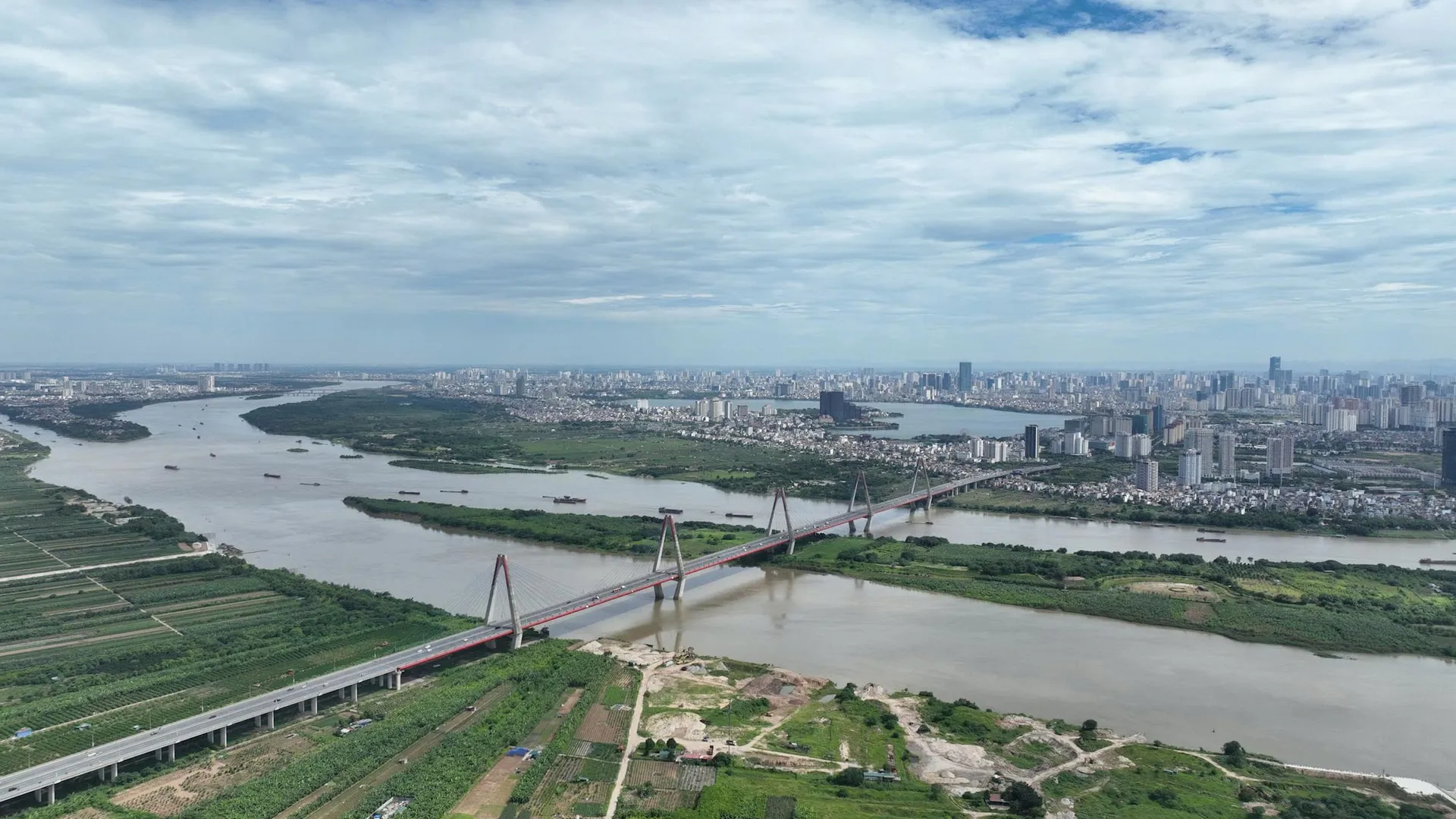
The Red River landscape.
If implemented effectively according to planning orientations, how could the “Red River Miracle” transform the urban landscape and improve residents’ quality of life?
Many cities around the world were formed and developed along rivers. Periods of rapid and uncontrolled growth often damaged these rivers, but later adjustments helped restore them. Cities take pride in reviving their rivers, restoring natural ecosystems and stimulating economic and social development. These achievements are often described as miracles.
Examples include the Thames River in London, the Seine River in Paris and the Han River in Seoul.
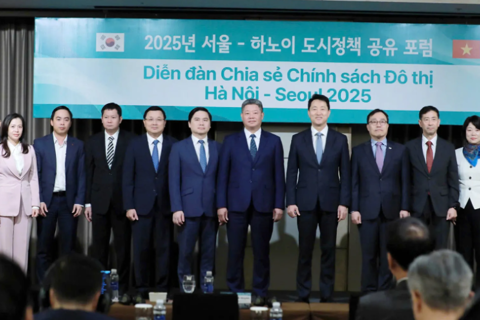
In Seoul, the Han River Renaissance 1.0 program lasted 40 years from 1983 to 2023. It addressed pollution, removed encroachments, strengthened flood control infrastructure and created public spaces.
The city then launched the Han River Renaissance 2.0 program from 2024 to 2040, focusing on ecosystem restoration from upstream areas, expanding green connections from the main river to tributaries and extending those networks into residential neighborhoods so residents can access public space, greenery and water more easily.
Hanoi has begun its own “Red River Miracle” through concrete actions supported by strong political commitment and broad social consensus. This will be a long process with many challenges that require persistence over decades.
At the beginning of a new spring, looking toward the next 50 to 100 years, what are your expectations for implementing the Red River plan so Hanoi can truly become a green, cultured and modern city?
As a citizen of the capital who has witnessed Hanoi’s development for nearly 70 years, I not only hope to see the Red River plan realized but have also joined other architects, artists and community members in practical initiatives.
Public art spaces in Phuc Tan under Long Bien Bridge, community playgrounds, the Phuc Tan Dragon Park, An Duong Forest Park, the ecological road connecting An Duong and Phuc Tan and wastewater treatment plans behind Long Bien Market are small steps.
However, they have created positive impacts by encouraging community participation in cleaning and beautifying the Red River and contributing to the success of Hanoi Creative Week 2026.
Whether Hanoi will be beautiful and livable in the next 50 or 100 years depends on actions taken today.
Thank you for your time!