Red River Boulevards shape Hanoi’s new growth axis
The creation of a landscape boulevard can help Hanoi reconnect with its historic identity shaped by water and restore the river-based character that defined the city for centuries.
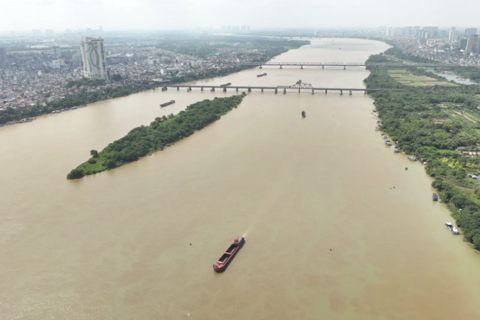
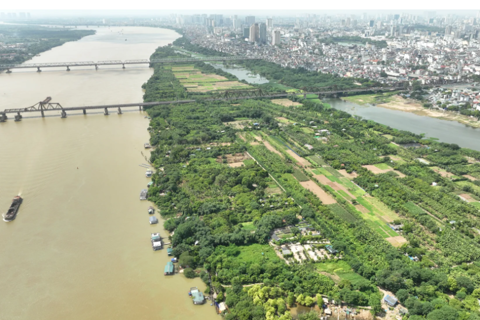
THE HANOI TIMES — The Red River Landscape Boulevard is emerging as a strategic corridor shaping the restructuring of urban space along both banks of the river. As new bridges rise across the Red River, the boulevard anchors a fresh development axis for Hanoi and defines the city’s next phase of growth.
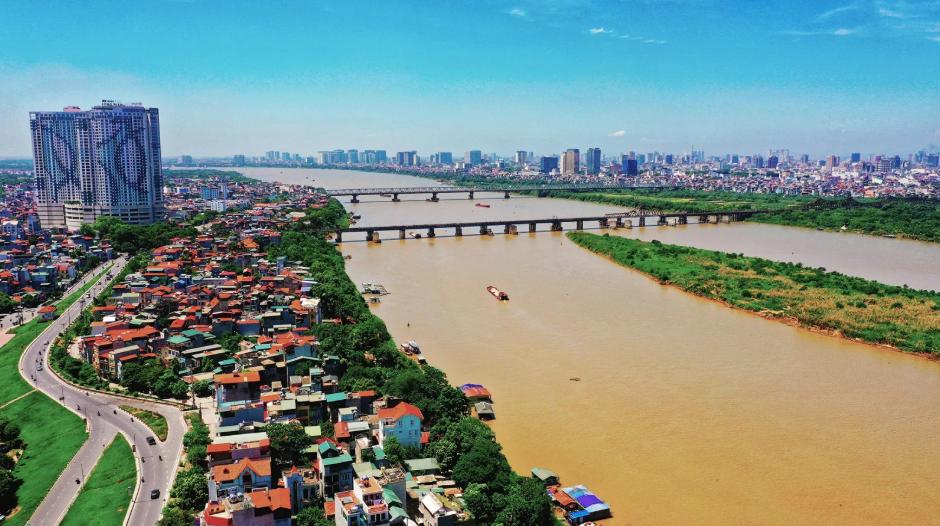
The Red River Landscape Boulevard project aims to expand green space, enhance landscape connections and improve urban living conditions. Photo: Hoang Ha/The Hanoi Times
The government has directed Hanoi to aim for the groundbreaking of the Red River Landscape Boulevard on December 19, 2025. Relevant agencies are accelerating preparations to meet this timeline.
Architect Tran Huy Anh, a Standing Member of the Hanoi Architects Association, said the move should be seen as a moment to generate momentum rather than a technical deadline.
He noted that the ground-breaking date can help draw public attention to the project, but cannot be viewed as the factor that determines overall progress or quality, as projects involving river regulation and basin management always require long-term study based on complete data and interdisciplinary evaluation.
“The Han River project in South Korea, which underwent 20 years of research and 20 years of implementation, is a typical example of the need for careful preparation,” said Anh.
According to Anh, Red River is tied to the safety of the entire basin, the project cannot be approached hastily.
“With a river that fluctuates as significantly as the Red River, development must follow a long-term, science-based approach that aligns with natural conditions,” he said.
Experts say the most complex challenge lies in the residential areas along both riverbanks, which have existed for more than 70 years with nearly 300,000 residents living inside the dyke corridors.
Although Decision 257/QD-TTg approving the flood control and dyke plan for the Red River–Thai Binh system identifies the need to stabilize these communities and address encroachment, Hanoi previously lacked the land and resources to carry it out.
The growth of new urban zones now offers a rare opportunity to provide safe, comfortable, and permanent housing for riverbank residents. This relocation also frees land and helps unlock multiple incomplete projects around the city that have struggled due to low population density, creating broader development momentum for the capital region.
Strengthening infrastructure links
The Red River Boulevard project is planned as two out-of-dyke road corridors with cross sections of four to six lanes, linking major bridges and integrating with the city’s transport network.
The corridor will accommodate parks, plazas, community spaces, waterfront access points and cultural tourism functions.
With a study area of nearly 11,000 hectares, the project opens new land for green space, landscape integration and improved urban living conditions.
Alongside the boulevard, Hanoi is advancing investment plans for seven new river crossings to establish a continuous connection between both banks. These bridges include Hong Ha, Thuong Cat, Tu Lien, Tran Hung Dao, Vinh Tuy phase three, Me So and Duong 2.
They are strategic projects because they help relieve overloaded bridges such as Thanh Tri, Vinh Tuy, Chuong Duong and Thang Long while opening new development directions to the north, east and south.
Once completed, the bridges will create a strong link between the inner city and emerging zones such as Dong Anh, Me Linh, Gia Lam, Van Giang and Phu Xuyen.
These bridges are expected to enhance regional connectivity and ease pressure on the current network. They will also serve as lateral backbones that help the riverfront boulevard operate efficiently and form a unified transport grid that supports growth on both banks.
This grid will strengthen new growth poles, support spatial redistribution and reduce infrastructure strain.
Urban planners view riverfront land as a strategic asset. The creation of a landscape boulevard can help Hanoi reconnect with its historic identity shaped by water and restore the river-based character that defined Thang Long for centuries.
When planned well, this space can anchor cultural, tourism and creative economic activities while giving the capital a much-needed spatial outlet in a rapidly urbanizing environment. In this framework, the seven new bridges play a central role by creating lateral connections that integrate cultural and ecological spaces on both banks instead of leaving them isolated.
The bridges will not only expand transport capacity but also help reshape the riverfront platform, enabling a network of parks, plazas and urban services to grow in harmony with the Red River Boulevard. These structures will give Hanoi a clearer urban skeleton that supports more orderly and sustainable development on both banks.
This requires respect for long-standing riverbank communities whose cultural identity and livelihoods are tied to craft villages, agriculture and small services. Restructuring efforts must protect social stability and provide practical support for livelihood transitions.
Experts warn that the project can only proceed if water security and flood safety are placed first. The Red River is the backbone of the Red River–Thai Binh system and changes within the Hanoi section can affect downstream areas.
“All construction, from roadworks to parks to landscape features, must comply strictly with floodplain and dyke regulations. The project cannot narrow the river’s flow, alter its direction or introduce barriers that may create risk,” said Anh.
Hanoi also faces flooding pressures due to an incomplete drainage network and increased surface runoff. Riverfront development must therefore be linked to a broader plan to upgrade the city’s drainage system, including the To Lich, Nhue and Day rivers and regulating lakes to ensure adequate capacity for urban catchments.
A second key requirement is protecting livelihoods, ensuring resettlement and stabilizing riverbank communities. This is essential to building social consensus, which is indispensable for any large-scale project.
All relocation and resettlement plans must be transparent, phased and respectful of legitimate rights. The project will also require an interagency coordination mechanism, scientific review and timely public information to maintain trust. Transparency and evidence-based planning are fundamental to success, Anh suggested.