Red River urban vision moves closer to reality
The plan to develop a landscape boulevard along the river signals Hanoi’s commitment to modern and sustainable growth while preserving its natural and cultural character.
THE HANOI TIMES — The Government has approved the study and investment plan for the Red River Landscape Boulevard, marking a major step toward reshaping Hanoi's riverfront and enabling Hanoi to finalize the policies needed to move the project forward.
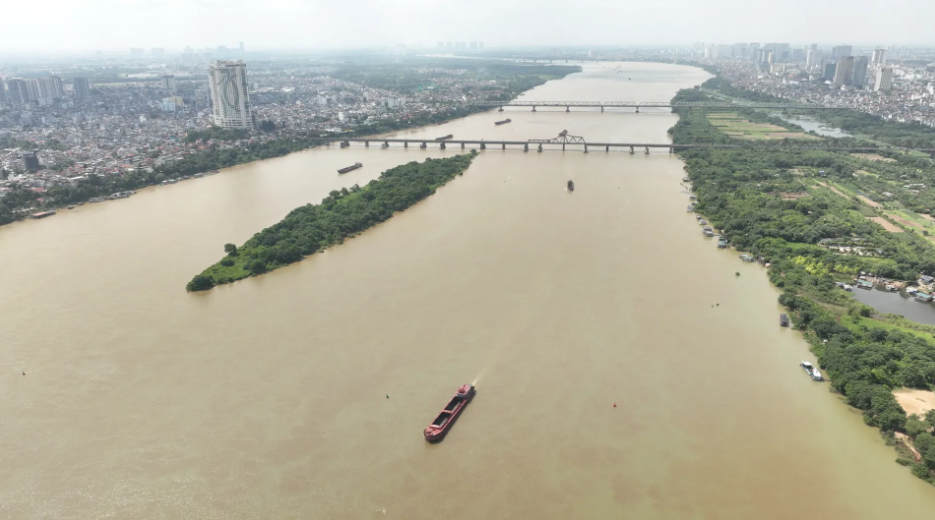
Red River section running through Hanoi. Photo: Pham Hung/The Hanoi Times
Long-term vision
The Red River has long been recognized as a defining element in Hanoi’s urban form.
Planning specialists noted that studies of the river corridor began decades ago when the city launched a series of projects on landscape development along both banks.
From the 1990s, central ministries and consulting units conducted surveys and proposed concepts on spatial planning, inland waterway transport and urban scenery, gradually building a valuable database for today’s planning work.
Several partnerships with international organizations also helped broaden the city’s perspective and brought global experience into the technical and environmental assessment of the river.
Alongside the work of domestic experts, a number of comprehensive planning proposals with foreign partners were prepared in the early 2000s.
These studies offered useful reference points with multi-dimensional approaches on landscape, environment, culture and modern urban design.
Despite the limitations of past conditions, they laid important groundwork that continues to shape Hanoi’s long-term vision for the riverfront.
A major step forward was the approval of the zoning plan for both sides of the Red River. The plan identifies the river corridor as a central landscape axis that integrates parks, cultural spaces, public services and urban infrastructure. This serves as a key basis for evaluating large projects aimed at improving quality of life, expanding public space and enhancing the value of riverfront scenery.
Experts said the sustained research effort has reaffirmed that the Red River is not only a natural waterway but also a strategic growth axis that links the urban core with surrounding areas and supports the capital’s long-term development.
Breakthroughs
Under Notice No. 626/TB-VPCP issued on November 17 2025, the Government agreed in principle to study and invest in the Red River Landscape Boulevard based on consistency with current plans and alignment with Hanoi’s development goals.
The city has been tasked with reviewing all related plans with particular attention to spatial layout, technical infrastructure, landscape and environment, disaster prevention and cultural development.
The notice also calls for focused implementation, avoidance of fragmentation and strict transparency throughout the process.
This guidance demonstrates the Government’s determination to ensure the project is effective given its scale and far-reaching influence on urban life.
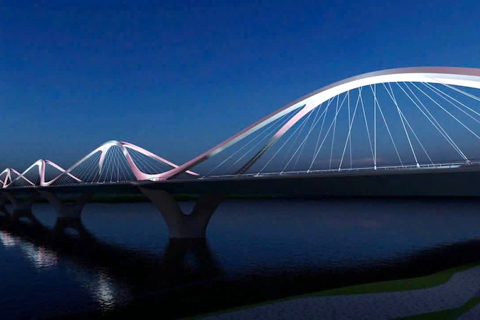
Under the proposed direction, the Red River Landscape Boulevard must make full use of the water surface while integrating ground level and underground spaces with vertical and horizontal connections to create a coherent and modern landscape tied closely to urban areas on both sides of the river.
The goal is to reorganize infrastructure, strengthen dike safety and build resilience against natural hazards.
Hanoi is also required to propose appropriate mechanisms and policies within its authority to support project implementation while compiling matters beyond its jurisdiction for higher-level review.
This reflects the city’s proactive approach in coordinating with ministries and ensuring that legal requirements fit real-world conditions.
The city must also set investment phases and prioritize feasible components to maintain progress and avoid pressure on resources during the initial stages. This is a core principle in managing large projects and helps reduce risks during implementation.
Urban specialists describe the study of the Red River Landscape Boulevard as a sound approach that places the river at the heart of the city’s spatial structure. They stressed that the project is not only about upgrading infrastructure but also about achieving greater harmony in landscape, environment and cultural expression.
According to Dr. Architect Dao Ngoc Nghiem, Vice Chairman of the Vietnam Association of Urban Planning and Development, planning documents have long identified the river corridor as Hanoi’s principal landscape axis.
Nghiem noted that many domestic and international studies have also suggested development directions that combine tourism, culture and green spaces.
This consistency highlights the river’s strategic value.
“Major projects today should selectively build on past experience and incorporate new requirements suited to current conditions. Ensuring dike safety and flood discharge is a critical factor that earlier studies struggled to address. In addition, close coordination between the city and relevant ministries is therefore essential for long-term sustainability,” Nghiem said.
Beyond technical standards, the project must also emphasize landscape quality and cultural space.
A well-designed boulevard could take advantage of the river’s natural setting to create large public areas for cultural activities and festivals, improve green space and enhance public access to the water, Nghiem noted.
“A continuous and sustainable landscape corridor would help link riverside districts with the urban center, improve environmental quality and strengthen the identity of the capital,” he continued.
With the Government’s approval to study investment, the Red River Landscape Boulevard stands at an important moment.
A careful and compliant implementation process would give Hanoi the opportunity to shape a modern and distinctive riverfront landscape.
The project is expected to play a significant role in upgrading transport infrastructure, expanding development space and promoting cultural and tourism activities along the river.
|
"Hanoi, as the country’s central metropolis, has long placed importance on preserving its distinctive urban spaces, with the Red River regarded as one of the city’s defining features. The effort to study a landscape boulevard along the river is not only an infrastructure initiative but also a statement of Hanoi’s commitment to modern and sustainable development while protecting natural and cultural values as urbanization accelerates. As the city completes the next stages of preparation, the Red River Landscape Boulevard will continue to draw strong interest from planners and the wider public. With a careful, scientific and consistent approach, the project is expected to help shape a new urban character for the capital," Dr. Architect Dao Ngoc Nghiem, Vice Chairman of the Vietnam Association of Urban Planning and Development. |