Exploring hidden gems from Red River to Mekong Delta
From capital old streets to Mekong delta, Hanoi and the southern province of Vinh Long have teamed up to create one seamless tourism journey.
THE HANOI TIMES — On the glistening waters of the Mekong River, hundreds of Ngo boats, adorned with Khmer motifs, slice through the waves to the beat of drums and cheers echoing from the riverbanks.
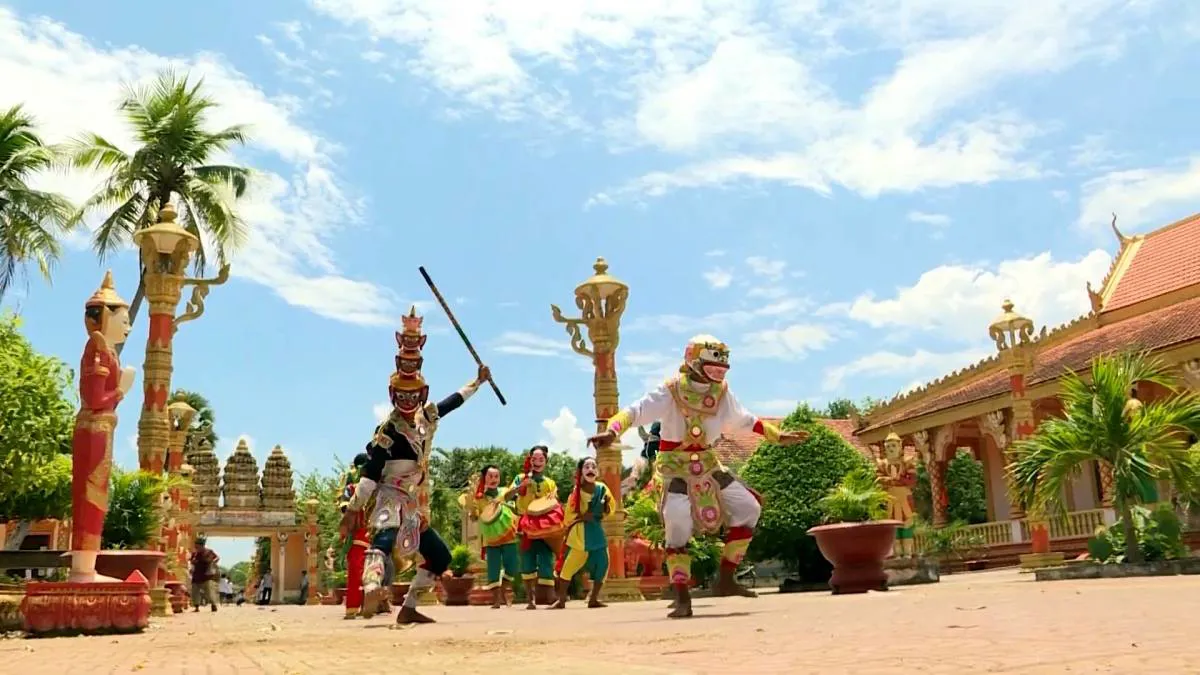
The graceful Khmer Chan dance lights up the Ok Om Bok celebration in Vietnam’s Mekong Delta. Photo: VOV
The Ngo boat racing festival, together with the Khmer's Chan dance, forms the heart of the Ok Om Bok celebration, a UNESCO-recognized Intangible Cultural Heritage of Humanity since 2014.
Soon, travelers will have even more chances to experience these living traditions up close, thanks to expanding tourism cooperation between Hanoi and the southern province of Vinh Long.
A new step in tourism connectivity
Hanoi and Vinh Long on November 5 signed a cooperation agreement that marks a new step toward building stronger tourism links between the North and the Mekong Delta. The deal opens the door for both regions to develop joint tours, share resources and offer visitors a richer tapestry of cultural and ecological experiences.
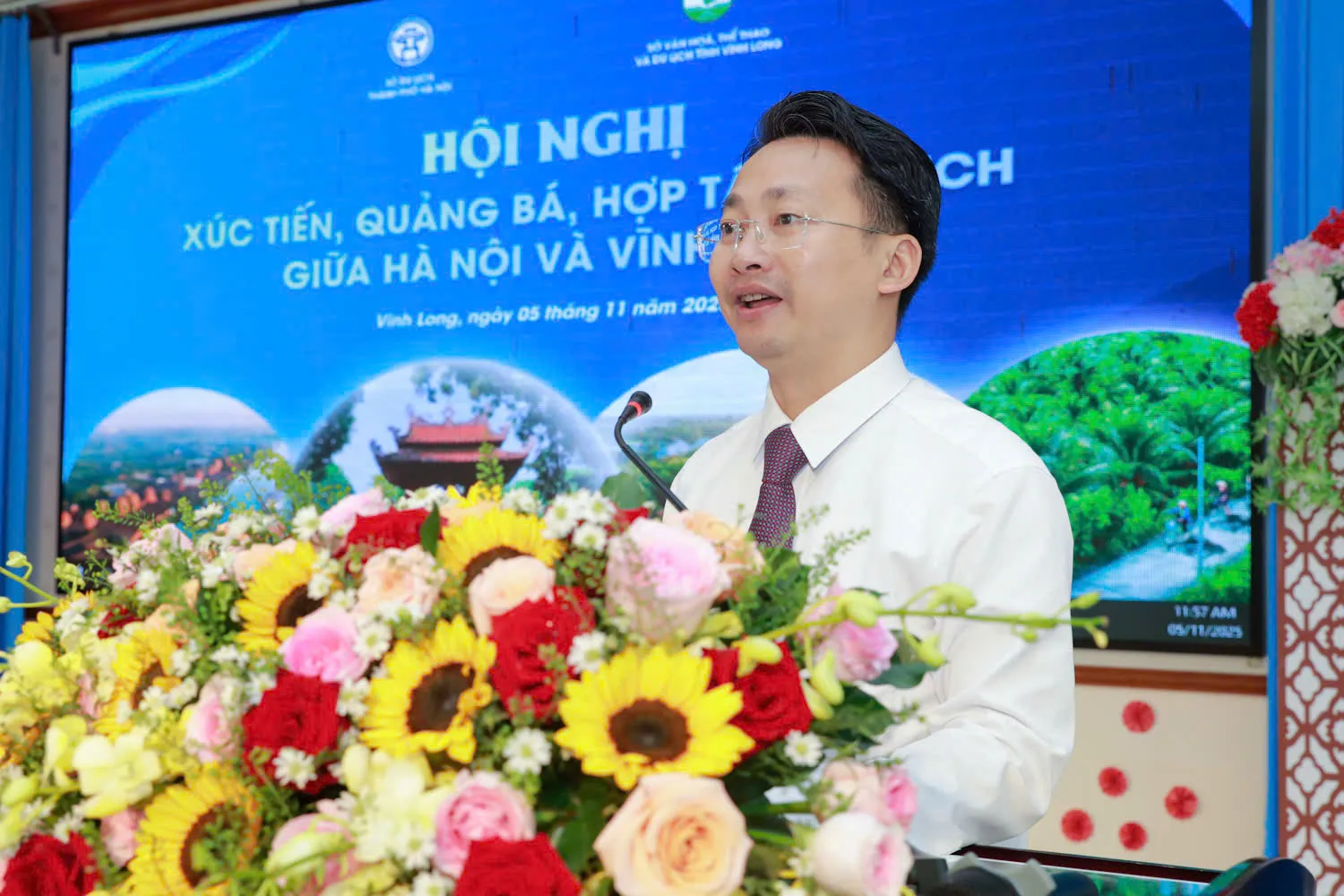
Tran Trung Hieu, Deputy Director of the Hanoi Department of Tourism, delivers remarks at the conference “Promoting and Cooperating for Tourism Development between Hanoi and Vinh Long,” held on November 5.
“This cooperation represents a firm commitment from both localities to highlight their unique cultural identities, stimulate domestic tourism and attract international travelers,” said Tran Trung Hieu, Deputy Director of the Hanoi Department of Tourism, at the conference titled “Promoting and Cooperating for Tourism Development between Hanoi and Vinh Long.”
Hieu said that building inter-regional tourism chains will help ensure diversity, authenticity and stronger appeal through shared themes.
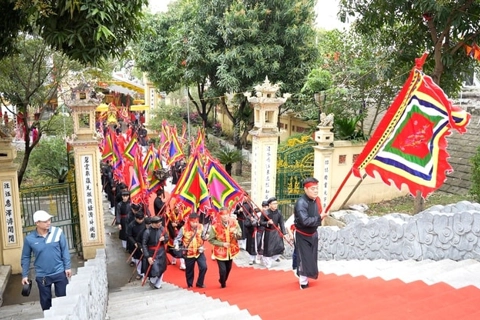
The new “Cultural–Heritage Linkage” route, for instance, aims to showcase both destinations’ distinctive traditions. Hanoi offers timeless craft villages such as Lang Chuong, famous for conical hats, and Quang Phu Cau, known for its incense-making. Meanwhile, Vinh Long brings the joyful pulse of Khmer folk festivals like Sen Dolta, Chol Chnam Thmay and Ok Om Bok.
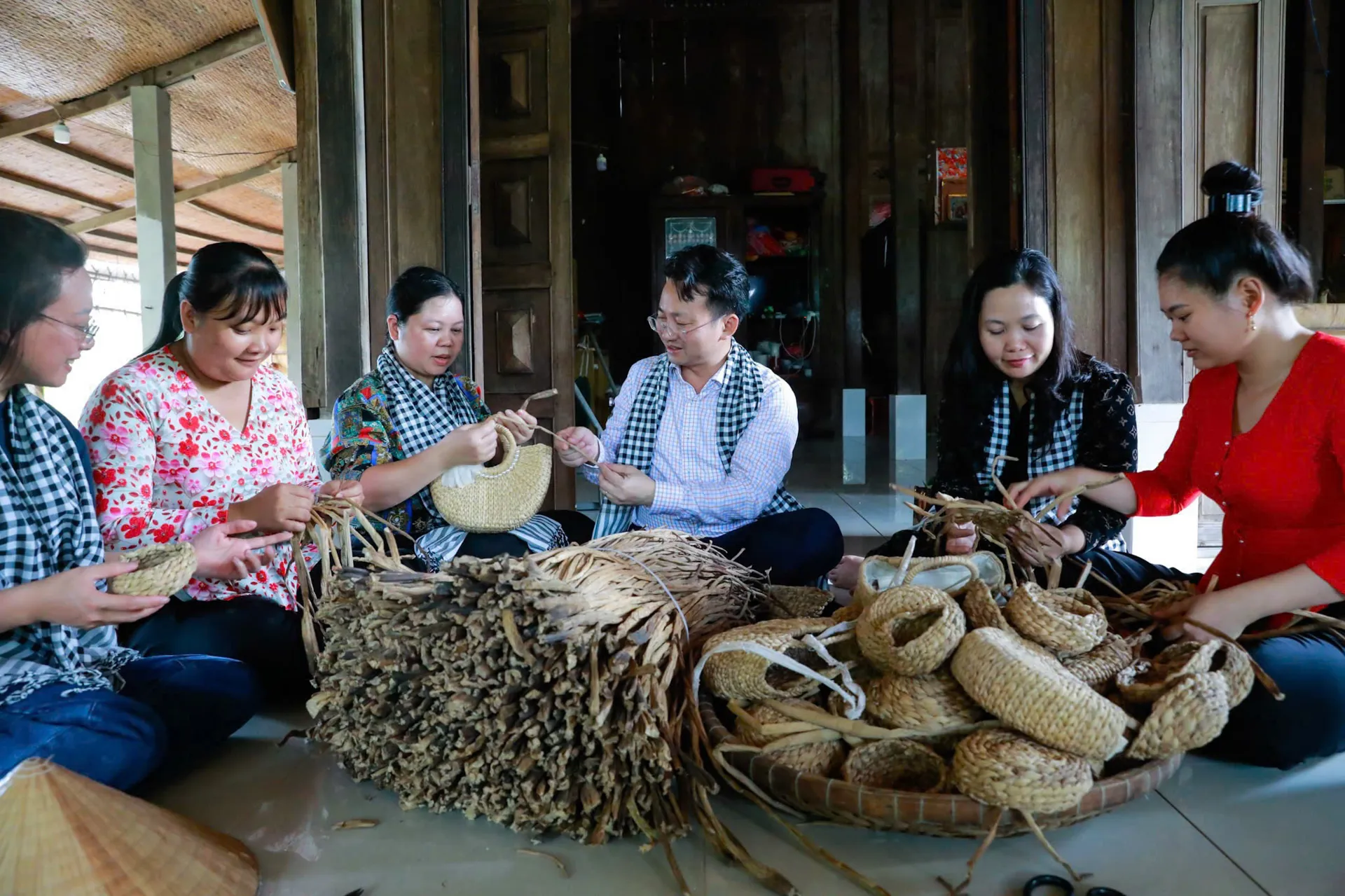
Hanoi delegation joins a handicraft-making activity on Ho Islet, Vinh Long Province. Photo courtesy of Hanoi Department of Tourism
Beyond culture, Hanoi and Vinh Long plan to tap their natural landscapes to build new eco-tourism routes. Travelers could soon wander through Hanoi’s flower villages before heading south to Sa Dec Flower Village or Tram Chim National Park in the neighboring Dong Thap Province.
In the culinary field, Culinary - Shopping Tours will connect Hanoi’s famed gastronomy with Vinh Long’s tropical specialties such as Nam Roi grapefruit, oranges, pomelos and coconuts. These tours will not only invite visitors to explore fruit gardens and taste regional delicacies but also help promote Vietnamese cuisine and local trade.
River tourism is also set to become a highlight, linking the traditional craft villages of both regions. Imagine cruising from Bat Trang and Van Phuc in Hanoi to the pottery, weaving and rattan-making communities of Vinh Long, all while soaking in the tranquil countryside views.
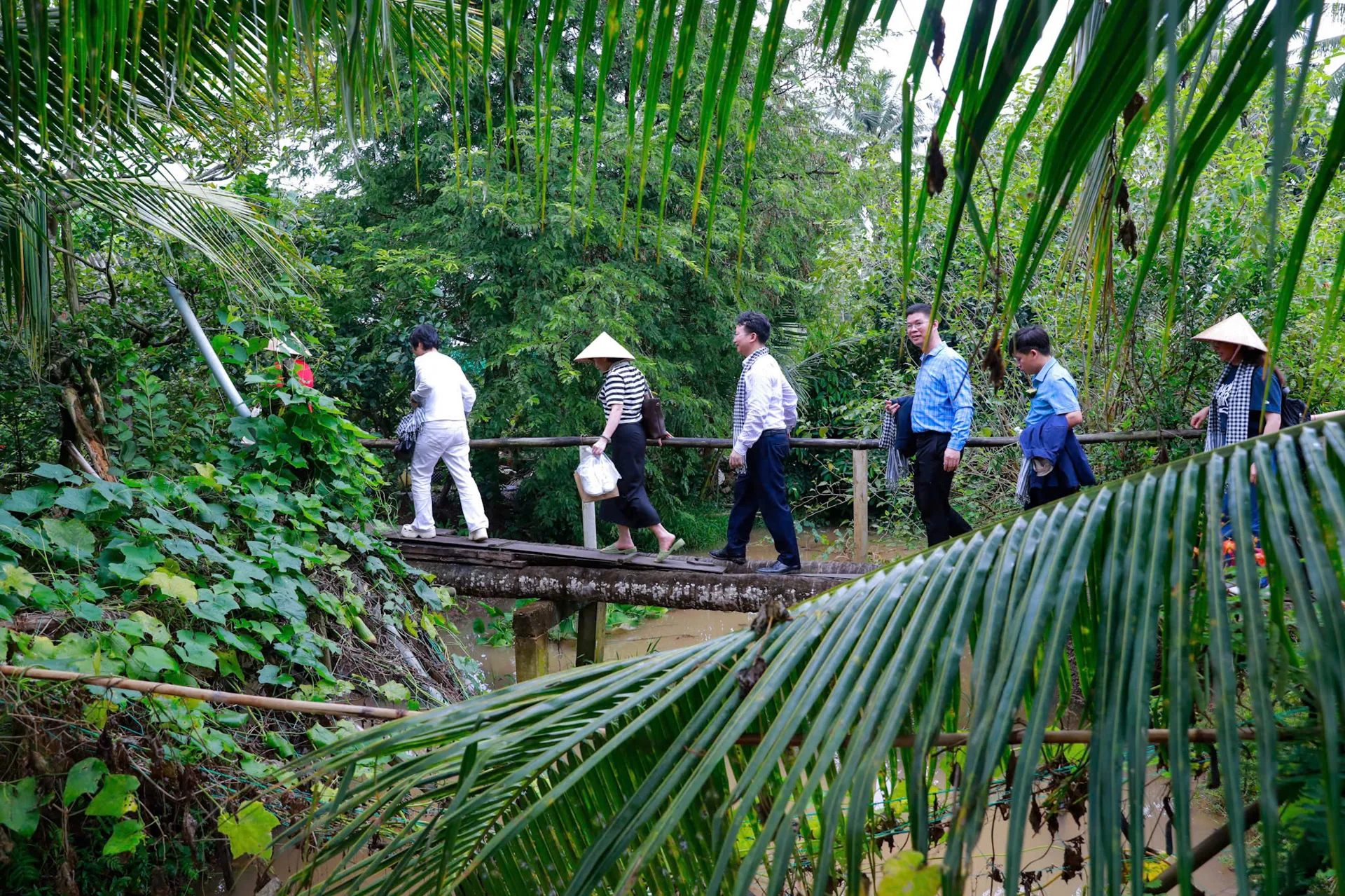
Tranquil countryside scenery welcomes visitors to the Ho Islet self-guided tourism village in Vinh Long Province
Nguyen Thi Ngoc Dung, Deputy Director of the Vinh Long Department of Culture, Sports and Tourism, welcomed the partnership, emphasizing that the province is ready to collaborate with businesses to develop products, routes and services that reflect its identity.
The need for a strategic vision
Representing travel agencies participating in the conference, Nguyen Tien Dat, Vice President of the Hanoi Tourism Association, noted the province’s unique advantages: “Vinh Long tourism has many outstanding features not found in the North, from river and garden experiences to exploring mangrove forests and discovering the friendly, genuine folk culture of the Western people.”
Representing travel agencies, Nguyen Tien Dat, Vice President of the Hanoi Tourism Association, described Vinh Long as a hidden gem as saying that “The province offers what the North doesn’t such as river life, mangrove forests, fruit gardens and the warmth of Western hospitality.”
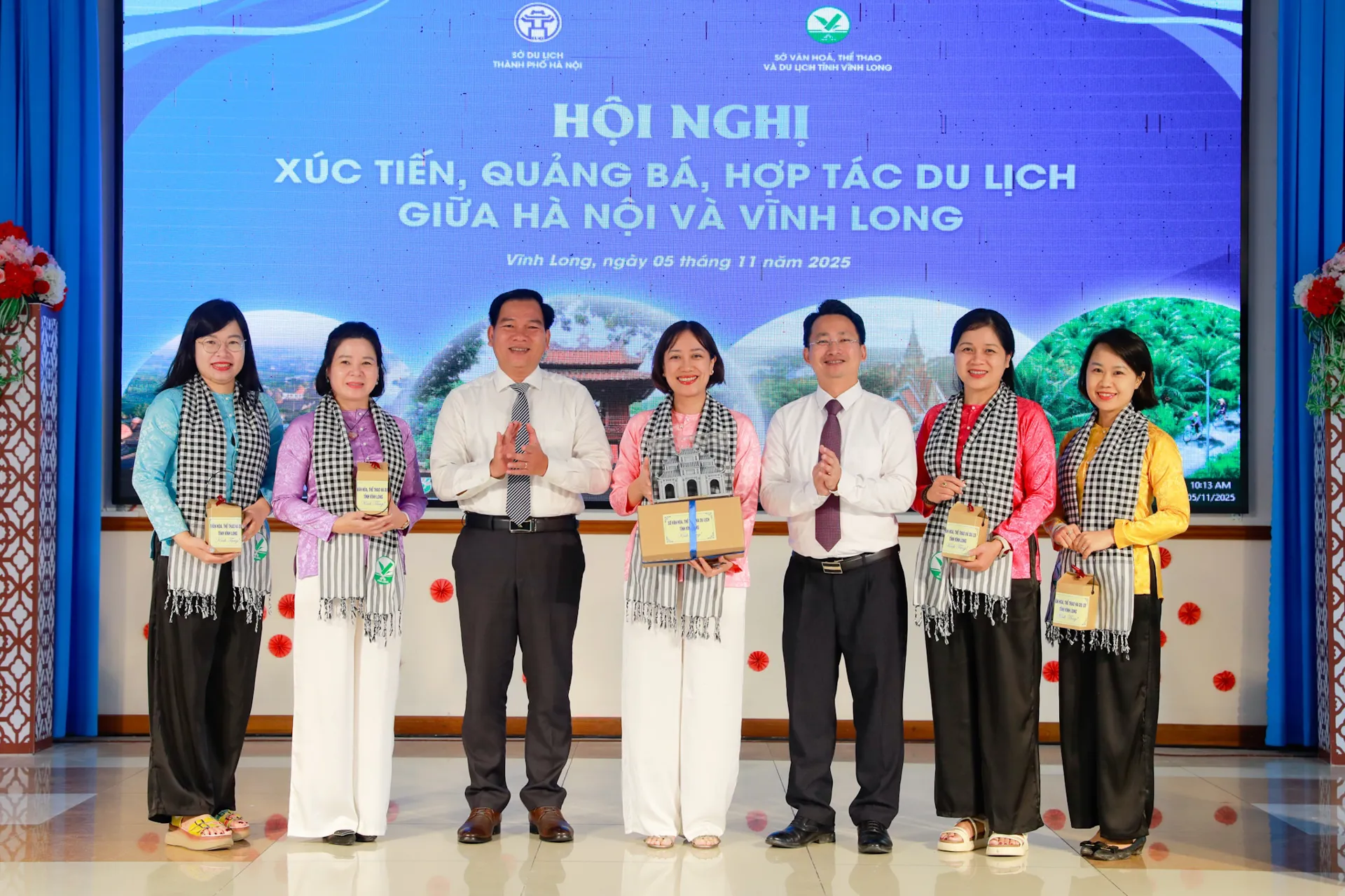
Delegates attending the conference “Promoting and Cooperating for Tourism Development between Hanoi and Vinh Long” held on November 5.
However, Dat also pointed out several limitations and the need for a comprehensive tourism development strategy.
“The transportation system is still limited, and there is a shortage of high-quality accommodation to retain visitors. Airfares from Hanoi to the South also remain high, which makes it harder to attract travelers,” he said.
Dat suggested that Vinh Long focus on infrastructure investment, upgrade transportation networks, diversify tourism products, develop MICE and experiential tourism, and strengthen digital promotion to attract visitors in both directions.
Meanwhile, Truong Quoc Hung, Chairman of the UNESCO Hanoi Travel Club, praised Vinh Long’s large river system and strong community culture, which together form the basis for distinctive tourism products.
He cited the example of tourism on Ho Islet, where each household develops its own “self-made” tourism product while preserving its unique identity.
“Con Ho still uses oil lamps instead of electricity, yet its hospitality remains professional and methodical, leaving a strong impression on visitors,” said Hung.
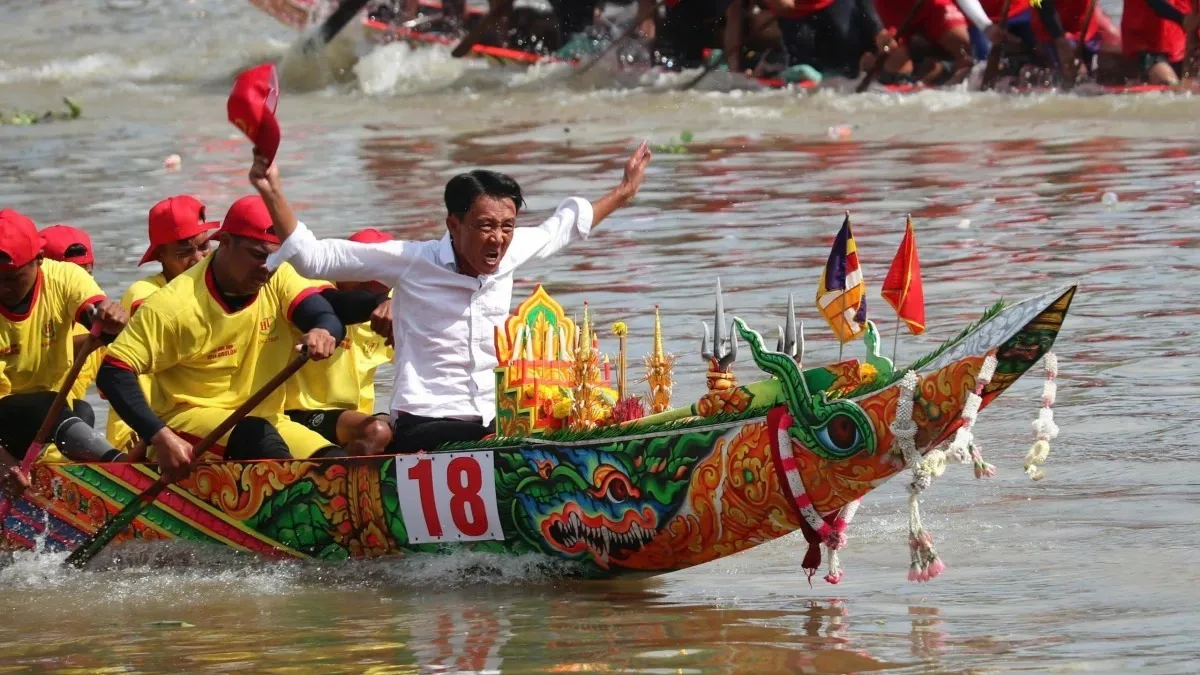
The vibrant Ngo boat race during the Ok Om Bok festival - a UNESCO Intangible Cultural Heritage of Humanity. Photo: VOV
According to him, Vinh Long should continue to promote river-based and community tourism in islets and orchards to create a uniquely Vietnamese river tourism system.
In conclusion, Deputy Director Tran Trung Hieu reaffirmed that both Hanoi and Vinh Long possess immense potential in cultural, eco-, and community-based tourism - resources that remain largely untapped.
“Enhancing air connectivity and improving road networks will be key to fostering inter-regional tourism,” he said, expressing hope that stronger cooperation will soon increase visitor flows between the capital and the delta.
At the conference, the two local tourism departments signed a Memorandum of Cooperation on Tourism Development for 2026–2030, which covers four major areas including tourism management, promotion and marketing, product development and training with digital transformation.
From the Red River to the Mekong, the new partnership symbolizes Vietnam’s broader ambition, connecting cultures, communities and travelers through the shared language of tourism.
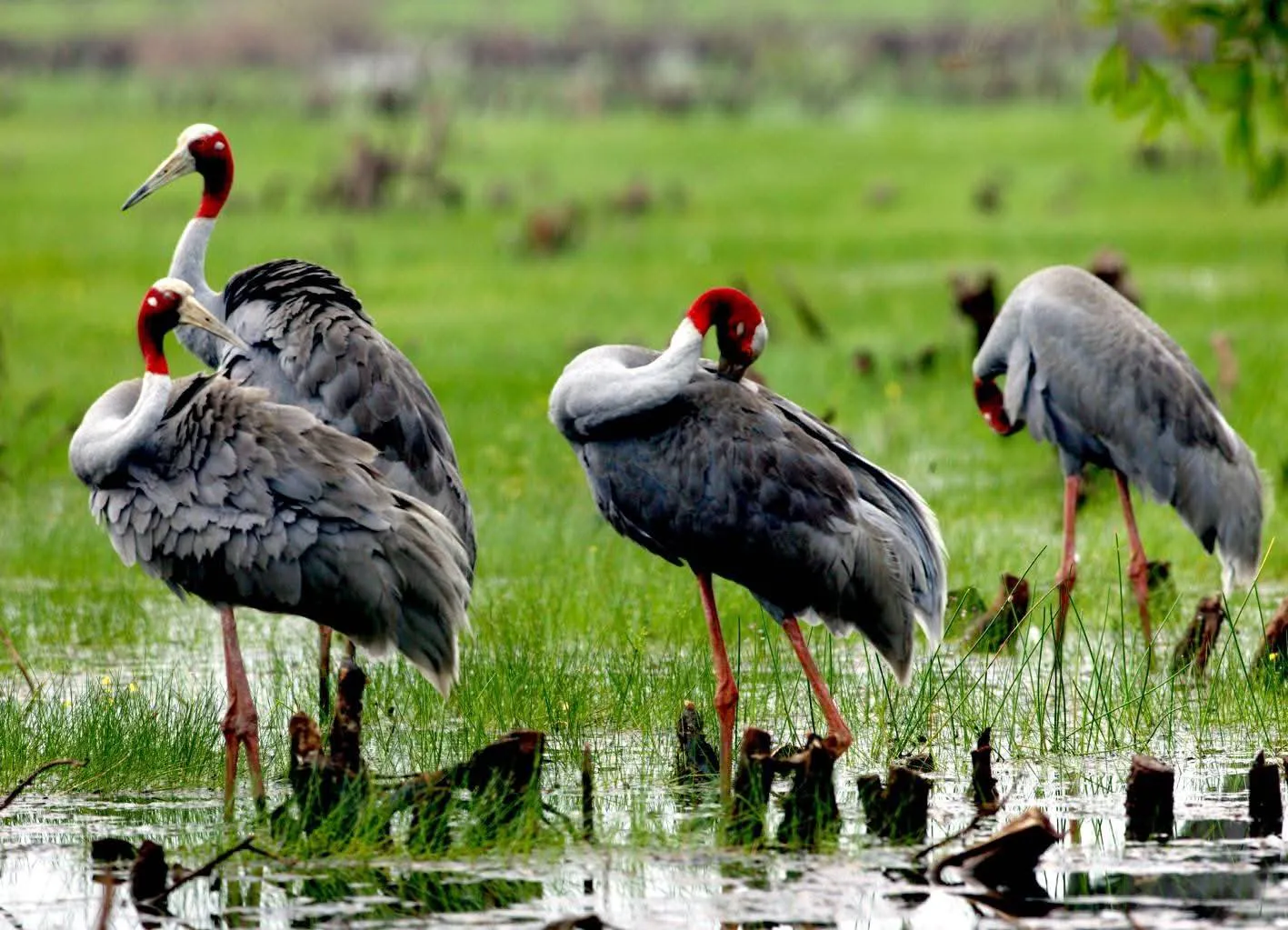
Lush wetlands and diverse wildlife define the beauty of Tram Chim National Park in the Mekong Delta. Photo: Vietnam Wander
|
The Southwest region of Vietnam is an ideal destination for those who love the charm of rivers, lush gardens and the rustic beauty of Southern culture. Vinh Long stands out with its An Binh islet system, fruit-laden orchards, and the bustling Tra On floating market- a vivid reflection of the everyday life of the Mekong Delta people. In Ben Tre, visitors can explore Con Phung and Con Quy islets, row a sampan along emerald coconut-lined canals, visit the famous coconut candy village, or stroll through the lively Mo Cay floating market. Meanwhile, Tra Vinh captivates travelers with its harmonious blend of Vietnamese and Khmer cultures, reflected in landmarks such as Ang Pagoda, Ao Ba Om, and Hang Pagoda, as well as unique festivals like Ok Om Bok. The pristine Ba Dong Beach also offers a tranquil retreat for those seeking peace and relaxation. Visitors can also enjoy hands-on experiences such as cycling across monkey bridges, listening to traditional folk music, and savoring garden-style cuisine featuring fried elephant ear fish, fish sauce hotpot, banh xeo (Vietnamese savory pancakes) and more. Traveling to the Southwest offers an intimate experience that is deeply human, authentic and rich in the cultural identity of Vietnam’s riverine life. |