14TH NATIONAL CONGRESS OF THE COMMUNIST PARTY OF VIETNAM
Log in
Property

Hanoi social housing prices double to near $200,000 per unit amid limited supplies

Hanoi’s social housing prices have nearly doubled in two years, pushing many low-income buyers out of the market.

THE HANOI TIMES — Social housing prices in Hanoi have surged for the past two years to reach as much as VND5 billion (US$190,000) per unit on the secondary market amid high market demand and low supplies.

According to data from Batdongsan.com.vn, at the Rice City project in Bo De Ward, prices have doubled from around VND2.3 billion – VND2.4 billion (US$87,400 - $91,200) per unit at the beginning of 2024 to at least VND4 billion ($152,000) now.
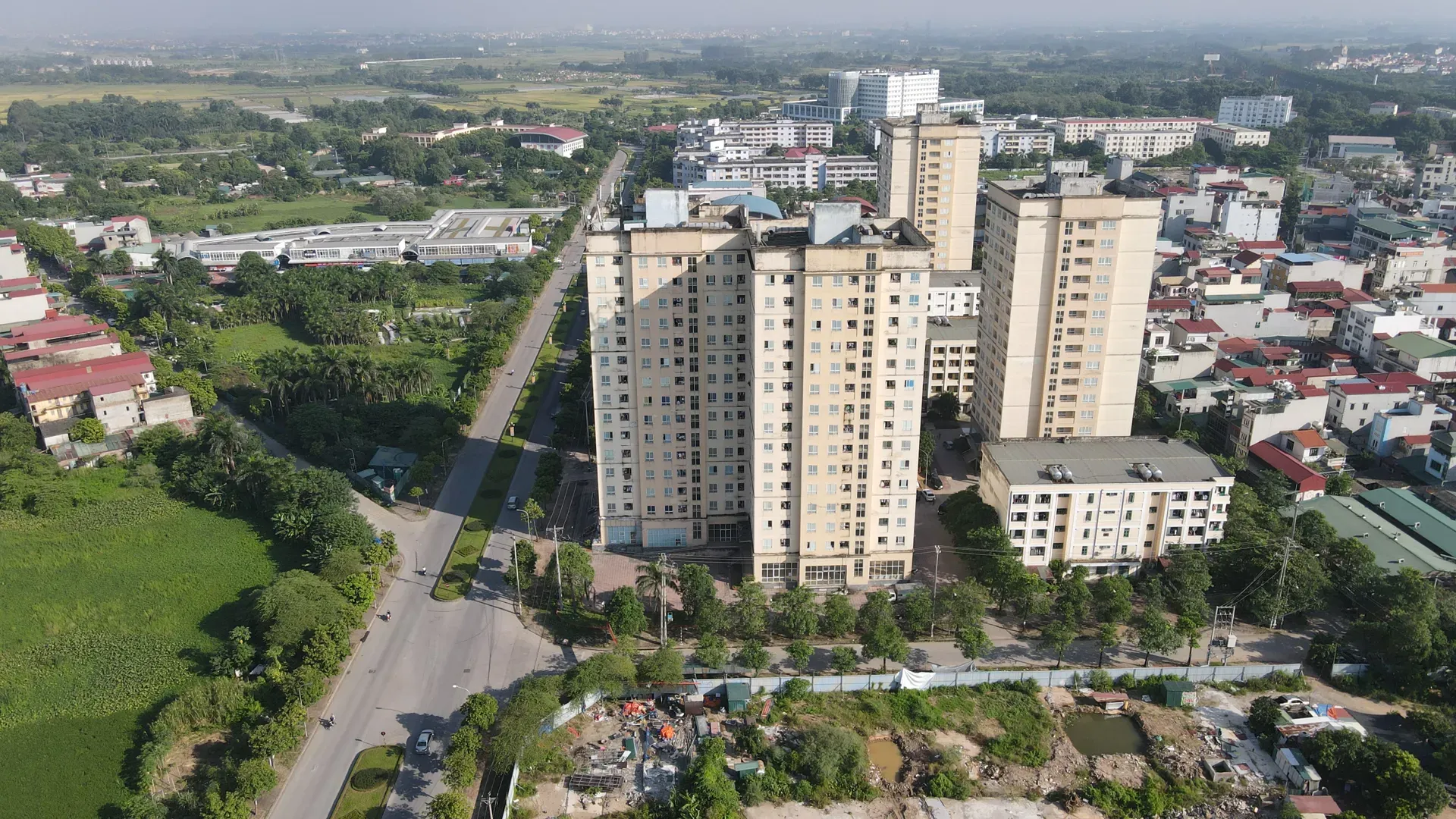
A social housing complex in Dong Anh Commune, Hanoi. Photo: Pham Hung/The Hanoi Times

At the Hope Residence project in Viet Hung Ward, prices have also jumped sharply from VND2.1 billion – VND2.3 billion ($79,800 - $87,400) to VND3.8 billion – VND4.3 billion ($144,400 - $163,400) per unit. In Thach Ban Ward, the Thach Ban project has seen prices reach as much as VND4.2 billion ($159,600) per unit.

The same doubling trend has been recorded in former inner-city districts such as Hoang Mai and Thanh Tri.

On the primary market, several social housing projects in Hanoi that are ongoing or about to launch also report record-high prices.

Among them, the Rice City Long Chau project in Bo De Ward is now selling for nearly VND30 million ($1,140) per square meter, the highest price ever in the social housing segment.

Hanoi currently has five social housing projects either on sale or preparing for sale, expected to release units from the fourth quarter of 2025 to early 2026, including the Kim Hoa Urban Area project, the CT1 Thuong Thanh project and the Dong Anh project.

With prices commonly ranging between VND20 million ($760) and 30 million ($1,140) per square meter, apartments of 60–70 square meters cost from VND1.2 billion ($45,600) to more than VND2 billion ($76,000), a figure high for low-income earners.

Under current regulations, individuals eligible for social housing must earn no more than VND15 million ($570) per month, while families must have a combined income of no more than VND30 million ($1,140) per month.

According to Tran Xuan Luong, Deputy Director of the Institute for Real Estate Market Research and Evaluation (VARS IRE), social housing has yet to succeed because current policies lack clear segmentation.

He recommended classifying housing units into three types. Commercial projects should suit high-income groups and price-stabilized housing should match the needs of middle-income earners.

The third category is social houses for disadvantaged groups, veterans, armed forces and people with disabilities, he said, adding that the last category should be for rent or lease-purchase only.

Luong also said that price-stabilized housing should allow workers to buy homes after 10–15 years of savings, while commercial housing should focus on higher standards that reflect real market value.

Reactions:
Share:
Trending
Most Viewed
Related news
Photo Hanoi’25 through the eyes of experts

Photo Hanoi’25 through the eyes of experts

04 Nov, 22:26

Experts and artists share their perspectives on Photo Hanoi’25, a convergence of visual storytelling, creativity and the connection between Vietnamese photography and the global art scene.

Revised housing roadmap doubles social housing targets for Hanoi

Revised housing roadmap doubles social housing targets for Hanoi

Vietnam’s push to accelerate affordable housing has significantly raised expectations for major cities, with Hanoi now tasked with delivering a far larger volume of social homes as part of the national goal to build more than one million units by 2030.

Social housing supply exceeds targets in 2025 as Vietnam tackles property imbalances

Social housing supply exceeds targets in 2025 as Vietnam tackles property imbalances

Vietnam surpassed its social housing construction target in 2025, marking progress in housing policy, but supply mismatches, high prices and legal bottlenecks continue to weigh on the real estate market.

Online building permits promise faster approvals and transparency in Vietnam

Online building permits promise faster approvals and transparency in Vietnam

Lengthy and complex construction procedures may soon be replaced by faster online approvals as Vietnam rolls out reforms to ease housing pressures and improve transparency in land management.

Hanoi apartment market set for steady growth as suburban supply reshapes demand

Hanoi apartment market set for steady growth as suburban supply reshapes demand

Hanoi’s primary apartment market is entering a more measured expansion phase, driven by growing supply in outlying areas and softer price movements, with infrastructure upgrades and end-user demand expected to anchor the primary apartment market through 2026.

Hanoi plans 39 social housing projects to meet 2030 affordable housing target

Hanoi plans 39 social housing projects to meet 2030 affordable housing target

Hanoi is accelerating its social housing program to expand affordable supply for workers and low- to middle-income residents while managing rising costs and price pressures.

Vietnam real estate market poised for new growth cycle in 2026

Vietnam real estate market poised for new growth cycle in 2026

With more open institutions and stronger trust, real estate will remain a key sector supporting double-digit GDP growth from 2026.

Affordable housing to boost Vietnam’s real estate market

Affordable housing to boost Vietnam’s real estate market

Affordable housing should be viewed as a long-term socioeconomic policy rather than a short-term support measure.

Van Cao – Hoa Lac metro line opens prospects for Hanoi’s urban development

Van Cao – Hoa Lac metro line opens prospects for Hanoi’s urban development

The line is a strategic infrastructure project that plays a key role in shaping urban development and sustainable transport in the new phase.