Hanoi developers to revamp urban landscape with old-building renovations
Hanoi accelerates old apartment renovation, integrating green spaces, transit-oriented development, and sustainable planning to enhance urban infrastructure and livability.
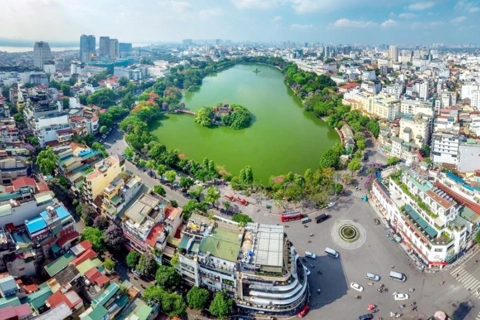
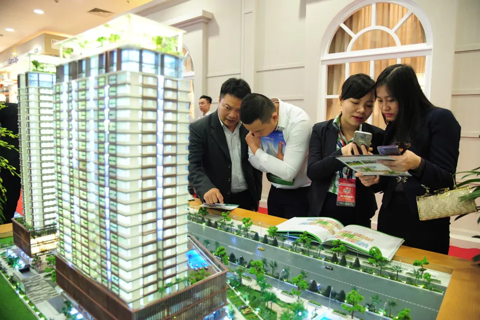
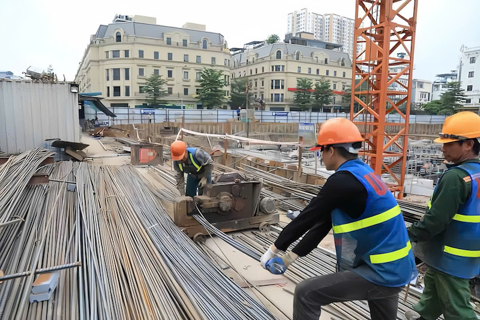
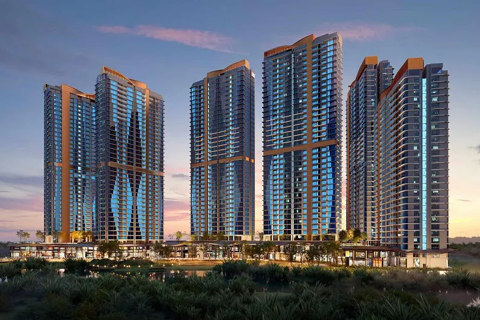
The Hanoi Times — Developers are set to transform Hanoi's urban landscape through key renovation projects. As part of the city's modern and sustainable urban planning, the renovation of old apartment buildings is central to a comprehensive redevelopment plan that focuses on integrating infrastructure improvements with the development of green spaces.
For instance, developers plan to integrate green spaces around Thanh Cong Lake, widen internal roads, and increase the height of residential blocks to optimize land use. Similarly, the architectural design and landscaping of the Giang Vo condominiums will be upgraded, with a focus on the west side of Giang Vo Lake, in line with the development plan for land parcel No. 148 on Giang Vo Street.
Meanwhile, Ngoc Khanh Condominium will undergo a redesign featuring optimized layouts, expanded green areas, modern public facilities, and architectural elements that harmonize with the scenic surroundings of Ngoc Khanh Lake.
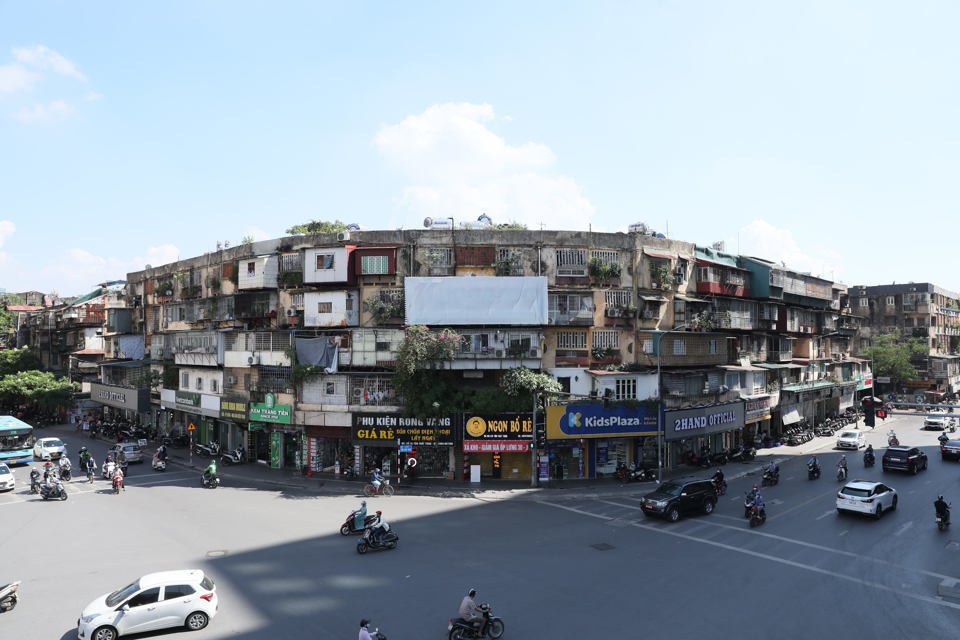
An old apartment building on Ton That Tung Street in Dong Da District. Photo: Pham Hung/The Hanoi Times.
The renovation of old apartment buildings must follow the approved general and zoning plans, which require a reduction in density while allowing taller buildings as long as the population remains stable.
This strategy prevents infrastructure congestion and frees up land for transportation, schools, parks, and public amenities.
Capital Law 2024 fuels housing renovation
The 2024 Capital Law is playing a key role in accelerating housing renovation in Hanoi. According to architect Dao Ngoc Nghiem, Vice President of the Vietnam Urban Planning and Development Association, the law is expected to remove obstacles, speed up renovation, and improve living conditions.
Mac Dinh Minh, Deputy Director of Hanoi's Department of Construction, noted that the newly amended law allows land reclamation of dilapidated condominiums, compensation of residents, their resettlement assistance, and auction of land-use rights if two-thirds of condominium owners agree. This approach enables land to be freed up to improve transportation, build schools, and create more public spaces, such as parks and community facilities.
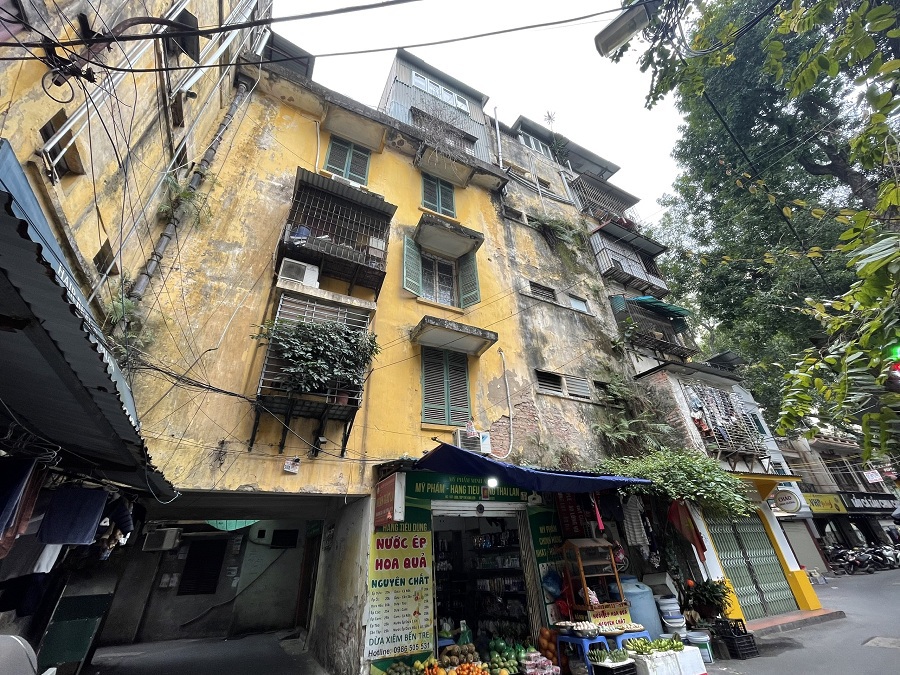
An old apartment building in downtown Hanoi. Photo: Le Tam/The Hanoi Times.
Soaring prices of old apartment buildings in Hanoi
The renovation of Hanoi's aging apartment buildings is urgently needed, as many are in a state of serious deterioration.
The city currently has over 1,500 buildings that are more than 50 years old, mostly built between 1960 and 1990. These buildings are concentrated in four central districts, with nearly 350 buildings rated at high risk of collapse.
Despite their poor condition, the prices of these apartments in central districts are extremely high. Nguyen Van Hieu, a native of Ha Nam Province who works in Hanoi, was shocked when he was looking for an old apartment to find an option for the rising cost of commercial housing.
However, he found that a 15m² unit (according to the title deed) in the Kim Lien complex, in practice, illegally expanded to 50-100m², was listed for VND2.15 billion (US$87,000), equivalent to VND140 million/m² (US$5,650/m²). Similarly, many other old and dilapidated apartments are priced above VND100 million/m² (US$4,000/m²).
Real estate agent Van Tuan said that such a price does not reflect the true condition of these apartments, attributing the surging prices to high demand as the buildings are at prime locations. Tuan, however, expressed concern about ongoing safety risks, saying that further delays in renovation would worsen conditions, increase pressure on infrastructure, and put residents at greater risk.
Urban planning under TOD - a sustainable way forward
To make efficient use of land and improve connections between residential areas and public transport, Hanoi is embracing transit-oriented development (TOD) as a long-term solution, according to Dao Ngoc Nghiem.
In an interview with Kinh te & Do thi (Economic and Urban) Newspaper, Nghiem stressed the importance of linking TOD with green spaces and public transport infrastructure. He explained that smart planning should align housing developments with metro stations, bus routes, and pedestrian-friendly spaces. This strategy aims to create a more sustainable and well-connected urban environment.
Echoing Nghiem, Trinh Quang, an expert from the Infrastructure and Green City Program, noted that TOD requires strong integration with urban rail systems, underground infrastructure, and environmental protection. However, it's necessary to have coordination among the government, businesses, and communities to ensure effective implementation.
Meanwhile, Hoang Thu Thuy, Deputy Head of the Division of Urban Development (Department of Construction), emphasized the need for clear criteria and a phased approach to ensure effective TOD implementation.
Similarly, Quang pointed out that TOD requires a well-structured land use fee system. Proper restructuring of urban space and allocation of resources will help build sustainable infrastructure while balancing economic and social priorities.