Bat Trang feast recognized as National Intangible Cultural Heritage
The recognition of the traditional feast of Bat Trang Commune, on the outskirts of Hanoi, as a national intangible cultural heritage honors a unique culinary tradition that preserves valuable cultural knowledge passed down through generations.
THE HANOI TIMES — The heritage element, titled “Bat Trang Traditional Cooking Knowledge,” encompasses the preparation of an eight-dish ceremonial meal long regarded as a hallmark of the local community.
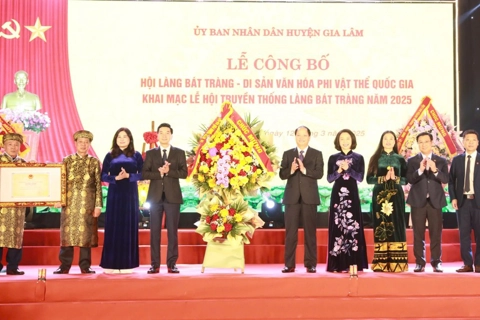
The recognition was announced on November 15 at the Bat Trang Museum of Viet Soul Art in Bat Trang Commune, Hanoi.
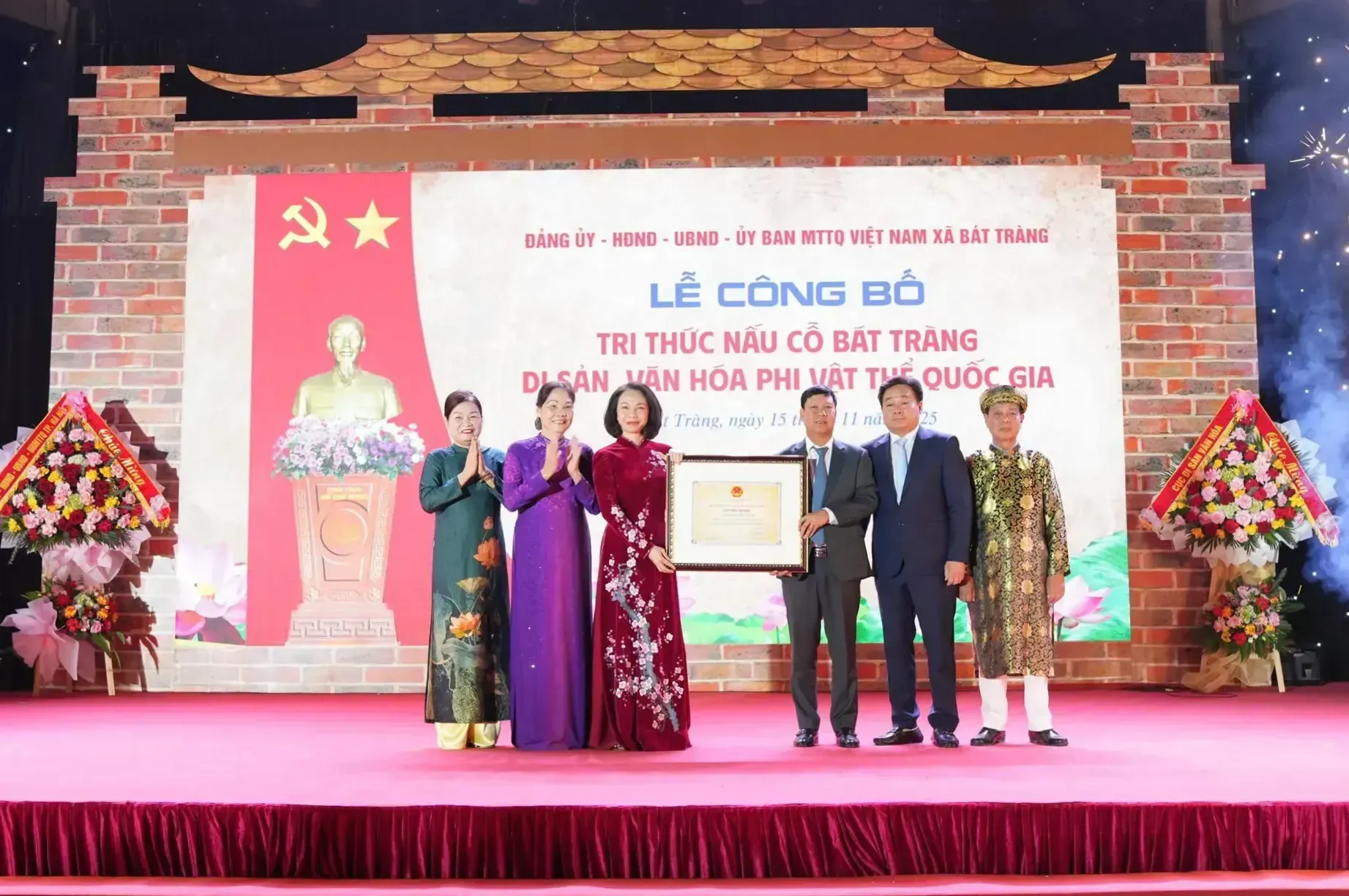
Vice Chairwoman of the Hanoi People’s Committee Vu Thu Ha (third from left) presents the certificate recognizing “Bat Trang Traditional Cooking Knowledge” as a National Intangible Cultural Heritage. Photo: Hoang Quyet
At the ceremony, Hoang Tien Dung, Chairman of the Bat Trang Commune People’s Committee, said that with a ceramic craft tradition of more than 700 years, Bat Trang is known not only for its pottery but also enduring cultural practices and historical relics.
Among these, he said the traditional Bat Trang tray of food stands out for capturing the community’s culinary expertise, ritual knowledge and social values.
He noted that the Bat Trang feast goes beyond refined cooking techniques. Each dish reflects family and clan rituals, embodying the community's cultural norms and etiquette.
The feast is prepared for major occasions such as the Vietnamese Lunar New Year, holidays, weddings, ancestral commemorations and village ceremonies, where the host’s respect and cultural understanding are expressed through the arrangement of the tray.
This culinary knowledge has been preserved through “learning by doing,” mainly within families and guided by the skillful stewardship of local women. Over time, these practices have shaped a distinctive gastronomic identity for the craft village.
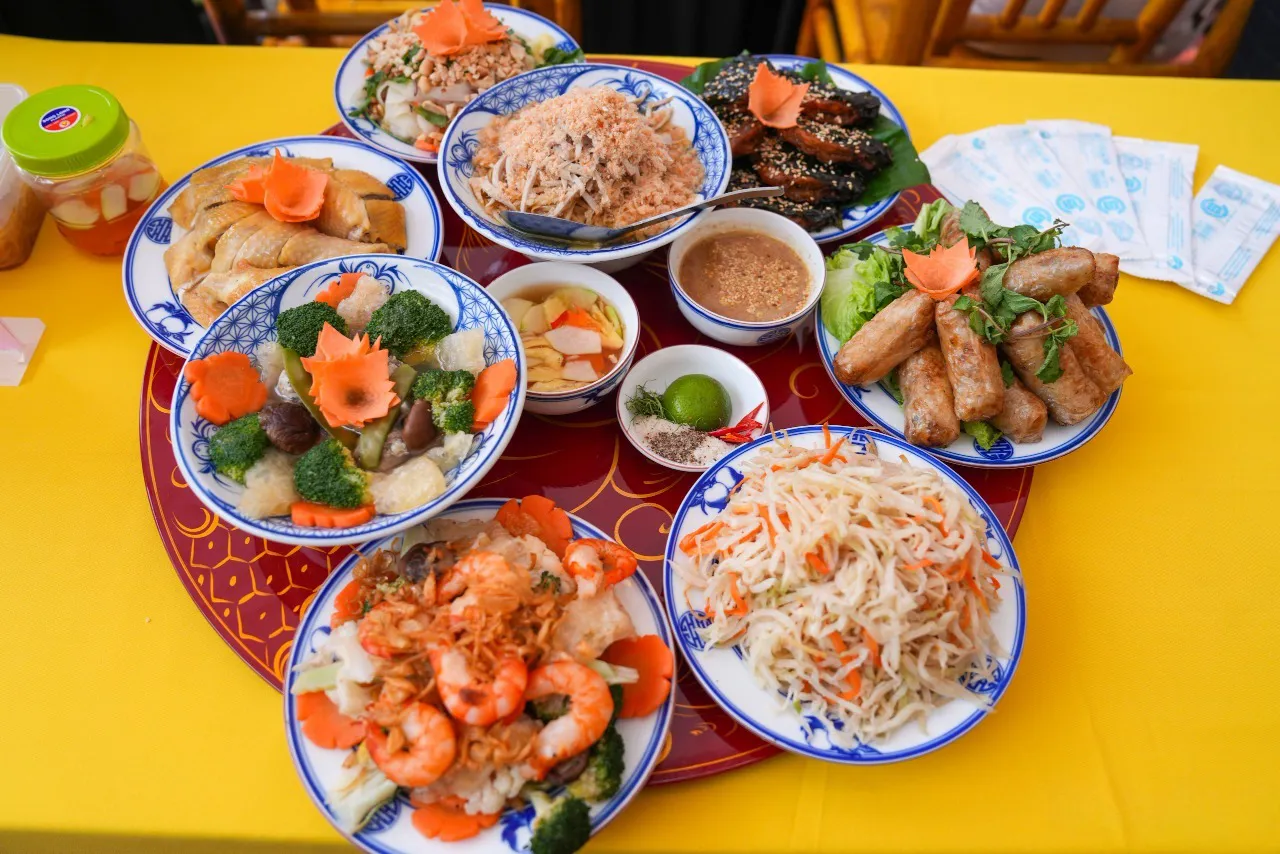
The Bat Trang feast both delectable in flavor and elegant in presentation. Photo: Huy Pham/ The Hanoi Times
A standard Bat Trang tray includes eight traditional dishes, balanced in color, flavor and aroma. They typically include steamed chicken with lemon leaves, stir-fried kohlrabi with squid, beef with black pepper sauce, shrimp spring rolls, stir-fried shrimp with mixed vegetables, stewed pigeon with lotus seeds, bamboo shoot and dried squid soup and dried pig skin and vegetable soup.
The number of dishes also carries symbolic meaning. Trays with four bowls and six plates signify fullness and completeness, while the six bowls and eight plates used during Tet and major events symbolize prosperity and are known as the “eight treasures.”
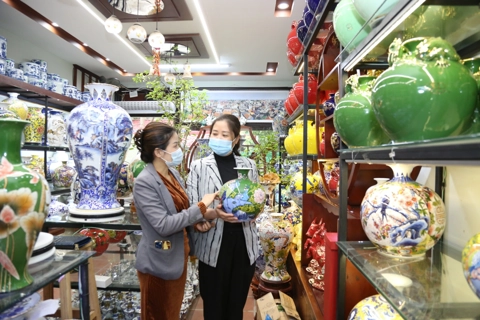
Simpler family trays with four bowls and four plates represent harmony with the four seasons and four directions. All dishes are served in Bat Trang ceramics, reinforcing the link between the village’s culinary tradition and its renowned pottery.
Local cooking is still shaped by folk wisdom such as “Boil chicken without boiling, the soup stays clear and sweet” and “A skillful feast is better than a plentiful feast,” reflecting the community’s values and meticulous craftsmanship.
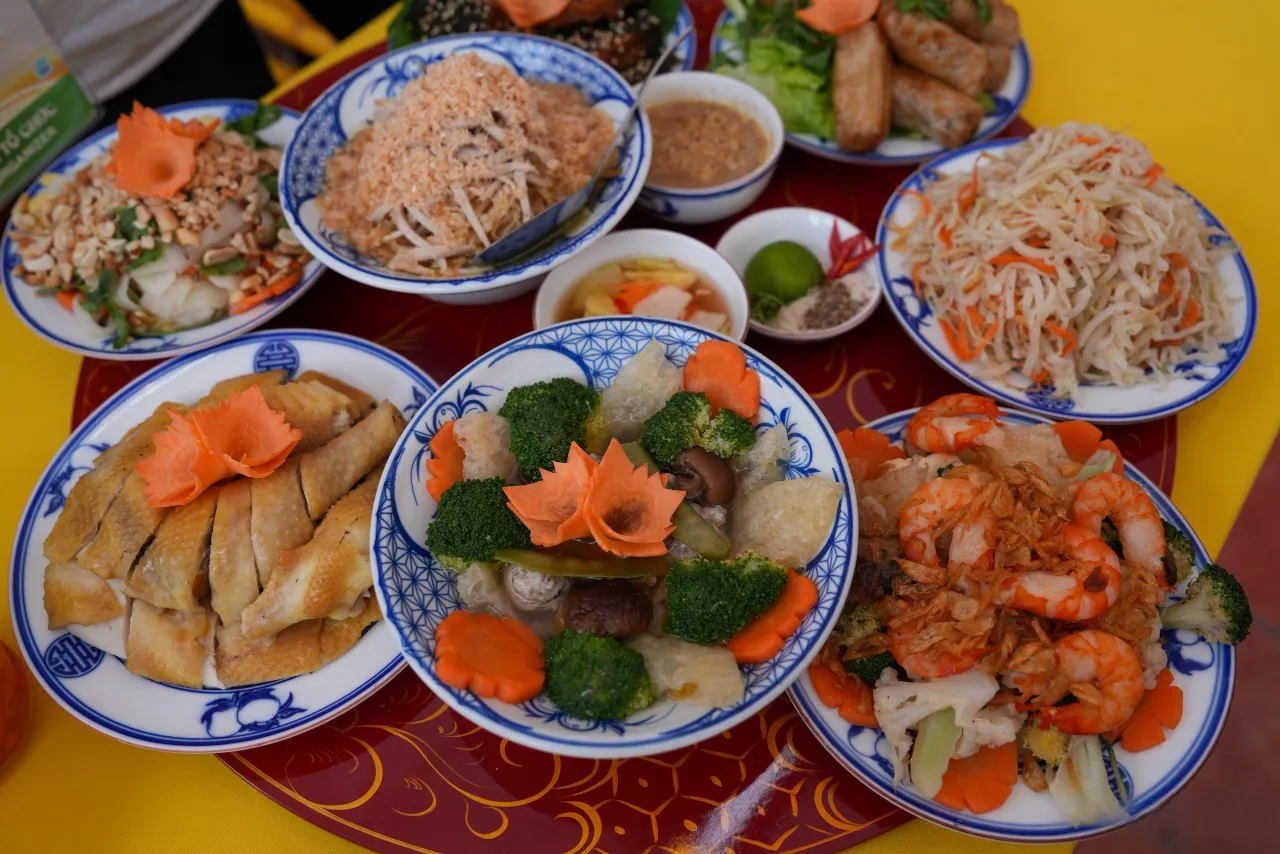
A standard Bat Trang tray features eight traditional dishes, each meticulously prepared to achieve a harmonious balance of color, flavor and aroma. Photo: Huy Pham/ The Hanoi Times
The Bat Trang feast is set to become a distinctive cultural tourism product, offering visitors a deeper connection to the village’s heritage. Beyond watching ceramic-making or buying handicrafts, tourists will be able to join in preparing and enjoying traditional feasts, creating a more immersive cultural experience.
On this occasion, Bat Trang Commune also launched the International Craft Village Conservation and Development Festival and the 2025 Craft Village Culture, Tourism and Trade Week, promoting cultural heritage and strengthening Bat Trang’s role as one of the capital’s key cultural and tourism destinations.