Log in
Life

Bat Trang pottery recognized national intangible cultural heritage

A tourism week has been organized at the century-old craft village to introduce the quintessence of pottery after the two-year hiatus of the Covid-19 pandemic.

Ceremonies were held for the reception of the certificate for “The National Intangible Cultural Heritage Recognition for Bat Trang Ceramic Craft” and the opening of Bat Trang tourism week on April 28 in Bat Trang Commune, Gia Lam District, Hanoi.

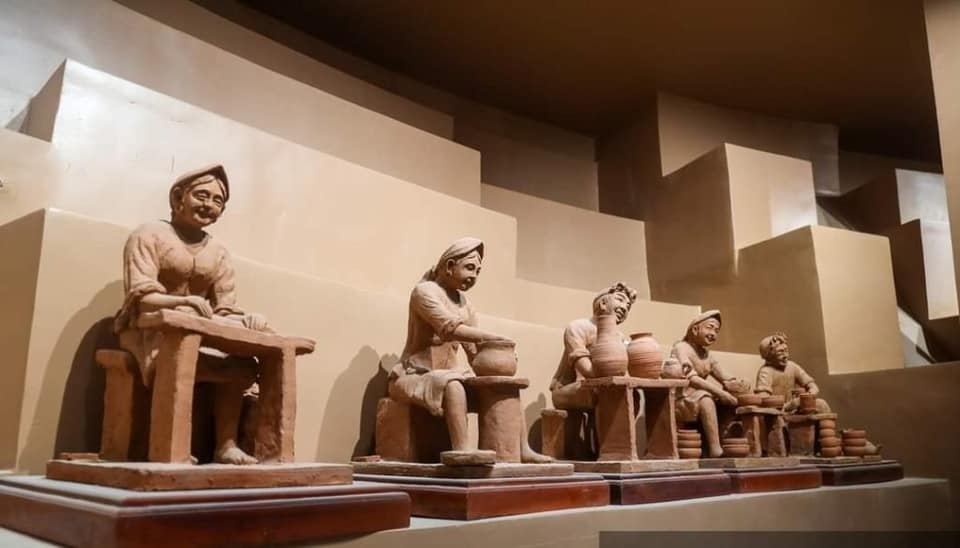
The space inside Bat Trang Ceramic Museum. Photo: Thanh Nga

According to Vice Chairman of Gia Lam District People’s Committee Nguyen Duc Hong, after two years of preparing and submitting the application, the pottery trade in Bat Trang village has been recognized as an intangible cultural heritage of Vietnam by the Ministry of Culture and Sports.

“This is a remarkable cultural event, kicking off for Bat Trang tourism after a two-year paralysis because of the Covid-19 pandemic,” he stated.

The Bat Trang tourism week will last until May 3 with a host of cultural activities, including the inauguration of the Centre for Quintessence of Vietnamese Craft Village (aka Bat Trang Ceramic Museum), the procession of the ancestors of Bat Trang pottery, the OCOP fair and the spiritual tours to local communal houses, temples, and pagodas,

Founded in the 14th century, Bat Trang village is considered the cradle of ceramics in Vietnam. Nowadays, it is one of the tourist magnets of Hanoi.

The village’s products have been highly valued for their quality, diverse designs, and varieties that are divided into functional groups such as household utensils, worship items, and ceramics for construction and decorative purposes.

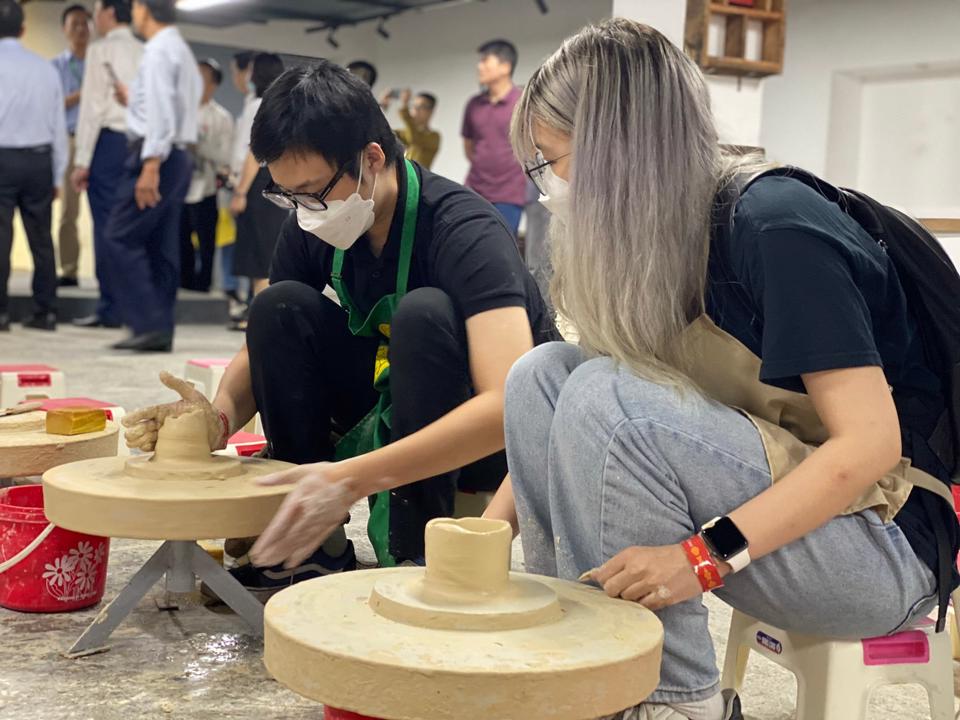
Tourists experience pottery making in Bat Trang Village, Gia Lam District, Hanoi. Photo: Hoang Quyet

Associated with Thang Long - Hanoi’s history, Bat Trang still retains many distinctive features of an ancient pottery village in the capital.

Besides its traditional craft, the commune’s long-standing culture with such traits as unique village festivals, customs, and cuisine are the advantages for Bat Trang to develop various types of cultural and experiential tourism.

Currently, Bat Trang is home to 200 enterprises and 1,000 ceramic home workshops, which create steady jobs and incomes for thousands of workers.

Before the Covid-19 pandemic, around 200,000 travelers visited Bat Trang per year, of them, foreign visitors accounted for 10%, and students and teenagers made up 40%. In the high season, Bat Trang welcomed nearly 10,000 visitors per day.
Reactions:
Share:
Trending
Most Viewed
Related news
Hanoi celebrates 47th Reunification Day

Hanoi celebrates 47th Reunification Day

28 Apr, 07:34

The capital city will be alive with cultural activities in celebration of the 47th anniversary of Vietnam's National Reunification Day and May Day.

Bat Trang Ceramic Exhibition - A walk with Italian culture

Bat Trang Ceramic Exhibition - A walk with Italian culture

27 Apr, 13:25

The exhibition of the invaluable legacy of contemporary Vietnamese art inspired by Italian fashion and jointly organized by the Embassy of Italy in Hanoi and the Hon Dat Viet Bat Trang Art Museum (Bat Trang Museum) is underway at Casa Italia, Hanoi.

Hanoi boosts tourism compliance through focused legal training for travel firms

Hanoi boosts tourism compliance through focused legal training for travel firms

The training course is expected to help travel firms better understand legal requirements, improve risk management and operate more sustainably in an increasingly competitive market.

Hanoi taps Ao Dai heritage in new push for cultural tourism

Hanoi taps Ao Dai heritage in new push for cultural tourism

With rising global interest in experiential travel, Hanoi is betting on the elegance and craftsmanship of the ao dai to tell its cultural story and draw visitors deeper into the city’s heritage

Craft villages across Hanoi reinvent tourism through heritage, creativity and community-led experiences

Craft villages across Hanoi reinvent tourism through heritage, creativity and community-led experiences

Artisans are opening their homes, redesigning workshops and turning everyday skills into immersive experiences that pull visitors into the heart of rural Vietnamese culture. What once lived quietly behind wooden doors now thrives as part of Hanoi’s most promising tourism frontier.

Cuu Village: A 500-year-old heritage site once known as the “Village of the Rich”

Cuu Village: A 500-year-old heritage site once known as the “Village of the Rich”

The rapid deterioration of the village renowned for its hybrid villas and tailoring heritage requires Hanoi’s huge cultural preservation efforts.

Vietnam and the US celebrate diplomatic tie through music and youth culture

Vietnam and the US celebrate diplomatic tie through music and youth culture

The project marks the 30-year anniversary of US-Vietnam relations while offering a fresh and youth-centered perspective on a milestone that has shaped both countries.

Capturing Vietnam: Heritage and tradition through 2025 award-winning lenses 

Capturing Vietnam: Heritage and tradition through 2025 award-winning lenses 

Through the lenses of talented photographers, Vietnam’s living heritage emerges in ancient dances, sacred rituals and timeless crafts captured in moments that reflect memory, identity and the nation’s soul.

Hanoi breathes new life into heritage space with weekend art program

Hanoi breathes new life into heritage space with weekend art program

The community art program along Hoan Kiem Lake, held every weekend, offers a fresh cultural experience for both residents and visitors.

Hanoi closes Photo Hanoi’25 with a vibrant celebration of creativity and culture

Hanoi closes Photo Hanoi’25 with a vibrant celebration of creativity and culture

From lakeside displays to Old Quarter art walks, Photo Hanoi’25 concluded with the celebration of a city where creativity flows through every street and photography serves as a bridge between cultures.