Cold snail vermicelli soup: Simple but quintessential Hanoi snack
Using simple ingredients, Hanoians of old created “Bun oc nguoi,” which has captivated diners for decades.
In his book "Mieng Ngon Ha Noi" or Delicacies of Hanoi, the late author Vu Bang praised bun oc or snail vermicelli soup: "It is a snack that reaches the pinnacle of Hanoi's art of fine dining."
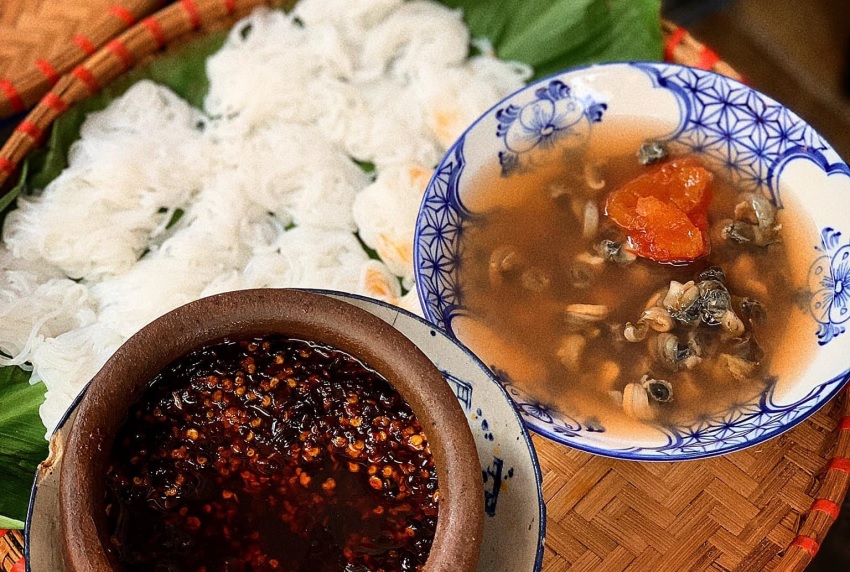
| Bun oc nguoi is among the best dishes prepared from snails created by Hanoians of old. Photo: Esheep Kitchen |
Hanoi's crisp weather in Autumn seems to be an ideal time for bun oc. There is an old Hanoian saying "The snail in October," suggesting people eat this dish when the snail becomes fat and it tends to be best eaten in the year.
The popular food of the hard-shelled mollusk, which lives in muddy environments such as ponds or rice fields, when prepared by Hanoi's talented chefs will become tasty dishes.
Instead of the hot version, which is more popular, the cold version - Bun oc nguoi - is considered by gourmets to preserve the raw and quintessential Hanoi cuisine.
Nguyen Thi Bau, a bun oc nguoi seller on Tay Son Street in Dong Da District, has been running a cold snail vermicelli soup shop with her younger sister for more than 30 years. The two women from Hanoi are the third generation to sell the soup, following in the footsteps of their mother and paternal grandfather.
Early in the morning, Bau often goes to snail markets to choose snails that are neither slimy nor fishy. At home, she soaks them in water and carefully washes them.
| The broth is kept in a terracotta jar with a basket of snail shells on top, the iconic image of a bun oc nguoi eatery in Hanoi. Photo: Khanh Huyen |
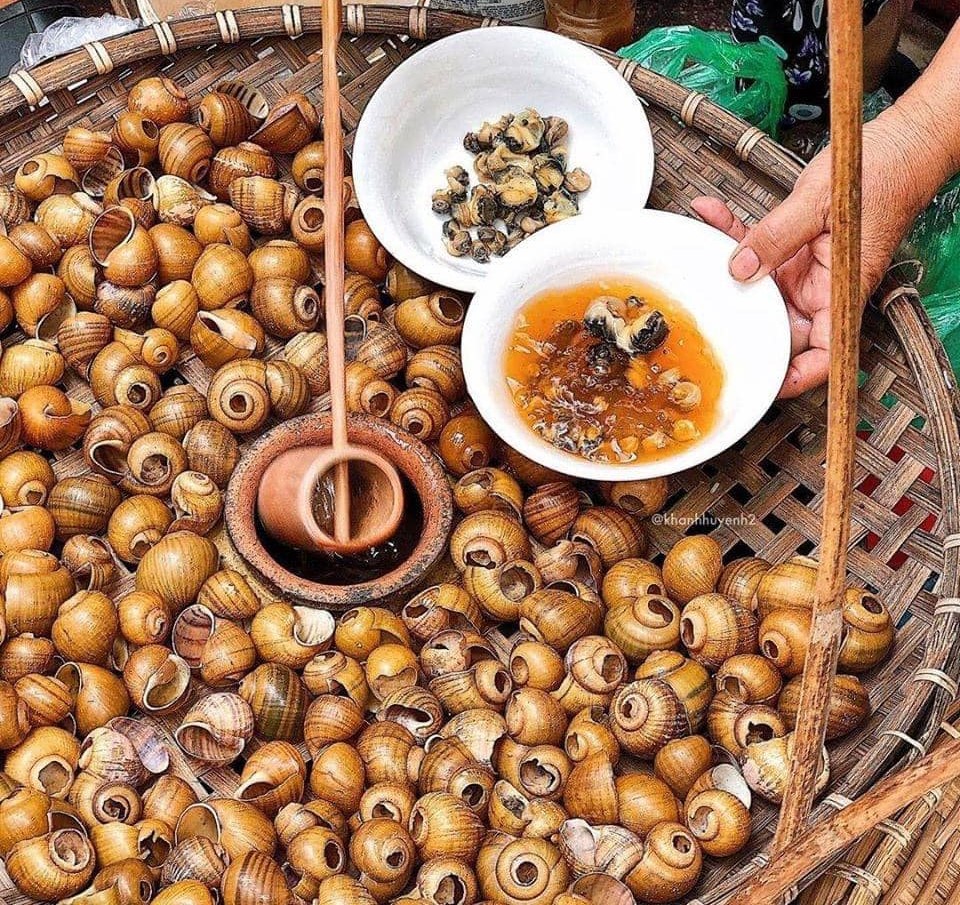
The snails are then boiled for about 15 minutes, just long enough for their flesh to remain fresh and for the water to take on the flavor that is then used to cook the broth.
"I choose snails that turn yellow and look fresh after cooking. I only start to take the snail meat out of the shell when the guests come to eat. If I did that before, the snails would dehydrate and become too dry. I also remove all the snail eggs because they make an unpleasant crunch in the mouth," Bau revealed.
The 65-year-old vendor added that the orange broth keeps its delicious taste and characteristic aroma longer if it is stored in a terracotta jar than in a metal pot. This is because her ancestors told her that the thick vinegar flavor changes when it is kept in metal containers.
The broth is the boiling water mixed with thickened vinegar until it tastes good. Moreover, the vermicelli ought to be ‘coin vermicelli’, also known as ‘basket clam vermicelli’ or ‘snail operculum vermicelli’. That kind of vermicelli from Phu Do Village of Nam Tu Liem District is the best.
| Ms. Bau usually adds cashew-colored oil to the snail broth to make her dish even more appetizing. Photo: Le Thi Huyen |
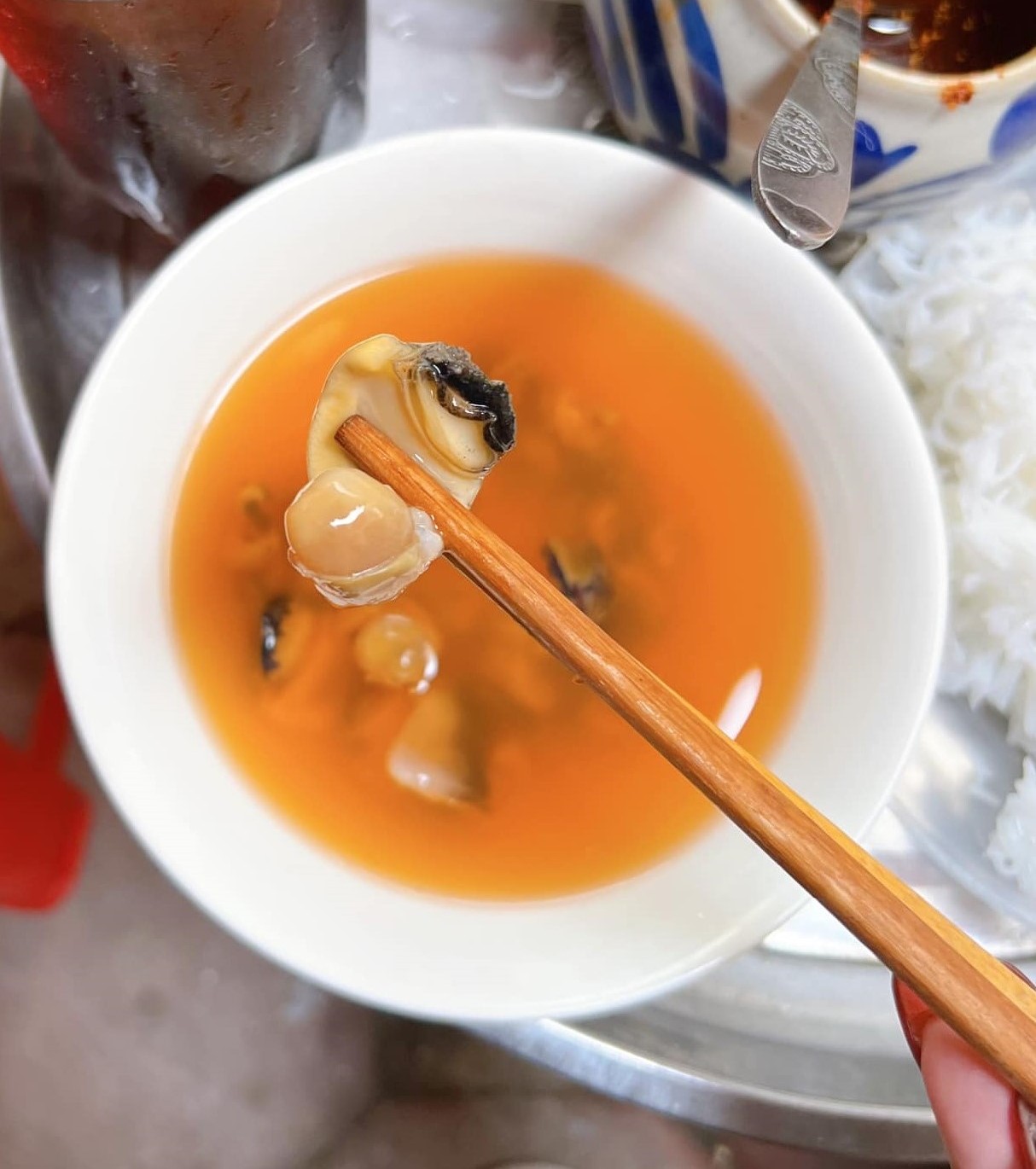
In the past, bun oc nguoi vendors often carried their wares on shoulder poles and hawked their dish around town, returning home when the broth jar was empty. Nowadays, the vendors still use shoulder poles, but they sit still at fixed locations.
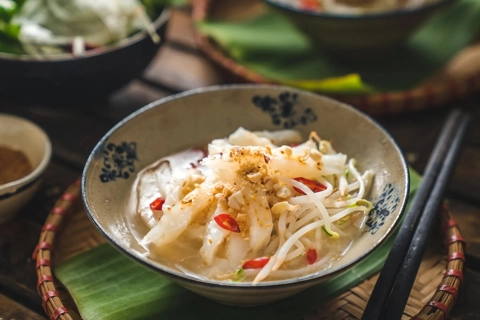
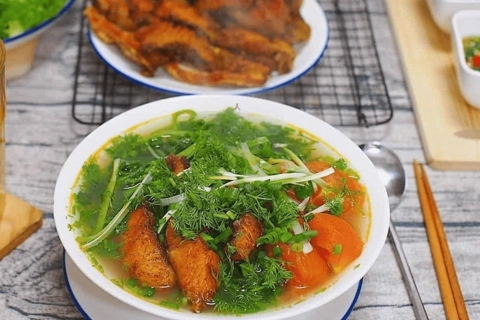
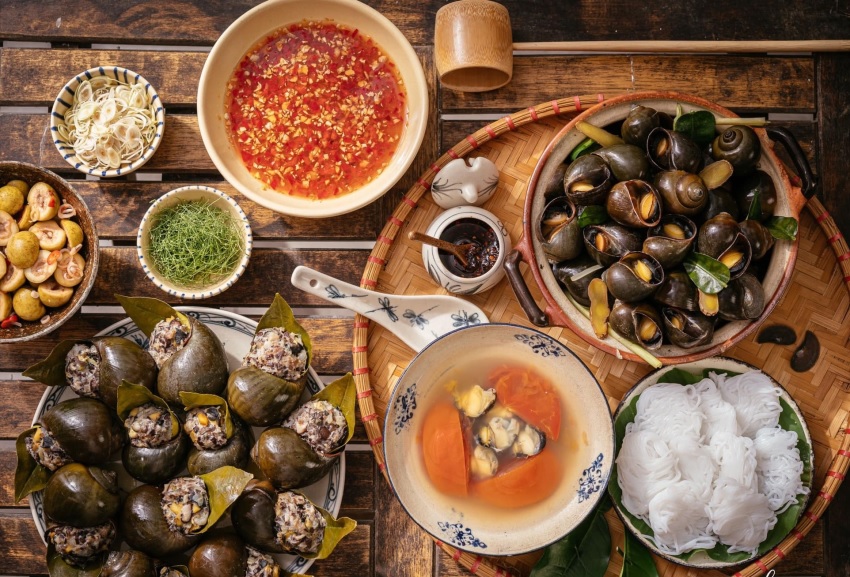
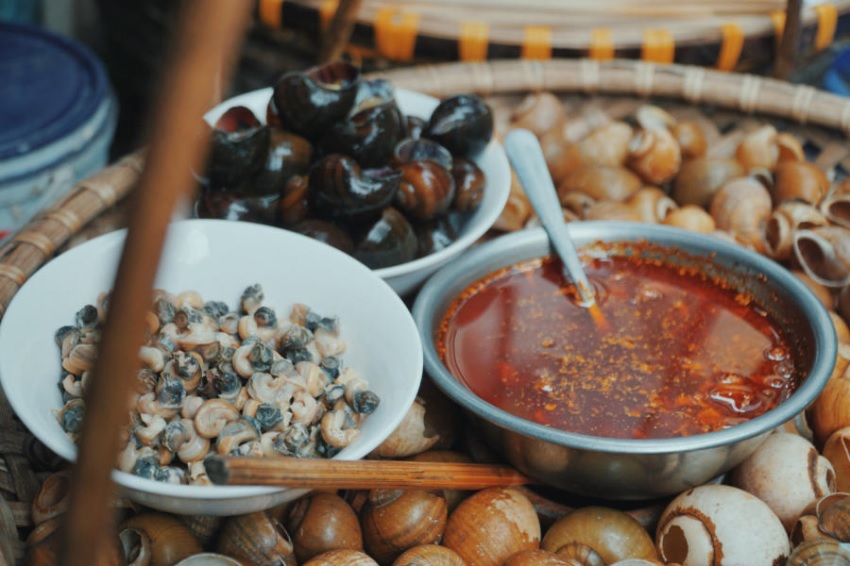
Most diners prefer cold snail vermicelli soup in the Summer for its cool, delicate, non-greasy taste. Unlike today's bun oc bowls, which are filled with snails, beef, pork bologna, fried fish or tofu, or even duck embryos, a bowl of bun oc nguoi is still simple: snails, a few pieces of vermicelli dipped in broth with a little cashew-colored oil, and chili.
The highlight, which gives the broth its unique flavor, is the thickened vinegar made from first-class sticky rice, the taste of which varies from vendor to vendor. Whether you can eat spicy food or not, you should add a little boiled chili - not the shrimp paste that often accompanies hot snail vermicelli soup. It gives the bowl an attractive reddish-brown color, while its heat accentuates the sour, fragrant broth.
Unlike other vermicelli dishes, bun oc nguoi isn't served with herbs. According to Hanoi cooks and cultural scholars, snails are naturally cold, so if eaten cold with raw vegetables, they will be too cold for the stomach. On the other hand, adding simmered chiles creates a yin-yang balance for the dish, which shows the finesse of ancient Hanoian cuisine.
| The simple yet delicious dish of Hanoians.Photo: VOVTV |
Tasting bun oc nguoi for the first time, Tran Phuong Thao, a student at the University of Water Resources, said she loved the delicate, slightly sour taste. "I find this dish cool and light," Ha praised the specialty.
Meanwhile, Tran Van Quynh, an officer from Hai Ba Trung District, revealed that when he returns to Hanoi from anywhere, cold snail vermicelli soup is the first dish he finds to enjoy. "The good thing about this dish is that I can add thickened vinegar to my taste. I like to eat it with big snails, whose meat is crunchy and fragrant," Quynh said.
Instead of opening restaurants, vendors usually sell bun oc nguoi on the sidewalk with a few stools, reminiscent of old Hanoi. Each serving costs about 30-50 thousand Vietnamese dongs. Some vendors frequented by locals and tourists are Mrs. Hue on Nguyen Sieu Street, Mrs. Xuan on O Quan Chuong Street, Mrs. Lan on Bui Thi Xuan Street, Mrs. Giang on Luong Ngoc Quyen Street, or Mrs. Bau and Mrs. Huong at alley no. 176 Tay Son Street.
| A serving of cold snail vermicelli soup is simple, consisting of snails, broth and vermicelli. Photo: Nguyen Ngoc Bich |