Communication matters immensely in combating Monkeypox: CDC
International health experts said that education and accurate messaging are critical to avoid stigma in dealing with Monkeypox outbreaks.
Communication plays a crucial role in controlling Monkeypox, a viral zoonosis with symptoms similar to those seen in the past in smallpox patients, said Eric Dziuban, Country Director for the US Centers for Disease Control and Prevention (CDC) Vietnam.
Eric Dziuban, Country Director for the US Centers for Disease Control and Prevention (CDC) Vietnam, speaks at the media briefing held in Hanoi on July 29. Photo: US Embassy in Hanoi |
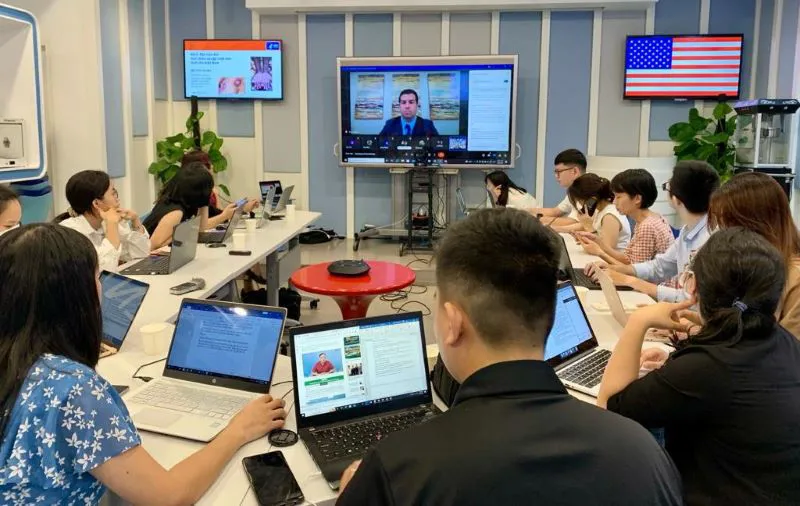
“Clear communication to the public is so important during outbreaks, especially during the early days when people are most likely to get confused or get their facts from places that might not be as reliable,” Dziuban said in a press briefing held at the US Embassy in Hanoi last week to share US support in Vietnam in Monkeypox readiness.
It means that communication education is one of the key factors in dealing with the disease that can be spread between people and certain animals in the context that the outbreak was declared a global health emergency by the World Health Organization (WHO). Dziuban said the media is a close partner in this kind of situation.
He highlighted the role of communication in reporting the zoonosis following the fact that as much as 95% of the total cases were confirmed among men who have sex with men (MSM) and transgender women are among the groups that are most exposed to the disease. However, anyone can be infected with Monkeypox and does not stigmatize sick people.
This disease is not exclusive to the MSM community, therefore, education and accurate messaging are critical to avoid stigma, Dziuban stated. Earlier this month, WHO Director-General Tedros Adhanom Ghebreyesus also told a media briefing in Geneva that “Stigma and discrimination can be as dangerous as any virus.”
According to the health professional, Monkeypox is usually non-fatal and self-limiting, noting that careful distinction is required from many other skin diseases and sexually transmitted infections.
The virus has lower pandemic potential. As of July 29, the infection caused more than 22,000 cases in 79 countries, according to CDC. Many of the cases in Africa are actually in countries that have historically had Monkeypox even before this outbreak began. And it’s also important to see that there have been very few deaths reported with this outbreak. So far only 7 all of them occurring in Africa and outside the continent.
Regarding preparations in Vietnam, Dziuban said the CDC has worked with the Ministry of Health since early June 2022 on the issues related to monitoring, testing, diagnosing, clinical management, and treatment to ensure that Vietnam can be prepared in order to identify cases early and contain the spread of infections.
Given human-to-human transmission, Dziuban warned of some main routes, including direct contact with lesions, respiratory secretions, objects a person with Monkeypox may have touched, mother-to-child, contact with contaminated or infected tissues, contact with urine, and fences.
It should be noted that patients are infectious from the beginning of symptoms until the crusts separate and a fresh layer of skin has formed. For that reason, he stressed the importance of avoiding close, skin-to-skin contact with people who have a rash that looks like Monkeypox, practicing good hand hygiene, communication education, training and reinforcement of good practices in healthcare facilities, and available supply of vaccines.
Among preventive measures, vaccines against Monkeypox remain thin, prompting efforts by the US and some other countries to work with vaccine producers to increase the supply.
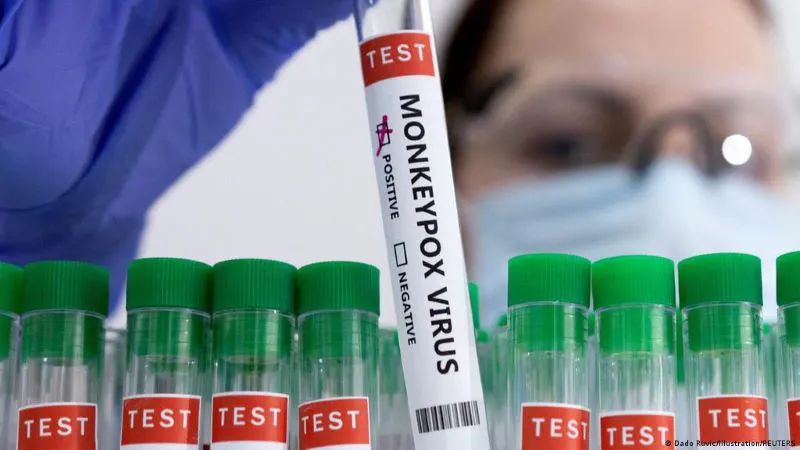
On July 23, 2022, the World Health Organization declares Monkeypox a public health emergency of international concern (PHEIC). |
As the current outbreak has unique features, they have not seen before and they have not known why Monkeypox, which has historically been reported in Africa, could spread to undocumented countries. It is possible that smallpox was eradicated a long time ago, smallpox vaccines are the old generation vaccines, and the new population born after the 1970s has not been vaccinated against this disease, so it causes the disease to return, Dziuban argued. He said they do not know whether the cause of the rapid spread of the disease is related to climate change or geographic mobility.
This shows the importance of being prepared to respond to emerging communicable diseases, and diseases of zoonotic origin in the future by sharing information and coordinating in response, Dziuban said, noting that CDC is here to be a partner to the Ministry of Health and to the Vietnamese government. “We do our best to advise and provide assistance. They’re requested and we’ve been working closely with the Ministry of Health on this situation,” he emphasized.
In addition, the CDC has worked with the WHO to make sure that Vietnam will get biological products at the earliest.
Notably, Dziuban believed that Vietnam’s specialized forces were capable of preparing and responding to Monkeypox because they have done these things very well during the Covid-19 epidemic.
On July 24, one day after the WHO declared Monkeypox as public health emergency of international concern (PHEIC), Vietnam’s Ministry of Health held an urgent meeting with the National Institute of Hygiene and Epidemiology (NIHE), Pasteur Institutes, CDC Vietnam, and WHO in Vietnam on Monkeypox response. At the meeting, health experts warned of the risks of disease importation into Vietnam in the course that first cases were confirmed in regional countries like Cambodia, China, Singapore, and Thailand.
The Ministry of Health emphasized the need to monitor people coming from infected countries, and manage risks at border gates and at medical facilities as well as in the community.