Life
Cultural events celebrate New Year
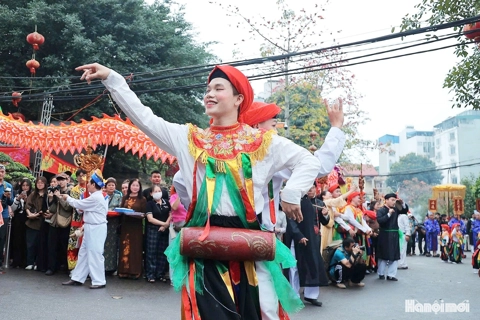
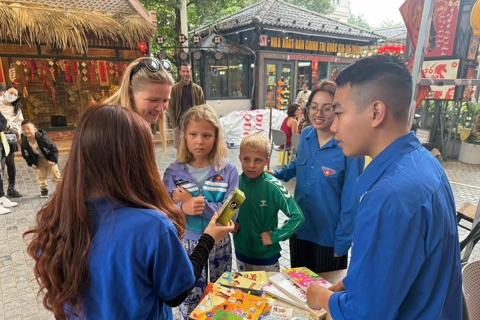
Water puppetry and Dong Ho paintings are just two amongst Vietnam`s many traditional arts selected to entertain locals and tourists alike during the Lunar New Year holiday season in Hanoi`s Old Quarter.
On February 10, the festivities kicked off on Hang Bac Street at the Kim Ngan Temple, a place where ancestors' traditional jewellery craft are worshipped.
"We selected one of the essential traditional arts, jewellery, to be highlighted during the spring festival with an aim to preserve and promote the value of Vietnam's cultural heritage as well as stay true to the image of the Old Quarter," said Pham Tuan Long, deputy head of the Old Quarter Management Board.
"This is the sixth time this kind of festival has been organised; it has attracted not only Hanoians but also many foreign tourists," he said, adding that, "we have invited two representative artists of water puppetry and Dong Ho paintings to perform for visitors."
Nguyen Dieu Trang, a fifth grader of Tran Nhat Duat primary school, and her classmates were excited for artist Phan Thanh Liem's water puppet show.
"I've enjoyed many water puppet shows already; the shows are often about dancing lions, buffalos fighting, rice farming or boat racing, but this was the first time I saw a story about traffic," she said.
"Now I know that water puppets can look like normal men wearing hats and riding motorbikes, or policemen blowing their whistles," she added.
Children became especially vocal when two young male puppets where stopped by policemen for dangerously chasing each other on motorbikes. During Tet celebrations, many locals do motorbike racing for fun, but it often leads to traffic accidents.
"After the performance, our teacher told us that we should obey traffic rules and especially during Tet holidays," Trang said.
Behind the water puppet stage, artist Nguyen Huu Qua, from Dong Ho Village in Bac Ninh Province, displays traditional paintings, the knowledge of which has been transferred from generation-to-generation in his family.
Since the upcoming Lunar New Year is the year of the Goat, Qua created a painting called Tam Duong Nghenh Phuc (Three Goats Welcome Happiness) to celebrate. The image is of goats among apricot blossom, a popular spring flower.
"I painted three goats since Vietnamese people believe that a family with three people born in the Year of the Goat make for a very happy and prosperous family," Qua said.
"The paintings have been used as traditional decoration in homes during the spring festival," he said, "in recent years, more and more people have been interested in buying Dong Ho paintings for Tet."
Qua will display the art at the temple from now till the end of the festival on March 10.
Old Quarter
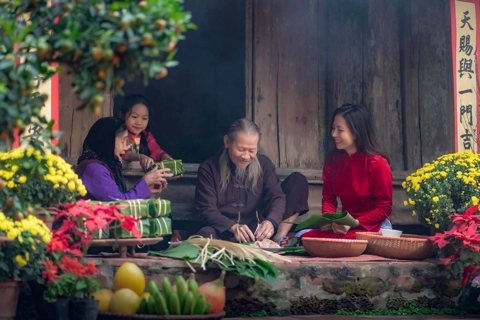
Traditional music such as cheo (traditional operetta), ca tru (ceremonial singing) and xam (music of blind buskers) will be performed at the Hanoi Old Quarter Information Centre at 28 Hang Buom Street from February 19-22.At the ancient house of 87 Ma May Street, visitors can see how a typical Hanoi family prepares for and celebrates Tet.
Ethnic spring festival
The Vietnam Museum of Ethnology in Hanoi will organise a series of cultural activities to welcome in the Lunar New Year and explore the diversity of ways ethnic minority groups will celebrate across the country.
This year the Lao Cai Provincial Department of Culture, Sports and Tourism will work with the museum to organise the events.
"On the occasion, we will introduce some of the most unique traditions of ethnic groups in Lao Cai Province," said Tran Huu Son, director of the department.
The museum invited Mong people from Sin Cheng Commune of Lao Cai to erect cay neu (New Year's tree) on the museum ground. The ceremony comes from Gau Tao, a typical festival of the Mong.
Giang A Hai, one of the Mong from Sin Cheng, said the cay neu must stand straight toward the sun to bring forth the Mong's prayers for happiness and prosperity in the new year. The tree is considered a bridge to the gods and forefathers' spirits, travelling between Heaven and Earth.
On the 23rd day of the last lunar month, Vietnamese people usually hold a cay neu erecting ceremony in front of their homes. Cay neu is believed to ward off evil spirits during the longest and most important annual festival in Vietnam. On the seventh day of the first lunar month, the tree is finally taken down.
Several other sports and cultural activities by other ethnic groups will also liven up the museum, such as shuttlecock throwing, pipe-blowing and crossbow-shooting by the Mong; phao dat (clay firecrackers) and Dong Ho paintings by the Kinh; and folk games by the Si La and San Chay groups.
The festival programme will take place at the Vietnam Museum of Ethnology, Nguyen Van Huyen Street, on February 22-23.
"We selected one of the essential traditional arts, jewellery, to be highlighted during the spring festival with an aim to preserve and promote the value of Vietnam's cultural heritage as well as stay true to the image of the Old Quarter," said Pham Tuan Long, deputy head of the Old Quarter Management Board.
"This is the sixth time this kind of festival has been organised; it has attracted not only Hanoians but also many foreign tourists," he said, adding that, "we have invited two representative artists of water puppetry and Dong Ho paintings to perform for visitors."

“Mice Wedding” - a popular work of Dong Ho folk painting
|
Nguyen Dieu Trang, a fifth grader of Tran Nhat Duat primary school, and her classmates were excited for artist Phan Thanh Liem's water puppet show.
"I've enjoyed many water puppet shows already; the shows are often about dancing lions, buffalos fighting, rice farming or boat racing, but this was the first time I saw a story about traffic," she said.
"Now I know that water puppets can look like normal men wearing hats and riding motorbikes, or policemen blowing their whistles," she added.
Children became especially vocal when two young male puppets where stopped by policemen for dangerously chasing each other on motorbikes. During Tet celebrations, many locals do motorbike racing for fun, but it often leads to traffic accidents.
"After the performance, our teacher told us that we should obey traffic rules and especially during Tet holidays," Trang said.
Behind the water puppet stage, artist Nguyen Huu Qua, from Dong Ho Village in Bac Ninh Province, displays traditional paintings, the knowledge of which has been transferred from generation-to-generation in his family.
Since the upcoming Lunar New Year is the year of the Goat, Qua created a painting called Tam Duong Nghenh Phuc (Three Goats Welcome Happiness) to celebrate. The image is of goats among apricot blossom, a popular spring flower.
"I painted three goats since Vietnamese people believe that a family with three people born in the Year of the Goat make for a very happy and prosperous family," Qua said.
"The paintings have been used as traditional decoration in homes during the spring festival," he said, "in recent years, more and more people have been interested in buying Dong Ho paintings for Tet."
Qua will display the art at the temple from now till the end of the festival on March 10.
Old Quarter
Traditional music such as cheo (traditional operetta), ca tru (ceremonial singing) and xam (music of blind buskers) will be performed at the Hanoi Old Quarter Information Centre at 28 Hang Buom Street from February 19-22.At the ancient house of 87 Ma May Street, visitors can see how a typical Hanoi family prepares for and celebrates Tet.
Ethnic spring festival
The Vietnam Museum of Ethnology in Hanoi will organise a series of cultural activities to welcome in the Lunar New Year and explore the diversity of ways ethnic minority groups will celebrate across the country.
This year the Lao Cai Provincial Department of Culture, Sports and Tourism will work with the museum to organise the events.
"On the occasion, we will introduce some of the most unique traditions of ethnic groups in Lao Cai Province," said Tran Huu Son, director of the department.
The museum invited Mong people from Sin Cheng Commune of Lao Cai to erect cay neu (New Year's tree) on the museum ground. The ceremony comes from Gau Tao, a typical festival of the Mong.
Giang A Hai, one of the Mong from Sin Cheng, said the cay neu must stand straight toward the sun to bring forth the Mong's prayers for happiness and prosperity in the new year. The tree is considered a bridge to the gods and forefathers' spirits, travelling between Heaven and Earth.
On the 23rd day of the last lunar month, Vietnamese people usually hold a cay neu erecting ceremony in front of their homes. Cay neu is believed to ward off evil spirits during the longest and most important annual festival in Vietnam. On the seventh day of the first lunar month, the tree is finally taken down.
Several other sports and cultural activities by other ethnic groups will also liven up the museum, such as shuttlecock throwing, pipe-blowing and crossbow-shooting by the Mong; phao dat (clay firecrackers) and Dong Ho paintings by the Kinh; and folk games by the Si La and San Chay groups.
The festival programme will take place at the Vietnam Museum of Ethnology, Nguyen Van Huyen Street, on February 22-23.